



The municipality of Luján ended over 50 years of pollution by permanently closing its open-air landfill, located next to Route 192. Since last Wednesday, 100% of the district’s household waste has been sent to CEAMSE, marking a milestone for the region’s environmental management.
Mayor Leonardo Boto formalized the measure, which includes a strict operational closure, social plans for informal recyclers, and a strong campaign for source separation.
Operational Closure and Control
The plan includes:
- Permanent monitoring of the perimeter.
- Rigorous access control to prevent the clandestine entry of waste.
- Progressive mitigation of historical issues such as smoke, fires, and odors.
Social Impact
The closure directly affects the informal recyclers who subsisted on the site. For them, the municipality implemented a transition program with support from the Province and the CFI:
- Integration into the cooperative system of the Manuel Belgrano Recycling Center.
- Job training.
- Stable income and better working conditions.
Future of Waste Management
The official plan includes:
- Enhancing source separation through educational programs.
- Installing more green points in the city.
- Advancing the construction of the Laudato Si Environmental Center, a postponed project that seeks to consolidate a comprehensive recycling model.
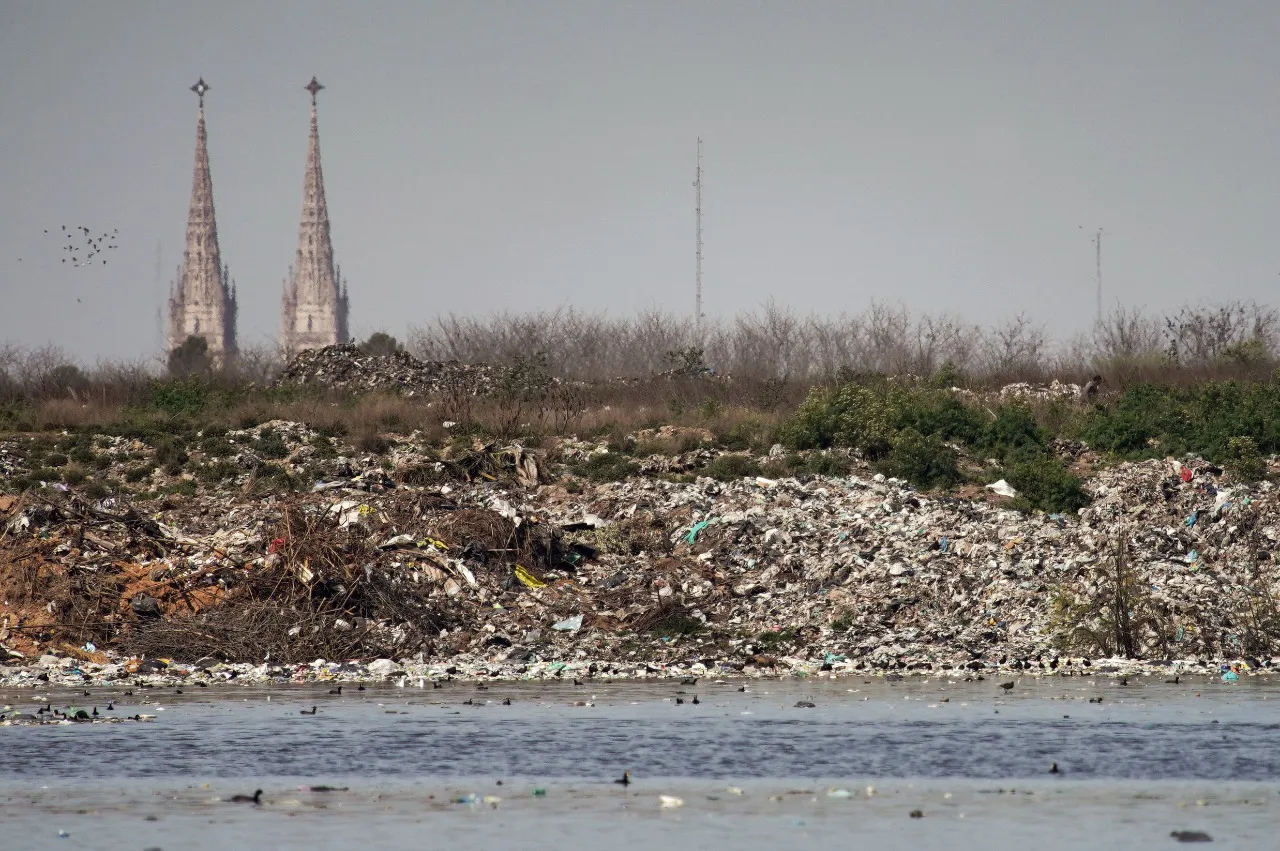
The Risks of Open-Air Landfills
Landfills are sources of pollution and marginalization. Their main impacts:
- Water contamination: leachates seep and affect underground aquifers.
- Health risks: smoke, toxic gases, and the proliferation of vectors cause respiratory and dermatological diseases.
- Social issues: recyclers work in precarious and unhealthy conditions.
- Climate change: waste decomposition produces methane, a potent greenhouse gas.
Unlike sanitary landfills, which have engineering to waterproof soils and treat gases and liquids, landfills result from a lack of infrastructure and proper management.
Provincial Context
In the province of Buenos Aires, there are more than 70 open-air landfills. The Ministry of Environment promotes closure and remediation plans under the GIRSU program, replacing them with green recycling centers where collectors can work in safe conditions.
The closure of the Luján landfill marks a turning point in local environmental management. After half a century of pollution, the city begins a new phase based on proper waste disposal, the social inclusion of recyclers, and environmental education.
This historic step reinforces the need to replicate the model in other municipalities to definitively eradicate open-air landfills in the province.



