



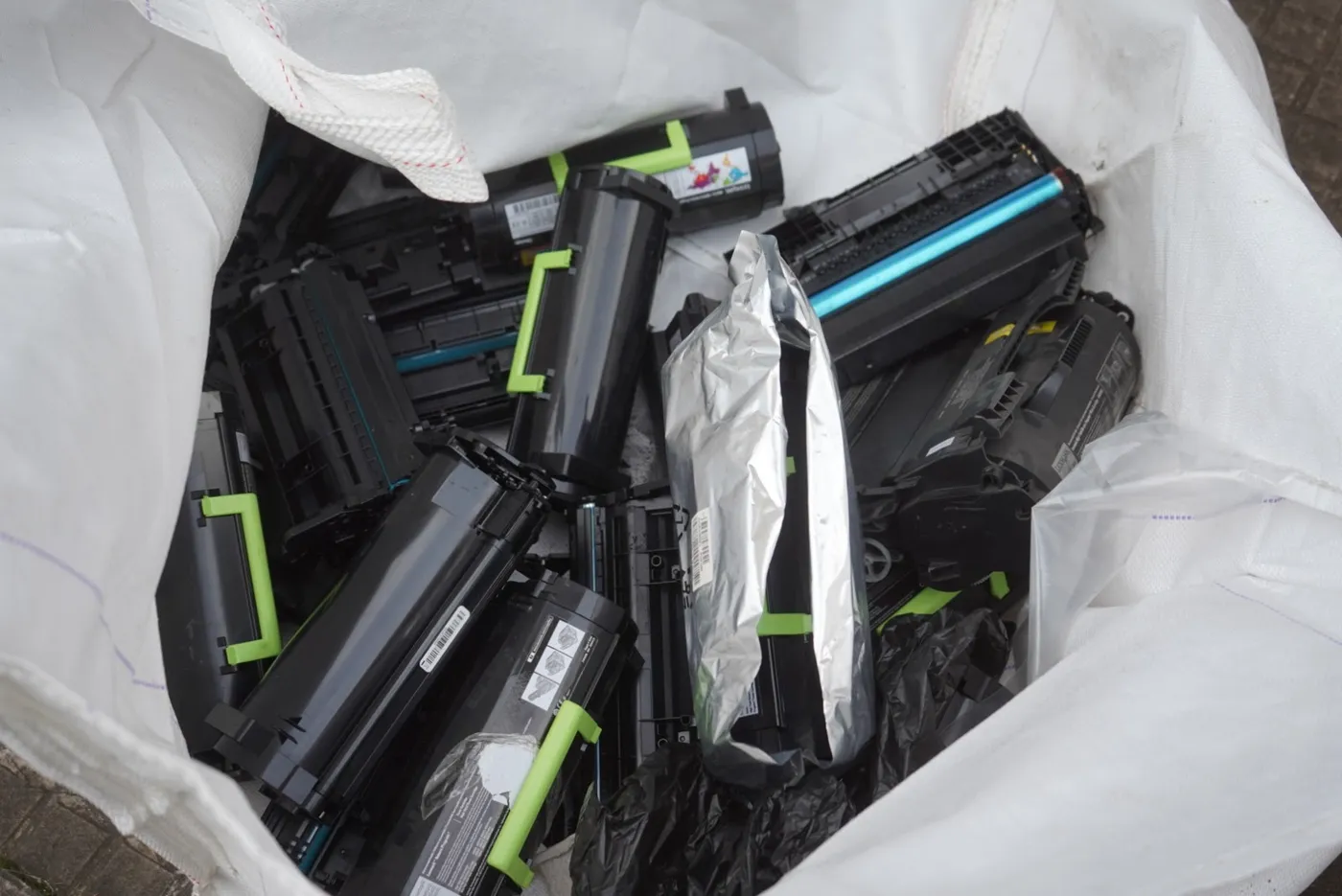
The Municipality of La Plata recovered more than 700 kilos of printer cartridges and toners, preventing them from ending up in Ceamse and reducing the environmental impact of these electronic waste.
The supplies were transported to a specialized cooperative in Pilar, where metal and plastic parts were separated, chemical residues were removed, and the plastic was shredded to become raw material for new production processes.
Each recovered load comes with a final disposal certificate, ensuring an environmentally responsible and transparent treatment.
Importance of recycling toners and cartridges
These supplies contain chemical substances that can contaminate the soil and water if not properly treated. Recycling allows:
- Reduce pollution: prevents heavy metals and chemicals from reaching sensitive ecosystems.
- Utilize resources: reuses plastics and metals in the industry.
- Decrease waste: reduces pressure on landfills and dumps.
Reception points and program expansion
Residents who wish to correctly dispose of cartridges and toners can bring them to the Eco House, located in Paseo del Bosque, between the grotto and the Gimnasia field.
The municipality plans to expand this service to community delegations, creating more reception points and facilitating citizen participation.
Complementary recycling programs
The Environment Secretariat supports campaigns for the recovery of:
- Batteries.
- Plastics.
- Used vegetable oil.
- Electronic waste (WEEE).
- X-ray plates.
These actions are part of a comprehensive waste management strategy that seeks to promote source separation and the circular economy.
WEEE recycling: key benefits
Recycling electronic waste protects public health and recovers valuable raw materials:
- Environmental protection: prevents lead, mercury, and cadmium from contaminating soil and water.
- Less pollution: prevents damage to air and ecosystems.
- Circular economy: allows the extraction of metals such as gold, silver, copper, and aluminum.
- Energy savings: reusing materials consumes less energy than producing them from scratch.
Authorized managers and plants in Buenos Aires
- Treatment plants: companies like PELCO S.A. (Tigre) and Silkers S.A. (Quilmes).
- University and civil initiatives: Ekoa – UNLP and the Zero Waste Center.
- Private management: companies like Puro Scrap collect e-scrap in General Pacheco.
- Municipal campaigns: environmental stations in municipalities like Morón and La Plata.
Social and environmental impact
The action of La Plata not only prevents hazardous waste from reaching Ceamse but also strengthens citizen awareness of the importance of recycling. By integrating cooperatives, universities, and private companies, a collaborative model is built that promotes sustainability and shared responsibility.
The recycling of more than 700 kilos of cartridges and toners in La Plata is an example of how cities can lead the transition towards a circular economy.
These actions reduce pollution, recover resources, and foster an environmental culture that protects public health and the future of the community.


