



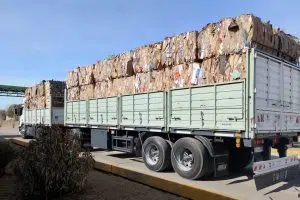
At the recycling plant “La Metropolitana,” located in Donovan, San Luis, over 34 tons of recyclable materials have been returned to the industrial circuit. This achievement, driven by the efforts of its workers, ensures that cardboard, blown plastic, and clear PET are once again converted into raw materials for the manufacturing of new products.
In recent weeks, the plant completed two significant sales of recovered material: 24,500 kilograms of cardboard, 5,900 kilograms of blown plastic in different shades, and 4,000 kilograms of clear PET. This activity is part of an environmental plan that aims to reduce the amount of waste ending up in open dumps.
The recovery strategy aligns with the UN’s environmental motto for 2025: “Beat Plastic Pollution.” This approach not only prevents waste accumulation but also promotes resource reuse and the circular economy, reducing the dependency on virgin raw materials.
The work at the plant is constant. Every day, the workers receive, separate, and classify solid waste on a specialized conveyor belt. Each worker is responsible for a specific type of material, such as cardboard, glass, polypropylene, aluminum, tetra pack, and PET.
The step-by-step of waste recovery
The process of recovering recyclable materials begins with the arrival of waste at the plant, where it is unloaded and placed on a conveyor belt. At this point, the staff identifies and separates usable materials, assigning them to specific areas according to their type and quality.
Subsequently, the materials go through a cleaning and conditioning stage. In the case of cardboard, it is checked to be dry and free of contaminants; clear PET is cleaned to remove labels and liquid residues, while blown plastic is sorted by color to maintain its commercial value.
Once classified, the materials are compacted into bales to facilitate storage and transportation. These bales are sold to industries that will use them as inputs, thus avoiding the extraction of new resources and reducing emissions associated with their production.
This cycle closes with the reintegration of materials into the market, where they are transformed into new packaging, plastic furniture, household products, and other consumer goods. The cycle repeats, generating a positive impact on both the environment and the local economy.

The environmental importance of recycling
Recovering waste is not just a matter of urban cleanliness but a cornerstone for sustainability. Every ton of recycled cardboard avoids the felling of dozens of trees, while plastic recycling reduces pollution in rivers and soils, where these materials can take centuries to degrade.
Furthermore, this process reduces greenhouse gas emissions by decreasing the need to produce new plastics and papers. It also contributes to biodiversity conservation, preventing wildlife from ingesting or getting entangled in waste.
Waste recovery promotes a circular economy that generates employment, drives innovation in product design, and encourages more responsible consumption. At the same time, it strengthens environmental awareness in the community, which plays a key role in separating waste at home.
Initiatives like that of “La Metropolitana” demonstrate that recycling is a powerful tool to build a pollution-free future. Each container, box, or bottle that is recovered ceases to be a problem and becomes an opportunity.



