



A toxic algal bloom in Australia caused the death of more than one million marine animals.
The outbreak began in March 2025 and is still active. According to a new study, it has already affected more than 550 species.
This even caused respiratory problems in the human population, according to the analysis that reveals the harmful extent of the phenomenon.
In particular, researchers identified the toxic algae Karenia cristata as the cause of this unprecedented environmental crisis in Australia.
This species of algae, until now considered insignificant, produces brevetoxins in significant quantities.
These are toxic compounds that harm both marine fauna and human health.
“For the first time, the rare and little-known K. cristata produces significant amounts of brevetoxins,” the scientists noted in the study published on the platform bioRxiv, which is still awaiting peer review.
The international team warned that “these findings reveal a new emerging international threat“.
They also warned that it may imply “unknown consequences in changing oceanic conditions“.

An exceptional event for its magnitude and duration
The harmful algal bloom recorded in South Australia extends over more than 20,000 square kilometers, lasting almost 10 months.
This episode ranks among the most extensive and damaging documented internationally.
According to the consortium of experts, “during 2025 an event of unprecedented marine mortality, currently ongoing, occurred in South Australia”.
Its impacts range from biodiversity to public health.
The harmful algal blooms (HABs) are a global challenge, however, most of these events tend to be brief and affect limited areas.
Therefore, the uniqueness of the Australian case lies in its temporal and spatial extent.
A change in scientific knowledge
Traditionally, Karenia brevis was the only species recognized for generating large amounts of brevetoxins, mainly in the United States.
The dominant presence of K. cristata in South Australia and its ability to produce these toxins marks a significant change in scientific knowledge.
The difficulty in identifying the exact cause of the event is due to the fact that several species of the genus Karenia can coexist and produce different toxins.
This complexity delayed the precise identification of the responsible species, the study explains.
The team collected water samples between March and September at 39 sites along the coast of South Australia, including areas near the city of Adelaide.
Then, advanced genetic sequencing techniques were applied to identify the species present.
The results showed that K. cristata dominated most of the samples.
In some areas, concentrations reached up to 15 million cells per liter.
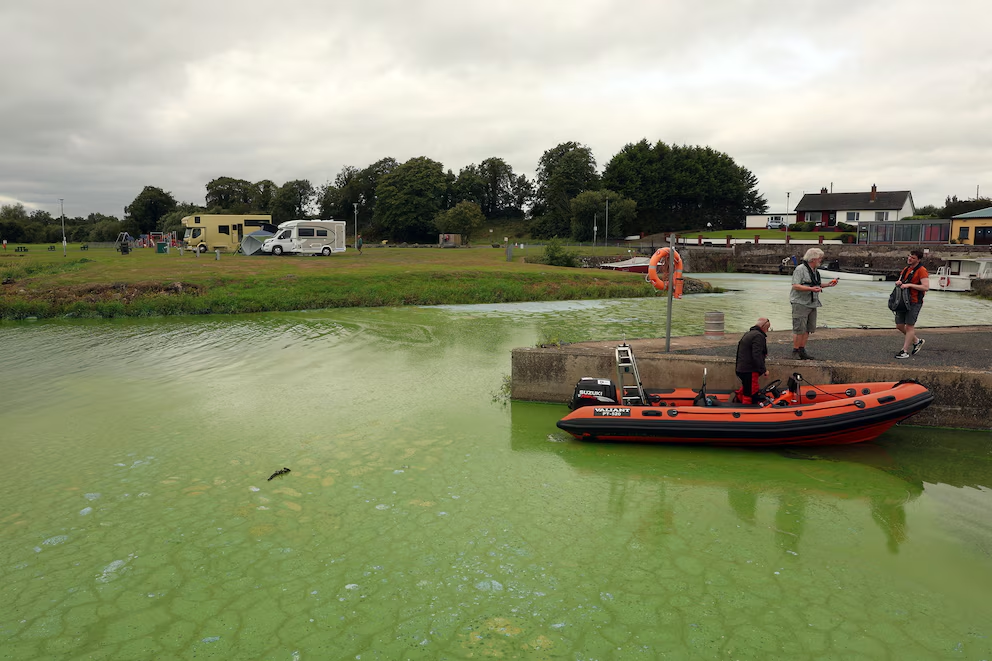
After discovering this, the researchers isolated the species in culture and analyzed its morphology through optical and electron microscopy.
In the analysis, the cells of this species are described as fragile, fast-moving and with distinctive characteristics in their cellular structure.
In addition to this analysis, toxicity tests were conducted on gill cells of rainbow trout, to understand the impact on fauna.
These showed a significant decrease in the viability of the cells to survive as the concentration of algae increased.
Australia: the massive impact of toxic algae on biodiversity and human health
The toxic algal bloom in Australia caused the death of more than one million marine animals from at least 550 different species.
The environmental analysis included monitoring chlorophyll through satellite sensors, which detected an unusual increase in phytoplankton biomass during the study period.
Respiratory symptoms have been reported in the human population, especially in the city of Adelaide.
This impact on public health adds a worrying dimension to the ongoing environmental crisis.
Two government investigations are currently underway to assess the causes and consequences of the event.
Scientists are seeking to understand the factors that trigger and sustain these blooms.
The identification of this new emerging threat has global implications.
Climate change and oceanic alterations could favor the proliferation of harmful algae species previously considered insignificant.


