



Climate change is advancing at an increasingly rapid pace, causing meteorological phenomena to become more extreme. An example of this would be the atmospheric rivers in Antarctica, which could double by the year 2100, leading to a possible rise in sea level.
According to a study published in the scientific journal Nature Communications, these events would be a consequence of the increase in atmospheric humidity caused by climate change, which would lead to a drastic increase in the frequency and intensity of this phenomenon.
It is worth noting that this climatic factor that falls on Antarctica consists of long and narrow columns of warm and humid air that can travel thousands of kilometers and even produce intense precipitation. In this way, they function as heat and moisture conveyor belts towards the poles.
In this sense, the report reveals that by the end of the century, this phenomenon could double and thus multiply atmospheric precipitations, creating a scenario of high emissions that could be difficult to stop.
 The climatic phenomenon plays an important role in the dynamics of Antarctic ice.
Snow, an ally against atmospheric rivers
Despite the worrying outlook for the future of Antarctica, snowfall could help mitigate the effects of this phenomenon, which are not exclusive to polar regions, although they are important in the climatic dynamics of the region.
Currently, the Antarctic ice sheet contains enough water surface to increase the global sea level by about 60 meters. This means that the slightest change in ice dynamics can have huge effects.
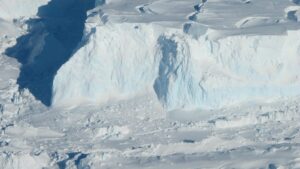
Antarctica is melting: a global alarm
The melting in Antarctica is progressing at a worrying pace, driven by the rise in global temperatures. The ice sheets covering the continent are losing mass at an accelerated rate, directly contributing to sea level rise and affecting the planet’s climate balance.
This phenomenon not only threatens species that depend on ice, such as emperor penguins, but also alters ocean currents that regulate global climate. When it melts, freshwater ice alters the ocean’s salinity, which can lead to changes in extreme weather patterns.
Recent studies have confirmed that parts of West Antarctica are at risk of irreversible disintegration. If warming continues, ice retreat could be so severe that it triggers massive loss of coastal glaciers.
Faced with this emergency, the international scientific community insists on the urgent need to drastically reduce greenhouse gas emissions. Antarctic melting is no longer a distant event: it is a clear sign that time is running out to act.



