



Technological advances have shown that they can be allies towards energy transition. An example is wind turbines made with Artificial Intelligence (AI).
Global energy companies are already using them, along with drones and robots, to transform the maintenance of wind turbines. This allows for faster, more precise inspections with less operational impact.
Wind turbines with Artificial Intelligence: how they work
Recently in the United Kingdom, they created a roof wind turbine made with artificial intelligence.
Equipped with drones with high-resolution cameras, the wind turbine blades are visually captured in a few minutes (approximately 10 minutes per blade).
An AI software analyzes hundreds of images looking for cracks, wear, or anomalies invisible to the human eye.
Simultaneously, robots access the interior of the blades to check for structural damage, providing a comprehensive view of the equipment’s condition.
 The future of wind energy.
A web platform for predictive maintenance
The processed data is loaded into an intuitive web interface where:
-
Type and severity of damage
-
Recommendations for immediate repair or periodic follow-up
-
Filters to analyze the entire fleet of wind turbines
This automation reduces labor costs, optimizes spare parts sales, and shortens downtime. All key points to reduce energy loss and operational costs.
The economic and energy impact
A single blade takes up to 12 months to replace if it’s not in production line, causing significant energy and money losses.
The investment in AI is lower than the costs associated with repairs, duplicate stock, and unexpected shutdowns. Especially when insurers cover most of the damage.
The integration of drones, robots, and AI in the maintenance of wind farms sets a new standard towards more efficient and sustainable renewable energy.
These technologies enable predictive operations, fewer downtimes, longer asset life, reducing costs and increasing production. Furthermore, their global scale entry paves the way for an intelligent and responsible energy transition.
Other international projects and global reach
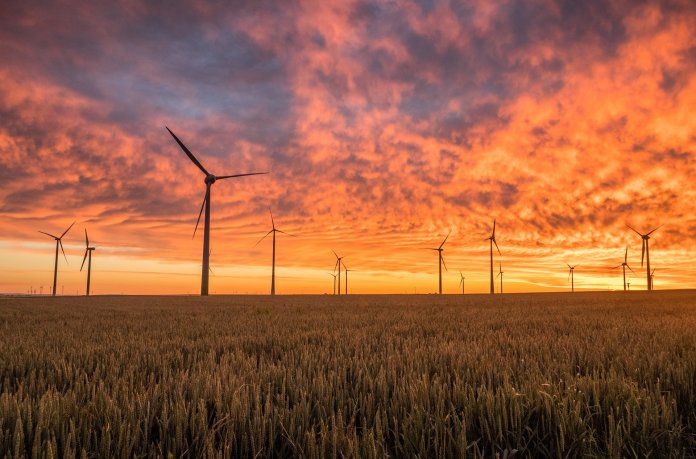 The path to energy transition led by AI.
-
Iberdrola/Neoenergia (Brazil): pilot with 230 wind turbines, AI, and drones from 2023, with expansion plans after validating efficiency and reliability.
-
Siemens Gamesa: uses Azure AI to process 400 images per rotor in 20 min and reconstruct accurate models in 30 seconds, integrating big data for predictive maintenance.
-
EPFL–Glasgow (laboratory): AI + radar to detect internal defects before assembly, even below the surface, improving blade manufacturing standards.

