



The leading company in the cement and supplies industry, Holcim Argentina, has launched an innovation in sustainable construction materials.
Through its brand Quimexur, it presented Imper Solaris, a high-performance liquid thermal and waterproof membrane that reduces energy consumption in constructions of all types.
This is a development that integrates sustainable technology with scientific support and provides a concrete solution to climate change.
Energy-saving liquid membrane: the new commitment to sustainable construction
As detailed by the company, what sets Imper Solaris apart from other products on the market is its dual capacity to waterproof and reflect solar heat.
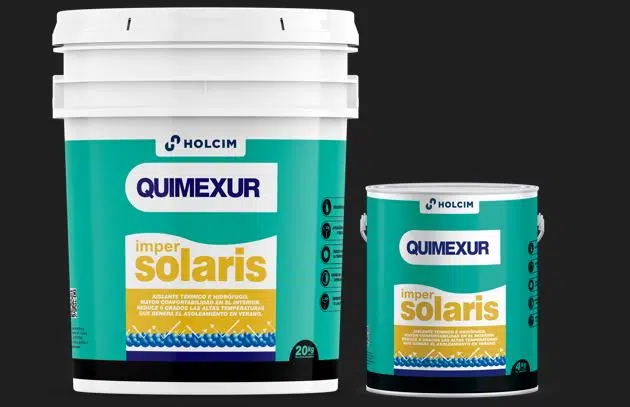 The new liquid membrane. (Photo: Holcim Argentina).
This is thanks to an exclusive formula with expandable thermoplastic microspheres that act as insulators, reducing thermal transfer to the interior of spaces.
This innovation allows to lower the interior temperature by 6 to 7 degrees, resulting in reduced use of air conditioning and significant energy savings.
In addition, Imper Solaris achieves a solar reflectance index exceeding 100%, positioning it within the international standard “Cool Roofs”, associated with roofs that reflect solar radiation and reduce urban heat.
Its 100% acrylic formulation is free of heavy solvents, it has high durability, resistance to UV rays, fungi, and algae, and maintains its whiteness without leaving sticky residues.
Tested by CONICET
An important point to highlight is that the product’s effectiveness has been validated by scientific studies from CONICET (Mendoza headquarters), confirming its thermal and waterproof performance in real and laboratory conditions.
This endorsement makes Imper Solaris one of the few solutions on the market with national scientific support.
How to apply and where the membrane is used
Easy to apply (with a brush, roller, or torch) and guaranteed performance for up to 12 years, Imper Solaris is suitable for a wide variety of surfaces.
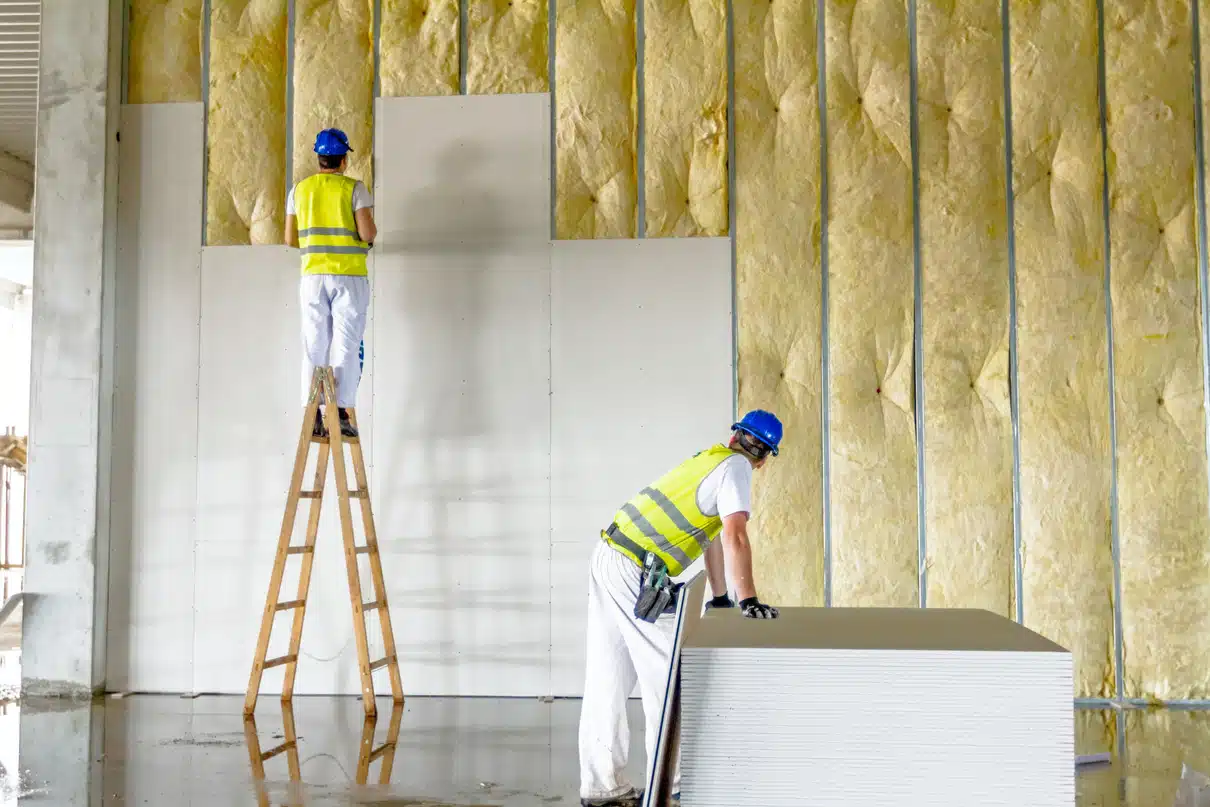 Advances in sustainable construction in Argentina.
It can be applied on roofs, terraces, balconies, exterior walls, industrial warehouses, rural properties, and more.
It can be found throughout the country through Disensa stores, the largest construction materials network in Latin America, with over 500 points of sale in Argentina.
What is sustainable construction
Also known as sustainable building, it refers to a specific design and construction approach. It aims to minimize the environmental impact of buildings and promote the well-being of their occupants.
It is a process that involves the rationalization of natural resource use, the implementation of innovative technologies and materials, and the efficient waste management, all with the goal of creating healthier and more efficient spaces.


