



Google announced a historic agreement to secure up to 3 gigawatts of hydroelectric power in the United States, marking the largest corporate commitment to this renewable source. The partnership was signed with Brookfield Asset Management and includes 20-year contracts valued at 3 billion dollars.
The supply will come from two hydroelectric plants in Pennsylvania, whose modernization and relicensing are included in the agreement. This step reinforces Google’s strategy to ensure the supply of clean energy in the regions where their data centers operate.
This commitment adds to other recent initiatives by the company in the acquisition of carbon-free energies, such as geothermal and advanced nuclear sources. The company also works with electric operators to optimize the integration of renewables through artificial intelligence.
The news was presented at an artificial intelligence summit in Pittsburgh, an event that also announced multimillion-dollar investments in AI and energy at the national level.
 Google bets on clean energy.
The keys to an energy transition in companies
The path to clean energy involves several strategies that companies can adopt to reduce their environmental footprint. One of the main strategies is the signing of long-term agreements for the purchase of renewable energy, as Google did, providing financial predictability and fostering the development of sustainable projects.
Another way is through direct investment in the generation of clean energy. This includes the installation of solar panels or wind systems in their own facilities, which can complement the purchase of external energy and reduce operating costs.
Companies can also participate in partnerships with grid operators and governments to promote policies that favor the integration of renewables. In addition, technological innovation —such as artificial intelligence to optimize power grids— is key to making energy consumption more efficient.
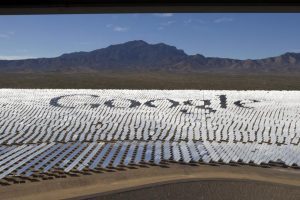
Clean energy and responsible business
Google’s case reflects a business model that focuses on sustainability as a strategic axis. It not only seeks to supply its operations with carbon-free energy, but also to lead a structural change in the global energy matrix.
The energy transition in companies not only responds to environmental needs, but also offers competitive advantages, such as reducing regulatory risks and improving corporate image.
The business commitment to clean energies becomes essential in a context where climate change demands concrete actions. Integrating these principles into business management is no longer just an option, but a shared responsibility.



