



The future of capybaras in Nordelta is once again in the spotlight. Following a meeting between the Secretary of Tourism, Environment, and Sports of the Nation and representatives of the Nordelta Neighborhood Association (AVN), it was decided to move forward with a relocation plan to an island in the Paraná Delta.
The pilot program, scheduled for the end of August, will involve the relocation of three capybara families, around 70 individuals, to a 60-hectare reserve. The costs of the operation will be covered by the AVN, which justified the measure by pointing out that 43 specimens were run over and killed in the first half of 2025.
Additionally, the implementation of a population control program using contraceptive vaccines was announced, which will be administered with darts and managed with authorization from SENASA. This less invasive alternative to capture aims to mitigate uncontrolled reproduction.
However, environmental and animal rights organizations expressed their rejection of the vaccination and relocation, warning about their possible consequences. The decision once again highlights the tension between urban development and wildlife conservation.
 Capybaras in Nordelta.
The impact of real estate development on wetlands
Capybaras are native inhabitants of the Delta wetlands and their presence in gated communities like Nordelta is a direct consequence of the transformation of their environment. The expansion of real estate ventures on natural territories has led to a drastic reduction of their habitats.
Environmental management experts argue that relocating the animals does not solve the underlying problem. As their space diminishes, capybaras tend to move in search of food or shelter, creating new conflicts in other areas.
The creation of biological corridors, reserve areas, and coexistence strategies are the alternatives recommended by specialists to prevent species from being trapped between urban developments. Isolated measures, such as capture or relocation, do not address the root of the ecological conflict.
Capybaras in the Paraná Delta
The Paraná Delta is one of the most important wetlands in South America and the natural home of the capybara. This ecosystem, spanning thousands of hectares in Buenos Aires, Entre Ríos, and Santa Fe, is increasingly threatened by urbanization, fires, and infrastructure works.
Capybaras play a key role in the wetland dynamics: they disperse seeds, promote vegetation, and serve as natural prey for other species. Their presence regulates the ecological balance, and their decrease or displacement can affect the entire food chain.
What happens in Nordelta is not an isolated incident. It is estimated that around 3,000 capybaras inhabit the Buenos Aires conurbation region, in areas that were once wetlands and now coexist with the expansion of private neighborhoods. Protecting their habitat and ensuring their survival is an urgent environmental responsibility.
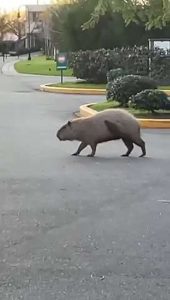 Capybara in Nordelta.
Coexistence or displacement: the real challenge
The official relocation and reproductive control plan aims to reduce conflicts, but opens up the discussion on how to manage the interaction between wildlife and urban growth.
The capybara, a peaceful animal with no aggressive behavior towards humans, symbolizes the impact of human activities on biodiversity. Instead of measures that simply move the problem elsewhere, experts insist on seeking comprehensive coexistence strategies.
The challenge lies in designing a model that considers environmental protection, respect for wildlife, and the responsibility of developments for their impacts. Because the real conflict is not the presence of capybaras, but the uncontrolled transformation of their ecosystems.



