



Cada 5 de junio, el Día Mundial del Ambiente invita a reflexionar sobre los desafíos ambientales y a promover acciones concretas. En este marco, las empresas se consolidan como actores clave, no solo por el impacto de sus operaciones, sino también por su capacidad de impulsar cambios de hábitos entre sus colaboradores.
El ecocanje se presenta como una herramienta estratégica para fomentar la economía circular dentro de los espacios de trabajo, transformando residuos en recursos y generando conciencia ambiental.
From Waste to Resource
An ecocanje consists of exchanging recoverable materials for products or benefits. Its main value lies in highlighting the potential of waste when it is correctly separated and reincorporated into productive processes.
Highlighted example: used vegetable oil. A single liter can contaminate up to 1,000 liters of water if improperly disposed of. However, when recovered, it can become a raw material for biofuels and other circular processes.
Grupo DH Case
The Grupo DH carried out the fourth edition of its internal ecocanje, aimed at employees of its five companies: DH-SH, Ecoser, Protegra, Santa Fe Aceites, and SF Fertilizantes.
- First edition (2023): 113 liters collected.
- Last edition: 178 liters, an increase of over 50%.
- Accumulated over four years: more than 551 liters recovered.
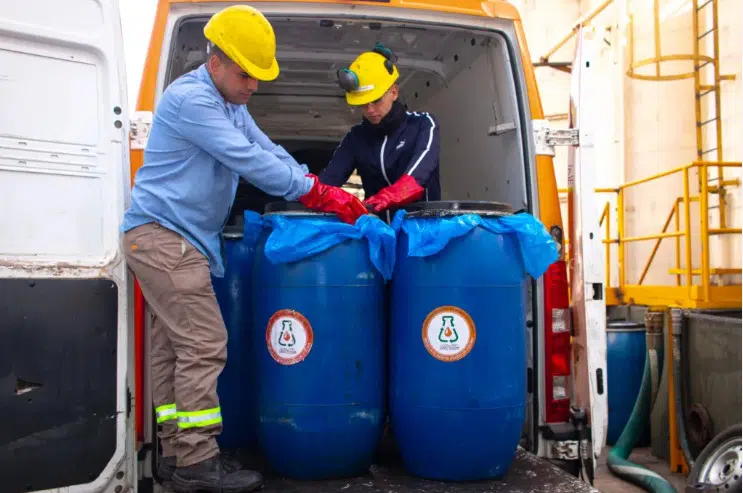
The collected oil is reconditioned at the Capitán Bermúdez plant to transform it into second-generation biofuel.
Active Participation
The dynamic is simple: for each liter delivered, participants receive gifts related to environmental care, such as:
- Plants from local nurseries.
- Stone paper agendas.
- Dietary products and bags of fruits and vegetables.
- Stickers and recycled objects.
Beyond the incentive, the true value lies in the awareness generated. Many employees involved family and neighbors, expanding the initiative’s reach and multiplying good environmental practices.
Voices of the Initiative
- Antonella Druetta, Sustainability Manager at DH-SH: “The most important thing about the ecocanje is not the amount of liters recovered, but the possibility of raising awareness. When we manage to turn a simple action into a habit, the impact transcends the workplace”.
- Sebastián Soso, Communications Manager at DH-SH: “These types of actions allow us to bring sustainability into people’s daily lives. The proposal generates conversations and behavior changes that go beyond the company”.
Cultural and Environmental Impact
The ecocanje strengthens an organizational culture aligned with the circular economy and demonstrates that cultural changes can begin with simple but significant actions.
Benefits:
- Promotes responsible waste management.
- Encourages active participation of employees.
- Generates positive impact inside and outside the workplace.
- Contributes to building healthier and more sustainable environments.
The ecocanje in workspaces is a practice that transcends the exchange of waste for benefits.
It represents a model of participation and environmental awareness, capable of transforming everyday habits and consolidating sustainability as part of work and community life.



