



The Paraná Federal Oral Court, composed of Judge Noemí Berros, issued an unprecedented sentence on this July 28, applying effective prison sentences against three men accused of intentionally causing a fire that devastated 6,000 hectares of wetlands. It happened in the Islas de las Lechiguanas area, within the Paraná Delta, jurisdiction of the Gualeguay department (Entre Ríos).
The convicted individuals, Oscar Alberto Magallanes, Jesús Alberto Magallanes, and Miguel Ramón Morales, from San Pedro (Buenos Aires), must serve sentences of 3 years and 6 months, and 3 years and 2 months, respectively.
The case is in the process of becoming final, as the grounds will be published on August 5, and can only be appealed through a judicial review within ten days.
The fire reached Rosario and Buenos Aires: regional and judicial impact
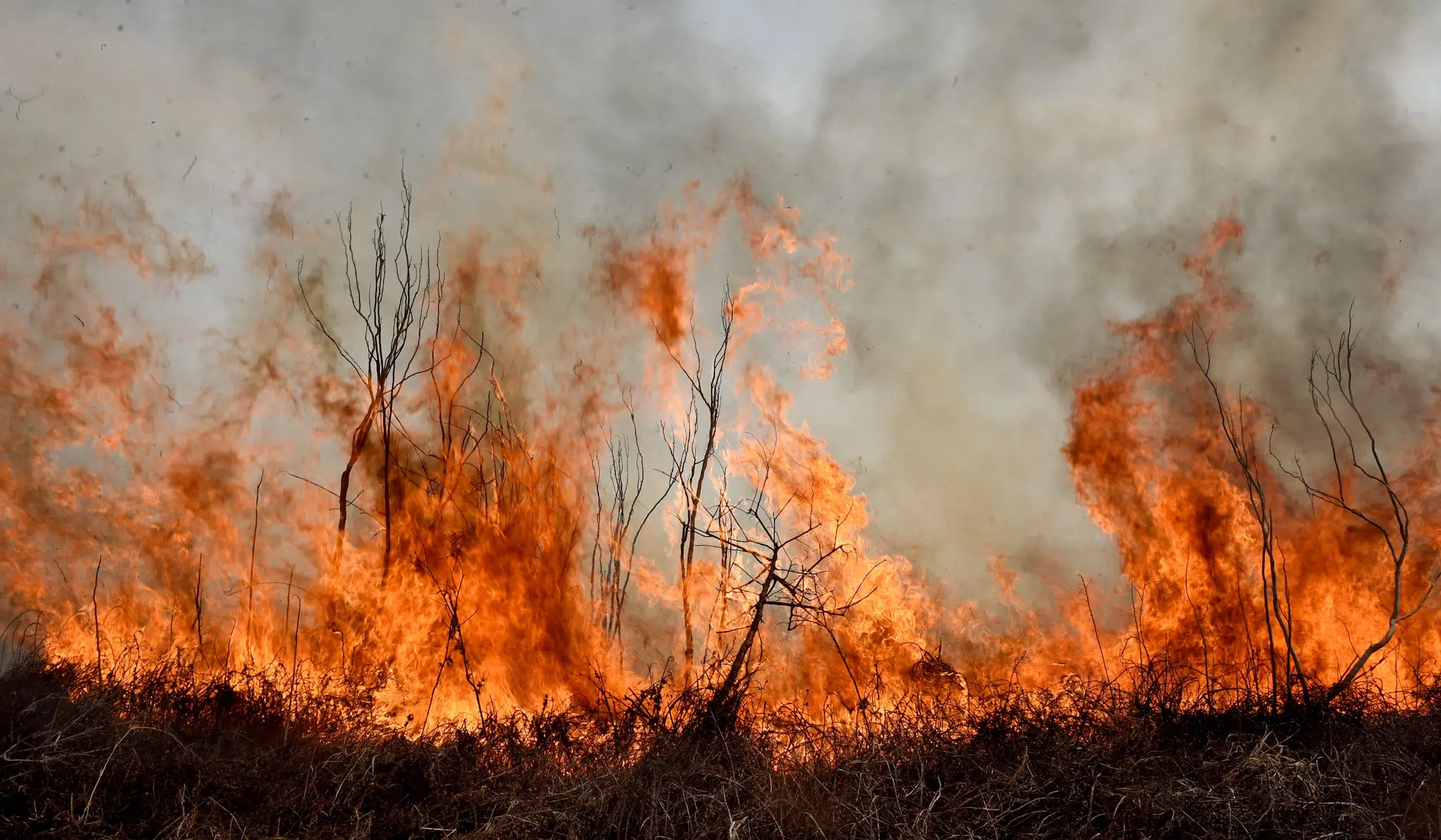
The fire occurred on August 23, 2023 in an area where the convicts had beehives installed. Due to the wind, the fire spread rapidly, devastating the wetland’s flora and fauna, and ashes reached Rosario and Buenos Aires.
The criminal charge applied was intentional environmental damage, given the magnitude of the environmental damage and the potential health risk.
During the trial, the Federal General Prosecutor’s Office, represented by José Ignacio Candioti, supported the case with technical documentation, expert opinions, and reports, demonstrating the intentional nature and consequences of the fire. “The characteristics of the damage required a public trial,” stated the prosecutor.
A legal precedent against wetlands fires
This ruling sets a legal precedent in Entre Ríos, as it is the first time that a crime of this nature in the federal system is penalized with effective imprisonment. The only similar precedent was a case of environmental contamination in Diamante, where in December 2020 a 3-year suspended sentence, plus fines and community service were imposed, later confirmed by the Federal Chamber of Criminal Cassation.
In this new case, the court had already rejected the request for a trial suspension made by the defense, arguing that the events involved a high level of environmental severity and required exemplary punishment.
Testimonies, reports, and public expectations
During the judicial debate, 15 key testimonies were presented, including that of environmental lawyer Matías De Bueno (Environmental Observatory UNR), and physician Damián Verzeñassi, a reference from the Institute of Socio-Environmental Health at the Faculty of Medical Sciences of UNR. Both exposed the damages to soil, flora, fauna, and human health, supporting the magnitude of the disaster with scientific evidence.
Prosecutor Candioti emphasized that these types of convictions can set a precedent to deter future intentional fires in areas of high ecological value. The sentence aims to prevent impunity in cases of environmental crimes, which often do not reach trial.
Effective imprisonment and next procedural steps
Now, the formal publication of the judicial grounds is expected, which would lead to the execution of the sentence if there is no appeal. Since the requirements for house arrest are not met, the three men must serve the sentence in regular prison facilities.


