



Since the ’90s, Carlos Ameglio has been working on sustainable energy solutions. In his town of General Galarza, Entre Ríos, he was a pioneer in the development of biofuels when the term was still unknown to most.
With a constant focus on the future, he promotes a new paradigm based on biomass, circular economy, and the transformation of forest waste into clean and accessible energy.
His work has ranged from biodiesel plants to furnaces and burners adapted to use renewable sources. Now, he aims to replace biodiesel with HVO and enhance the use of forest byproducts such as pellets and briquettes.
For Ameglio, the change is urgent and possible. That’s why he promotes the use of materials available in the natural environment to generate cleaner, less expensive, and environmentally friendly energy.
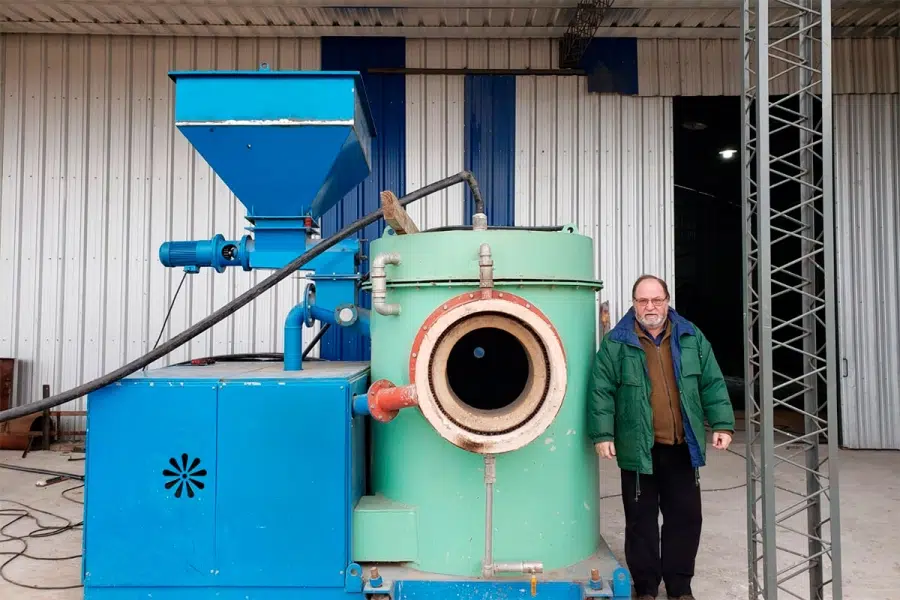
Pellets and Briquettes: Waste that Generates Heat
Since 2014, Ameglio has been working with waste from the forest industry in Entre Ríos, Corrientes, and Misiones. He uses these materials to produce wood pellets, which are compacted cylinders with high calorific value.
These pellets are easy to store, do not produce ashes, and work in stoves, furnaces, and boilers. They are obtained from planted forests, making them renewable and with low environmental impact.
Briquettes, on the other hand, are made from sawdust and wood shavings. Their compact shape gives them greater durability and energy power. They are ideal for indoor use, produce little smoke, and burn uniformly.
Ameglio also develops adapted equipment and affordable solutions so that more households can take advantage of these solid biofuels.
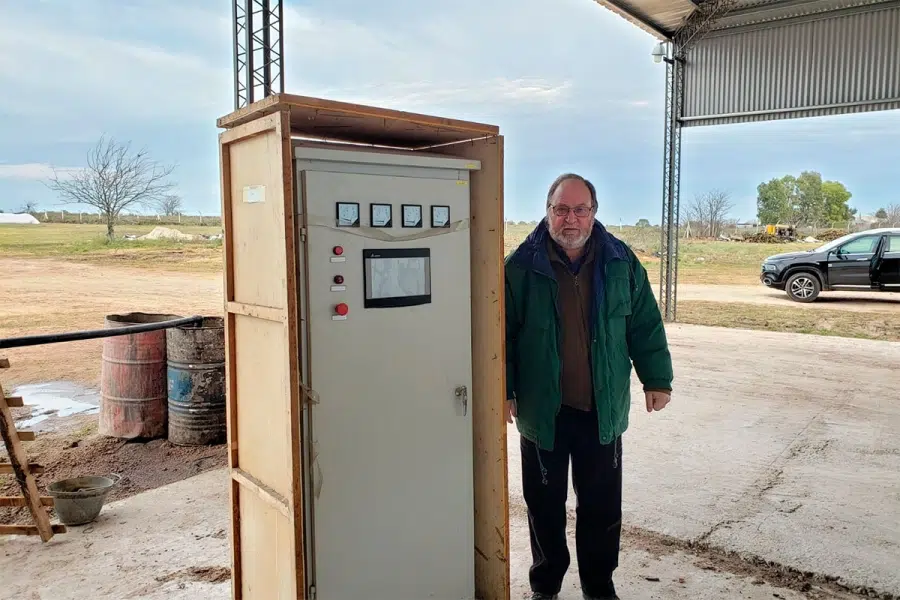
Types of Biofuels in Argentina
Different types of biofuels are produced in the country. The most well-known is biodiesel, mainly produced from soybean oil. It is used as a blend with conventional diesel.
Another one in development is bioethanol, generated from sugarcane or corn. It is used as an additive to gasoline. Both reduce emissions and allow for diversification of the energy matrix.
More recently, research is being conducted on HVO (hydro-treated vegetable oil), which allows for cleaner combustion and can replace diesel without modifying engines. Initiatives that make use of forest, agricultural, and plastic waste to generate solid or liquid energy are also growing.
Investing in these sources is key to achieving a fair, local, and sustainable energy transition, capable of revaluing resources and protecting the environment.

