



The province of **Santa Fe** is advancing in its strategy to move away from the traditional model of **linear economy**, based on producing, consuming, and discarding, and to consolidate an approach of [**circular economy**](https://noticiasambientales.com/compromiso-ambiental/san-luis-envia-14-toneladas-de-neumaticos-fuera-de-uso-para-coprocesamiento-avance-clave-en-economia-circular/), where urban waste is transformed into useful resources to reduce environmental impact and improve the efficiency of the production system.
In this context, the provincial government will provide **specific equipment** to **14 municipalities and communes** to promote **source separation** and the use of [**recyclable and organic materials**](https://noticiasambientales.com/bienestar/como-hacer-compost-en-casa-guia-practica-para-fabricar-abono-natural-ideal-balcones-pequenos-y-espacios-reducidos/), thus strengthening local management and citizen awareness.
## The potential of waste in Santa Fe households
Currently, a large part of **Santa Fe families** still do not practice **separation of waste at the source**. However, studies show that about **50% of urban solid waste** is **compostable**, and an additional **25% can be recycled**, meaning that **three out of every four waste items can be reintegrated into the production system**.
Therefore, the **Ministry of Environment and Climate Change** promotes an **active call to citizenship** to incorporate **separation habits into daily life**, with concrete practices such as **composting organics** and **sorting recyclables**, which directly contribute to **reducing pollution and protecting the natural environment**.
## New tools for municipalities and communes
The government will provide **differentiated bins** for material classification and **composters** for the treatment of organic waste at the source. These tools will allow to replace **final disposal without sorting**, which usually leads to **open-air dumps** and **landfill collapses**, with **material recovery processes** aligned with the principles of the **circular economy**.
The benefiting localities are:
– **Castellanos Department**: San Vicente, San Antonio, Presidente Roca
– **Las Colonias**: Grütly
– **San Martín**: San Jorge
– **La Capital**: Monte Vera, Rincón
– **General López**: Carreras, Melincué
– **Constitución**: Juan B. Molina, Sargento Cabral, Cañada Rica
– **Vera**: Margarita
– **9 de Julio**: Logroño
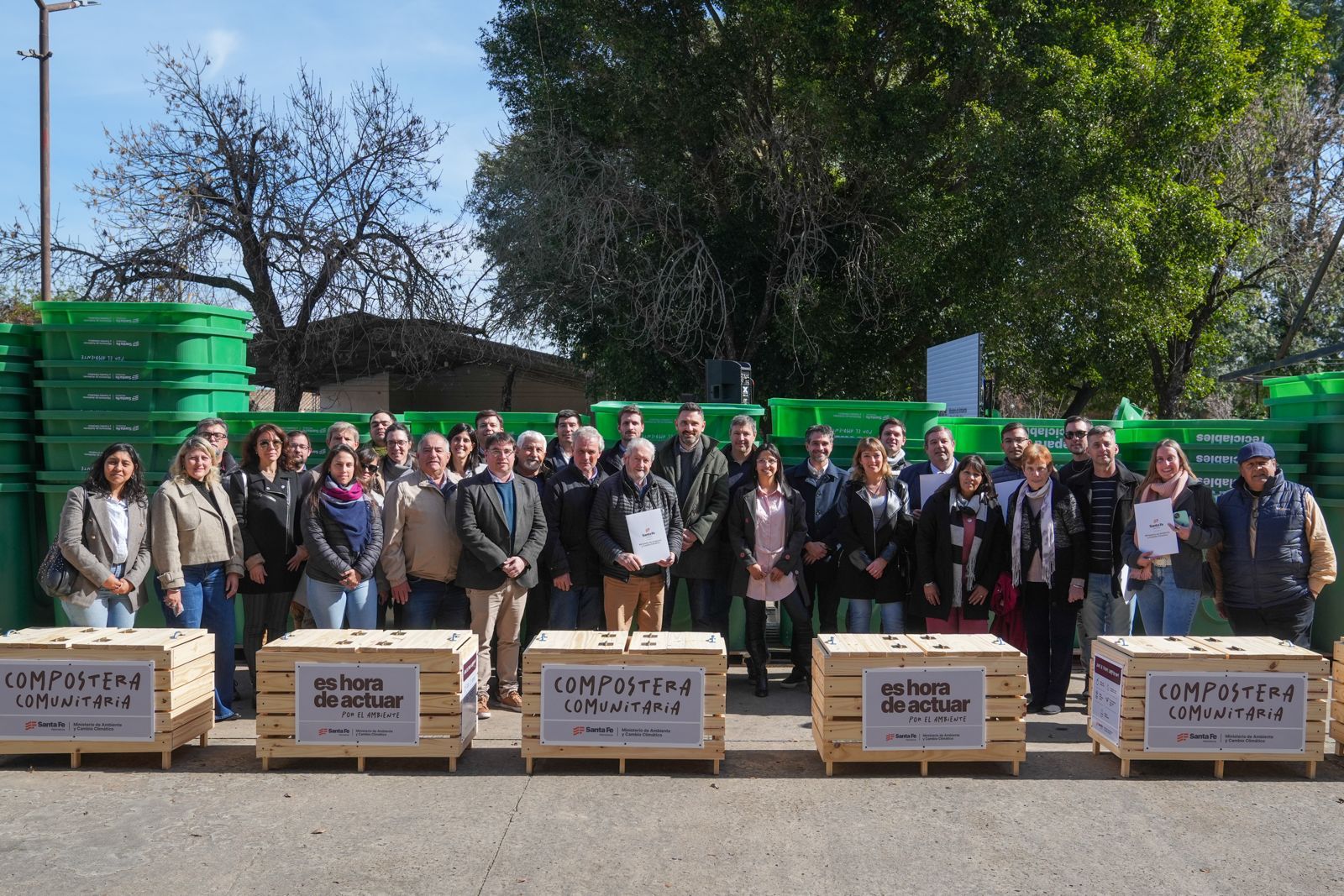
*New policies for urban waste treatment in Santa Fe*
## Santa Fe bets on the regionalization of urban waste management
The provincial strategy includes the formation of **Regional Girsu Consortiums (Integrated Urban Solid Waste Management)**, with technical assistance and financing for local governments. So far, **eight regions** have been established, and **more than 2.500 million pesos** have been invested in **infrastructure, equipment, and institutional strengthening**.
According to official data, in the last **18 months**, about **250 thousand people** started to dispose of their waste in **authorized landfills**, increasing the **safe population coverage to 70%**, compared to the 62% recorded at the beginning of the management.
## Complementary actions: phytosanitary, education, and citizen workshops
In collaboration with the civil association **Campo Limpio**, **over 400,000 kilograms of empty containers of phytosanitary products** were recovered, collected, and sent to **authorized treatment centers**. Three **transitory storage centers** have already been inaugurated, and two more are planned to be opened in **2025** to **strengthen environmental traceability** in the agricultural sector.
Educational and community actions were also promoted, distributing **educational materials** for various school levels and conducting over **100 workshops** aimed at promoting **home composting**, **separation of recyclables**, and **raising awareness of responsible waste management**.



