



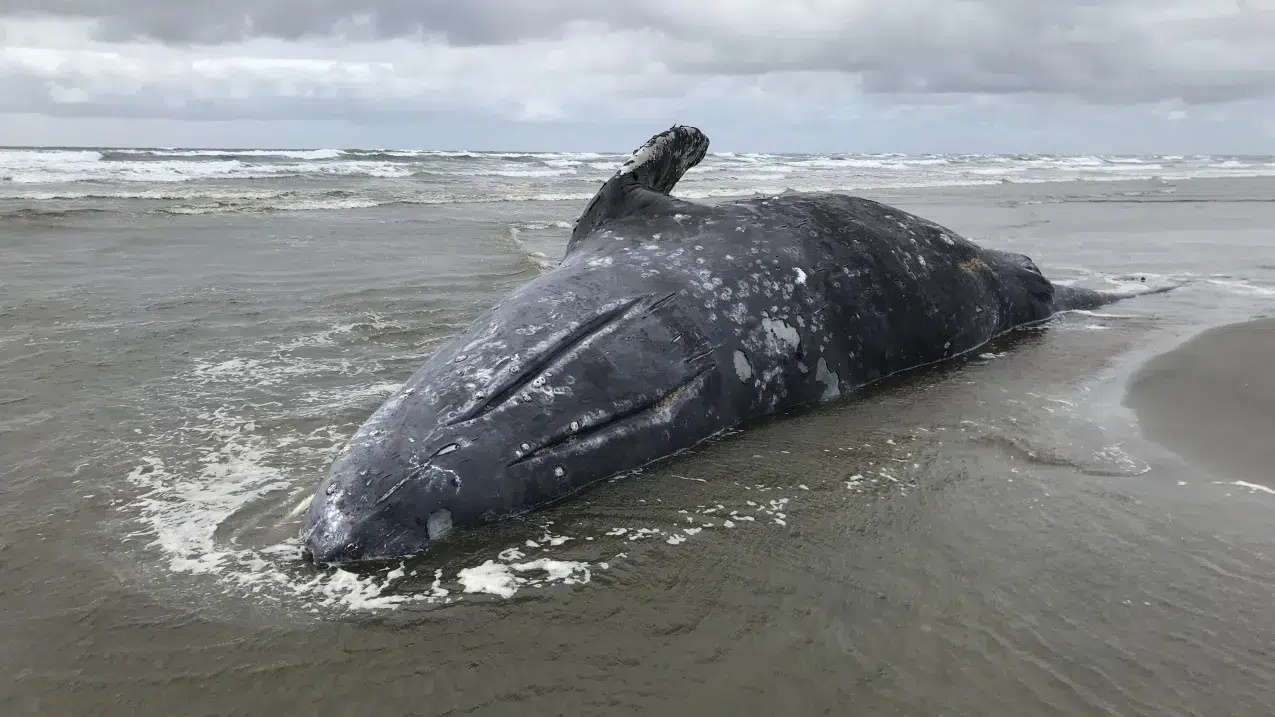
The environmental organization PEER (Public Employees for Environmental Responsibility) warned that the Pacific gray whales are facing a “catastrophic mortality event.” As of July 6 this year, 145 strandings deaths have been reported, a figure that already surpasses the annual totals recorded in the last three years.
The specimens found show signs of emaciation and hunger, which reinforces the hypothesis that the loss of sea ice and the reduction of food are behind this crisis.
Possible Causes
PEER identifies multiple factors that could explain the phenomenon:
- Loss of sea ice: reduces food availability.
- Collisions with vessels.
- Oil spills and microplastic pollution.
- Proliferation of harmful algae.
- Fishing activities in Russia.
The combination of these threats has reduced the Pacific gray whale population from about 20,000 individuals in 2019 to less than 13,000 today.
Scientific Voices
- Rick Steiner, marine ecologist from Alaska and president of PEER: “The whales are emaciated, and the scientific consensus is that they are starving.”
- David Weller, NOAA biologist: “The environment is changing at a pace that challenges the population’s ability to recover.”
Conservation Background
The gray whale (Eschrichtius robustus) was on the brink of extinction in the 1970s. In 1994, it was removed from the protected species list after conservation efforts, but Steiner called that decision a “huge mistake.”
Today, several environmental groups are urging the NOAA to re-list it as an endangered species.
Ecological and Economic Importance
Gray whales play vital roles in the ocean:
- Ecosystem engineers: by stirring up the sea mud, they release nutrients that feed fish and plants.
- Marine fertilizer: their waste nourishes phytoplankton, which produces a large portion of the oxygen we breathe.
- Expert travelers: they travel up to 18,000 km a year from the Arctic to Mexico.
- Ocean sentinels: their health reflects the state of the marine ecosystem.
- Economic engine: they attract observation tourism in places like the El Vizcaíno Biosphere Reserve (Mexico).
The “catastrophic mortality event” of the gray whales is a warning sign about the impact of climate change and human pressure on the oceans.
The drastic reduction in their population demands urgent conservation measures and a rethinking of environmental policies to prevent this species from being on the brink of extinction again.



