



The **Amazon** rainforest, considered the **green lung of the planet**, could be on the verge of an [irreversible transformation](https://noticiasambientales.com/medio-ambiente/una-nueva-ley-podria-aumentar-la-deforestacion-en-la-amazonia-brasilena-y-hay-alerta-a-nivel-mundial/).
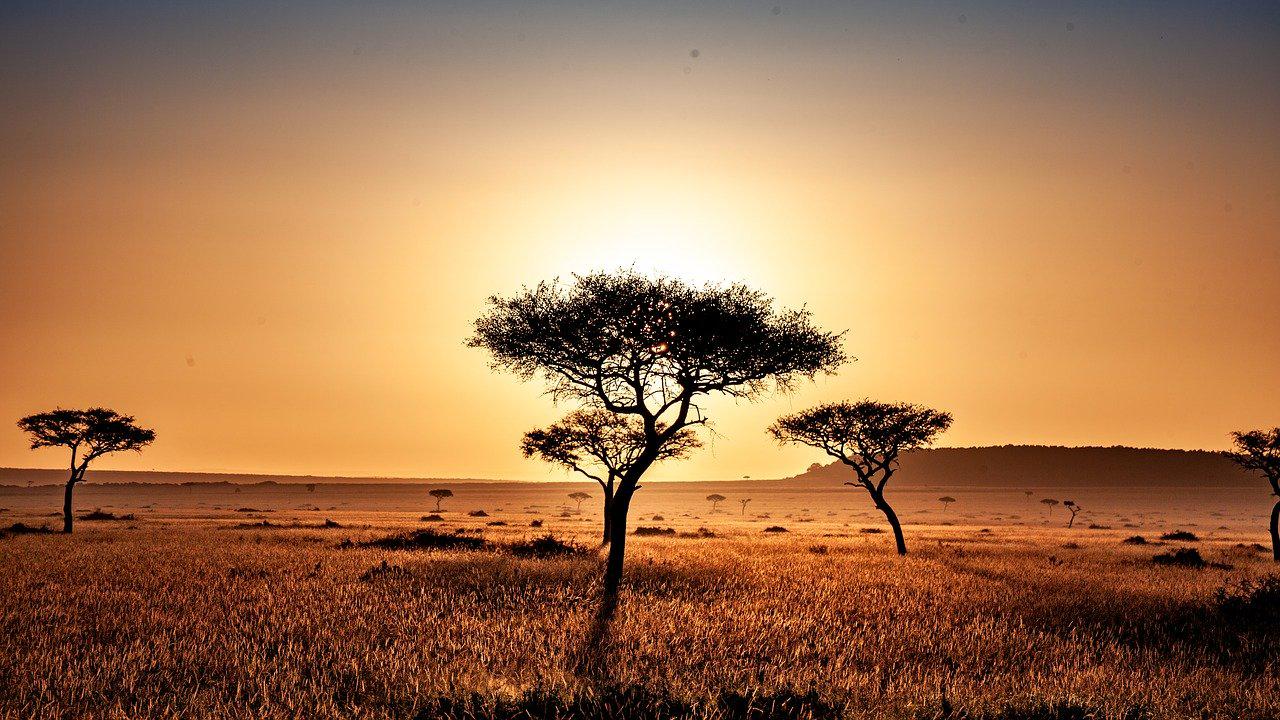
According to a study published in *Geophysical Research Letters*, this ecosystem could **degrade in less than a hundred years**, turning into a **drier savanna** if certain critical thresholds are exceeded.
## A key ecosystem for global climate
The **[World Wide Fund for Nature](https://wwf.panda.org/es/)** (WWF) reminds us that the Amazon is not only home to an **extraordinary biodiversity** but also serves essential functions:
– Regulation of the hydrological cycle
– Carbon capture and climate stabilization
– Habitat for thousands of plant and animal species
However, the tropical rainforest has shown **increasing vulnerability** to **droughts, forest fires, and accelerated deforestation**. Just in **2024**, the Brazilian Amazon lost **28,000 km² of forest cover**, according to the **World Resources Institute**.
## Scientific simulations reveal three critical thresholds
The study, led by **Andrew Friend**, a professor at the University of Cambridge, used a **computer model** to simulate the Amazon’s response to **climate change and deforestation**. The researchers identified three tipping points:
– 65% reduction in forest cover
– 10% decrease in moisture from the Atlantic
– 6% drop in precipitation
“Beyond these thresholds, even small changes could push the forest to its limit, transforming it into a grassland,” Friend explained to *Live Science*.
## The feedback loop that could dry out the forest
The phenomenon is based on a **feedback loop between vegetation, soil, and the atmosphere**:
– Trees absorb water from the soil
– They release vapor through **evapotranspiration**
– That vapor forms rain that returns to the soil
– The cycle repeats, maintaining the ecosystem humid
But if forest cover decreases, **evapotranspiration is reduced**, leading to **less rainfall** and accelerating the **forest’s drying**, favoring its conversion into a savanna.
## Model limitations and an urgent call to action
The team acknowledges that the model **does not consider the spatial variability** of the entire [Amazon basin](https://noticiasambientales.com/ciencia/hallazgo-clave-descubren-una-nueva-especie-de-arbol-en-la-cordillera-amazonica-entre-ecuador-y-peru/), but emphasizes that the results are **a warning sign**.
While refining the tool, the authors insist that it is **urgent to take action** to prevent the Amazon from crossing this ecological threshold.
## What’s at stake?
The transformation of the Amazon into a savanna would entail:
– Increased carbon emissions
– Massive species extinction
– Alteration of regional and global climate
– Direct impact on indigenous peoples and rural communities



