



The Giant Otter (Pteronura brasiliensis), also known as giant river otter, ariraí, or giant river wolf, has returned to swim in Argentinean waters.
The recent release of two adults and their two young in the Great Iberá Park in the province of Corrientes marks a historic moment for national zoology and for the conservation of emblematic species of South America.
An extinct species in Argentina since 1986
The last family group of Giant Otters was observed in Argentina in 1986. Since then, only isolated sightings have been recorded, with no evidence of reproduction or stable presence.
The species was considered extinct at a national level, a victim of poaching for its fur and the alteration of its aquatic habitat.
Characteristics of a sociable giant
The Giant Otter is the largest mustelid in the world, reaching up to 1.8 meters in length, with a flattened tail of almost one meter and a weight of around 33 kilograms.
Its behavior is highly social and cooperative, forming cohesive family groups that hunt, play, and communicate through complex vocalizations. Their presence in wetlands contributes to the control of fish and crustacean populations, favoring ecosystem balance.
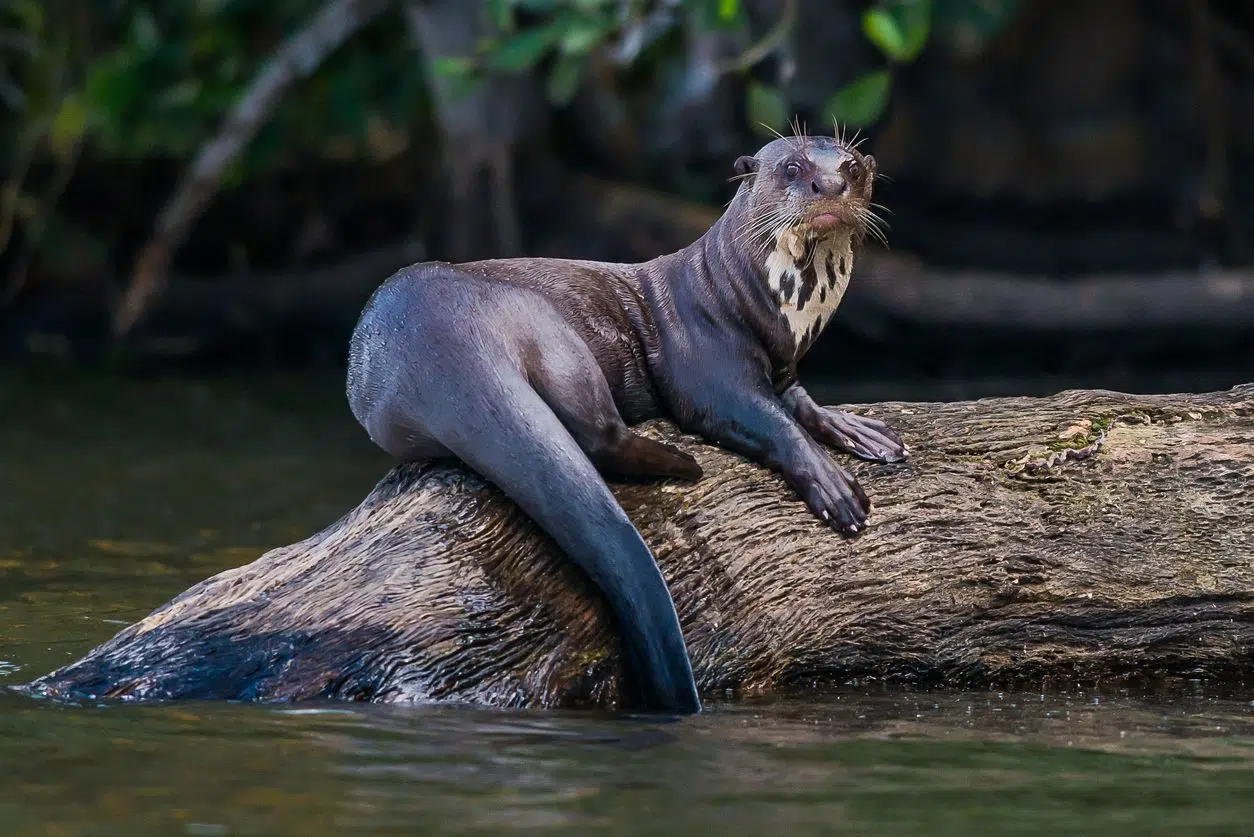 The Giant Otter returns to Argentina
An unprecedented reintroduction project
The reintroduction of the Giant Otter in Iberá began to take shape in 2006 as a conceptual idea, and became operational in 2017, when Rewilding Argentina started designing the project with experts from the International Union for Conservation of Nature (IUCN). The challenge was unprecedented: there were no captive specimens left in the country.
Thanks to the support of European zoos, in 2019 the first breeding pair arrived, initiating a process of progressive adaptation. In 2025, the release of a complete family was carried out, marking the effective return of the species to its original habitat.
Soft release strategy and active monitoring
The method used was soft release, allowing the animals to enter and leave freely from an enclosure located in Iberá, exploring the environment safely. During this stage, a specialized team monitors:
- The individuals’ hunting skills
- Their territorial orientation
- Their health status and social behavior
This approach seeks to ensure that the specimens are prepared for a completely wild life, minimizing risks and maximizing their integration into the ecosystem.
Restoring what was lost: a bet on biodiversity
The reintroduction of the Giant Otter not only recovers an extinct species in Argentina, but also reconnects Iberá with its natural history, returning one of its most important aquatic predators to the landscape.
Furthermore, it strengthens the park’s role as a model for ecological restoration, where international cooperation, applied science, and community commitment come together to reverse processes of environmental degradation.
Cover photo: Rewilding Argentina



