



Conscious fashion has stopped being a marginal alternative to become a global necessity. From Mexico emerges an example of how creativity, innovation, and sustainability can go hand in hand. The platform Fundamentally, dedicated to bringing together ethical and circular brands, is now driving a project that promises to change the way environmental impact is measured and communicated in the region.
This is Fundamentally Green Metrics LATAM, an initiative created in partnership with Green Story and Espera Capital. Its purpose is to provide micro-businesses and independent designers with technological tools that were previously reserved for large corporations, in order to make the traceability and ecological footprint of each garment transparent.
The context is not insignificant. The Mexican textile industry is facing a moment of great pressure: it is dealing with the contraction of the domestic market and competition from low-cost imports, mainly from Asia. This situation threatens thousands of small producers, who make up the majority of the sector.
In parallel, the European Union is moving forward with new environmental regulations that will require, starting in 2027, each product to have a Digital Passport that records its traceability and impact. What seems like a challenging goal to achieve can become an opportunity for Latin American brands to access more demanding and conscious markets.
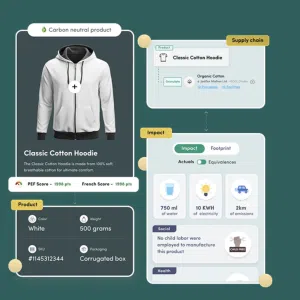 Eco-friendly fashion seeks to revolutionize the textile industry. Photo: Fundamentally Green Metrics LATAM.
Eco-friendly Fashion: More Than a Trend, a Structural Change
Eco-friendly fashion goes beyond the use of recycled fabrics or natural dyes. It implies a profound change throughout the value chain, from production to consumption. Each garment must be designed with its complete life cycle in mind, reducing the use of water, energy, and harmful chemicals.
In this model, the circular economy takes center stage. Textile recycling, fiber reuse, and small-scale production help minimize waste. Additionally, fair trade and respect for communities preserving artisanal traditions are prioritized.
Another fundamental aspect is transparency. Consumers demand clear information about the origin of garments and their environmental footprint. This is where initiatives like Fundamentally Green Metrics make a difference: they provide concrete data that allows measuring the real impact and, at the same time, generating reduction strategies.
An Ecosystem Driving Sustainability
Fundamentally has established itself as a cultural movement that goes beyond a mere sales platform. From its showroom in Mexico City and its upcoming digital spaces, it brings together over 50 brands that produce locally and on a small scale, with a strong commitment to sustainability.
The partnership with Green Story allows these brands to access life cycle assessment tools, carbon footprint calculations, and Digital Product Passports. What’s innovative is that over 80% of the costs of these solutions are subsidized, making them accessible to micro-businesses that couldn’t compete on an equal footing until now.
The goal is clear: democratize sustainability in Latin American fashion. By transparent processes and offering reliable metrics, these brands not only comply with international regulations but also gain the trust of increasingly informed and demanding consumers.
 Eco-friendly fashion seeks to revolutionize the textile industry. Photo: Fundamentally Green Metrics LATAM.
A Future Woven in Community
The platform also serves as a support network. With a directory that already includes over 500 Mexican brands and dozens of in-person events, Fundamentally fosters collaboration between designers, artisans, and entrepreneurs. In this ecosystem, fashion is seen as a form of activism that strengthens both the local economy and cultural communities.
Examples like that of Social Factory, which rescues Maya embroidery techniques under fair contracts and total traceability, demonstrate that fashion can be a bridge between tradition and modernity. The value lies not only in the garment but in the story of those who create it and in the respect for the environment providing the resources.
The global market for sustainable fashion is steadily growing, with projections to double its size in less than a decade. If Latin America manages to adapt and consolidate projects like Fundamentally, it will not only be able to compete in this sector but also have the opportunity to lead with proposals that integrate innovation, culture, and environmental respect.
In conclusion, eco-friendly fashion is no longer a luxury or a passing trend: it is a necessary path. From Mexico, a platform shows that dressing responsibly can also be an act of resistance and hope for the planet’s future.


