



In the murky and poorly oxygenated waters of the Amazonian and Orinoco basin, one of the most astonishing fish on the planet dwells: the electric eel.
Classified within the Electrophorus genus, this creature can release discharges of up to 600 volts, with extreme records reaching 860 volts, enough to stun large prey and even pose a risk to humans.
Three species, three electric strategies
New research reveals an unexpected diversity within the Electrophorus genus.
Recent studies, highlighted by National Geographic, have identified three main species of electric eels in South America:
- Electrophorus electricus
- Electrophorus varii
- Electrophorus voltai
Some reach 2.5 meters in length and 22 kilograms in weight, and present significant differences in electric power and geographical distribution, including populations in the Brazilian Shield, outside the traditionally recognized area.
Bioelectricity as an evolutionary tool
Defense, hunting, and communication in low-visibility environments. Electricity serves multiple functions:
- Detection of prey and obstacles
- Communication between individuals
- Defense against predators
In shallow waters, where they must come up to breathe, eels are vulnerable. Their ability to emit electric pulses of up to an ampere allows them to deter attacks and capture prey effectively.
Natural selection has favored those that generate more intense discharges, consolidating their role as dominant predators.
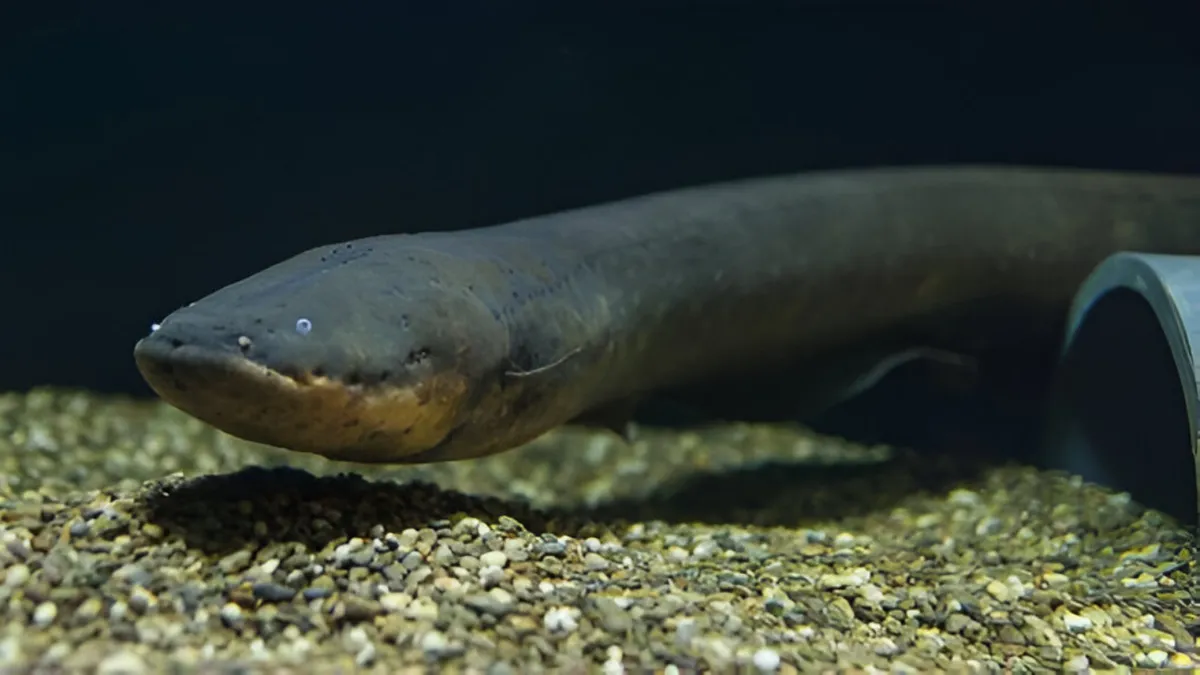
Anatomy of a living battery
The body of the electric eel houses three generating organs:
- Main organ
- Hunter’s organ
- Sach’s organ
These are composed of thousands of electrocytes, modified muscle cells that produce 0.15 volts each. Coordinated, they can release hundreds of volts in a single discharge, turning the animal into an unprecedented biological energy source.
Aerial respiration and survival in isolated pools
Physiological adaptations for extreme environments. Electric eels have the ability to breathe atmospheric air, allowing them to survive in muddy ponds and low-oxygen streams, especially during the dry season.
This adaptation gives them an advantage over other fish that depend solely on dissolved oxygen in the water.
Convergent evolution: electricity as a repeated solution
Nature has developed this ability at least six times in different lineages. Electricity generation is not exclusive to eels. Other species such as:
- Electric catfish (up to 400 volts)
- Electric rays (200 volts)
- Stargazers (45 volts)
have also developed this ability. According to genomic studies, this adaptation has emerged independently at least six times, representing a clear case of convergent evolution: different species responding similarly to shared environmental pressures.



