



The sighting of red macaws in the Iberá Wetlands, in the town of Carlos Pellegrini, marks a historic moment for Argentine biodiversity. After decades of absence, this species is once again part of the ecosystem, generating enthusiasm among park rangers, scientists, and visitors to the region (source).
The discovery included at least three specimens feeding on native fruits and flying in complete freedom, offering a natural spectacle rarely seen in the country. The return of this species is not only good news for the fauna, but also a tourist attraction that reinforces the value of Iberá as a conservation destination.
The reintroduction project, promoted for years, aims to restore the presence of the red macaw in its original habitat. For much of the 20th century, the species disappeared from the region due to poaching and forest loss. Today, thanks to conservation programs, results are beginning to be visible.
The sighting also translates into ecological benefits. Macaws play a key role in seed dispersal, favoring the regeneration of native forests. Their return strengthens ecosystem health and consolidates Iberá as a model of environmental restoration.
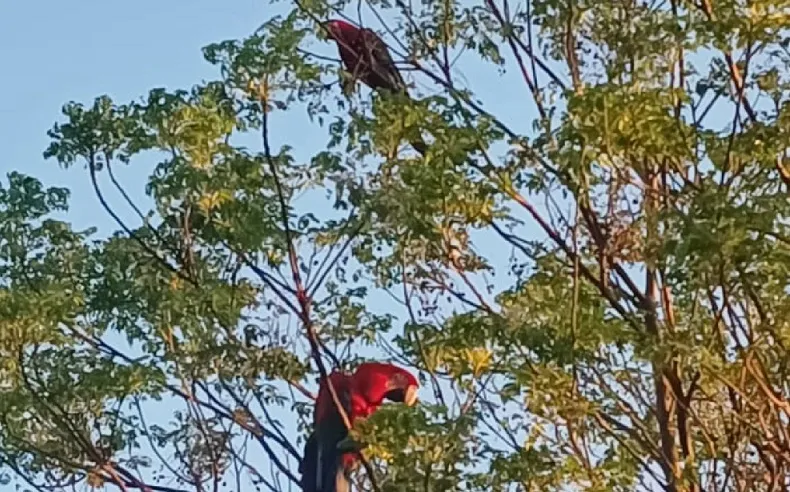 The return of the red macaw to Corrientes fuels hopes for the conservation of the species. Photo:
Conservation Status of the Red Macaw
The red macaw (Ara chloropterus) is classified as a species of “least concern” globally, but in Argentina, it disappeared from much of its natural range. Human pressures, capture for the wildlife trade, and deforestation were the main causes of its decline in the country.
Currently, its situation largely depends on reintroduction projects like the one in Iberá, which combine captive breeding with controlled release. These programs aim to establish stable and self-sufficient populations capable of reproducing and expanding freely.
The return of specimens to Corrientes represents a significant advance, but challenges remain. The continuity of monitoring, the protection of native forests, and environmental education are essential to ensure that the species does not disappear from Argentine territory again.
 The return of the red macaw to Corrientes. Photo: Unsplash.
Conservation and Responsible Tourism
The presence of the red macaw has become an attraction for ecotourism. Visitors from around the world come to the Iberá Wetlands hoping to observe these birds in their natural environment, providing a boost to local economies and reinforcing commitment to wildlife protection.
The challenge lies in balancing tourism development with conservation. Controlled activities, responsible trails, and specialized guides allow for an enriching experience without endangering the species or the ecosystem.
The return of the red macaw symbolizes much more than an environmental achievement: it is confirmation that, with sustained effort, it is possible to reverse biodiversity loss. In the heart of Iberá, these brightly colored birds with majestic flights remind us that nature can thrive when given a second chance.



