



In a context where urban spaces face the challenge of growing without compromising their sustainability, SpacePal emerges as an innovative solution.
Known as the ” Airbnb of events“, this platform proposes monetizing underutilized urban spaces, avoiding new constructions and promoting a model of circular urbanism.
Circular economy applied to urban space
Reusing instead of building: an intelligent strategy to reduce emissions and resource consumption.
The SpacePal proposal is based on a simple premise: bringing life to what already exists. Event halls, restaurants, terraces, and gardens that remain empty most of the week can be turned into venues for meetings, productions, training, or celebrations.
This reuse avoids the consumption of materials, energy, and land involved in building new spaces.
“Every empty space can become a shared resource, generating income and reducing environmental impact,” explains Mateo Caño, CEO of SpacePal.
According to UNEP, the construction sector accounts for almost 40% of global CO₂ emissions. Reusing existing infrastructure allows for resource optimization and reduction of urban footprint.
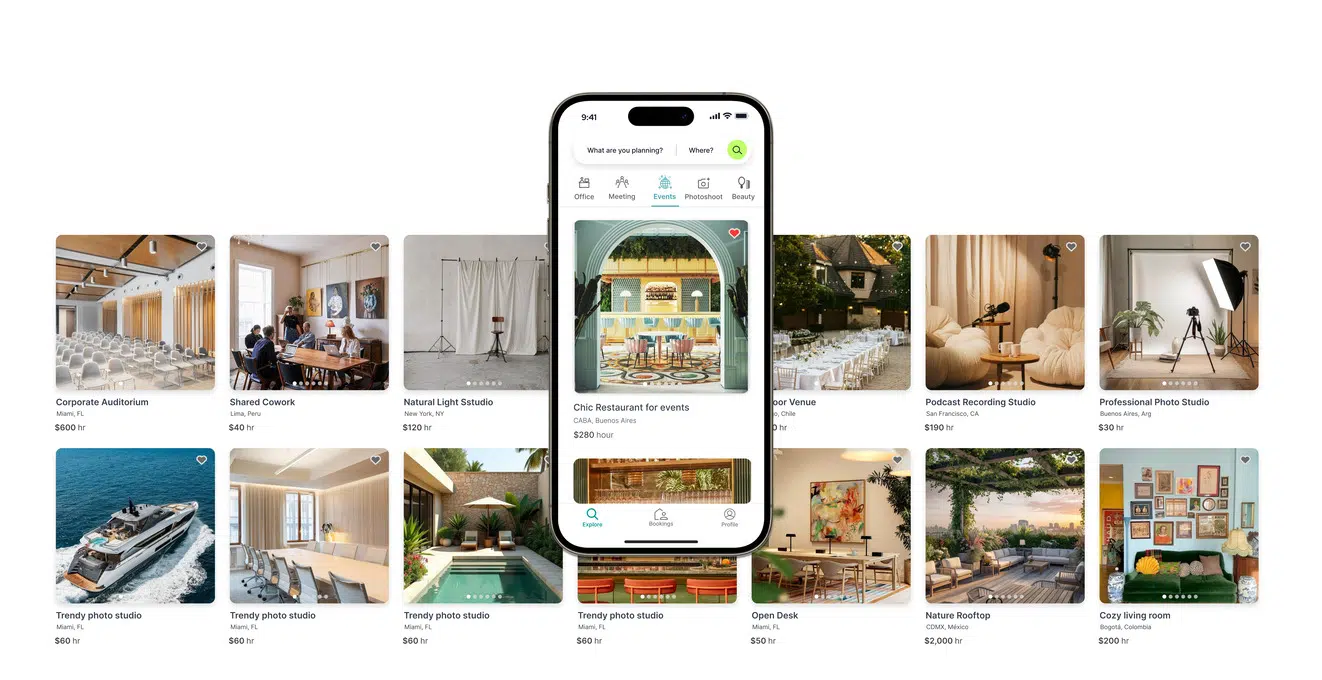
Concrete cases showing the potential
Locations that were previously closed now generate economic, social, and environmental value
- A hall in Palermo is now rented during the week for workshops and photo sessions
- A restaurant in San Telmo hosts filming crews on Mondays
- A terrace in Caballito has become a venue for private dinners and outdoor events
According to ladrillo.info, flexible spaces in Buenos Aires already exceed 80% occupancy, with over 4,700 active members and 500 companies using them regularly.
Positive environmental and social impact
Less cement, more community: benefits that go beyond the economic aspect.
- Reduction of emissions: avoids the construction of new buildings
- Energy savings: shared spaces consume 2.5 times less energy per person
- Neighborhood revitalization: new visitors energize local commerce
- Sustainable mobility: 75% of users use non-polluting transportation
Additionally, 27% stopped using their car when moving to shared spaces, contributing to urban decarbonization.
Hosts as agents of change
Hosts can offer their locations during free hours or days, generating income without much effort. The platform takes care of connecting supply and demand, providing security, support, and convenience.
“We propose to see spaces as living resources, with the potential to be shared and enjoyed by more people,” adds Caño.
Collaborative urbanism for resilient cities
SpacePal expands its model from Buenos Aires and Miami to other cities around the world.
With a presence in Barcelona, Bogotá, and Mexico City, SpacePal aims to position itself as a reference in flexible and sustainable space solutions.
In Argentina, thousands of locations remain unused for a good part of the week. Transforming them into opportunities is a way to build a more efficient and collaborative economy.



