



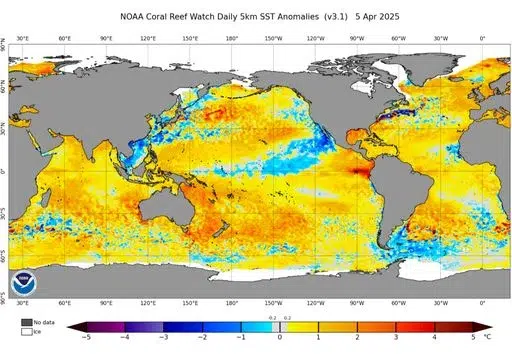
The Equatorial Pacific is once again showing signs of alert. The surface waters of the region recorded an anomaly of -0.5 °C, a value that marks the minimum threshold to consider the beginning of the La Niña phenomenon. This cooling, recorded by, represents the clearest indication so far this year that the event could consolidate in the coming months.
Although the National Oceanic and Atmospheric Administration of the United States has already detected two cooling episodes during the season, specialists emphasize that there have not yet been consecutive weeks with values in that range. However, the cooling pattern is strengthening and could be officially confirmed between October and November.
The climate bulletin also pointed out that the current anomaly is the lowest recorded in 2025 in the Niño region, the key area for identifying this type of phenomena. This reinforces the possibility that La Niña could return, with immediate effects on South America and, especially, on Argentina.
Meanwhile, the atmosphere still does not fully reflect the typical behavior of the phenomenon, so in some areas of Brazil above-average rainfall is already expected. However, for the Southern Cone, the outlook is beginning to take shape with greater concern.
 La Niña Phenomenon. Photo: Meteored.[/caption>
Causes behind this climatic anomaly
The cooling of the waters of the Equatorial Pacific responds to a complex network of factors that alter the atmospheric and oceanic circulation. One of the keys is the strengthening of the trade winds, which push the warm waters of the surface westward in the ocean. This movement allows colder waters to surface from the depths in the eastern sector, generating the temperature drop recorded in the Niño region.
Another determining factor is the interaction between the ocean and the atmosphere. When cold waters dominate the surface, atmospheric pressure is modified and the Walker circulation is reinforced, an air current that directly influences rainfall patterns in different parts of the planet. This change alters the climatic balance and triggers effects thousands of kilometers away from the Pacific.
The phenomenon is also linked to natural climate variability, although in a context of global climate crisis it becomes more extreme. Global warming increases the intensity and frequency of these episodes, favoring more marked fluctuations between El Niño and La Niña. This combination explains why recent years have seen more severe and persistent anomalies.
Expected impact in Argentina due to the La Niña phenomenon
The National Meteorological Service projects differentiated effects depending on the region of the country. In the Littoral and northeast, which includes provinces like Misiones, Corrientes, and Entre Ríos, below-normal rainfall is anticipated, increasing the risk of drought in agricultural areas.
In the northwest, especially in Jujuy, Catamarca, and western Salta, the trend is opposite: above-average precipitations are expected, which could benefit local production, although it could also lead to flooding episodes.
In the central region, which includes Buenos Aires, Córdoba, La Pampa, and part of Cuyo, values close to normal are expected, while in Patagonia the situation is more unfavorable, with rainfall ranging from normal to below normal, worsening a context of already dry soils.
 The La Niña phenomenon alters ocean temperature.
A challenge for production and ecosystems
The arrival of La Niña has direct consequences on Argentine agriculture, particularly on wheat, soybean, and corn crops. Prolonged droughts reduce yields, affect water availability for irrigation, and increase the vulnerability of producers.
The water deficit also increases the risk of forest fires, which find in dry vegetation the perfect fuel to spread. In addition, late frosts, another effect linked to the phenomenon, can seriously compromise fruit and wine production.
At an environmental level, ecosystems are stressed by the lack of water, altering the habitat of birds, amphibians, and species dependent on wetlands. Rivers with lower flow reduce their capacity to support biodiversity and affect water supply for communities.
The cooling of the Pacific once again places La Niña at the center of the climate debate. Its initial signs are already present, and if confirmed, the Argentine spring and summer will be marked by a drier and more challenging scenario. Nature, once again, reminds us of the need to prepare for a phenomenon that transcends borders and compromises both production and environmental balance.



