



Deep in the Colombian Amazon, indigenous communities keep alive an agricultural system that has proven for thousands of years that it is possible to produce food without destroying ecosystems. These are the chacras, small cultivation plots that operate in harmony with the natural cycles of the tropical forest.
Far from intensive models based on monocultures and agrochemicals, these productive areas integrate into the environment and, after some years of use, gradually return to their natural state. For this reason, specialists consider them one of the most valuable experiences of sustainable management of natural resources.
Currently, the chacras remain fundamental for hundreds of indigenous families inhabiting territories such as the macroterritory Jaguares del Yuruparí and the Miriti-Paraná reserve, where food production is part of an integral vision that links nature, culture, and spirituality.
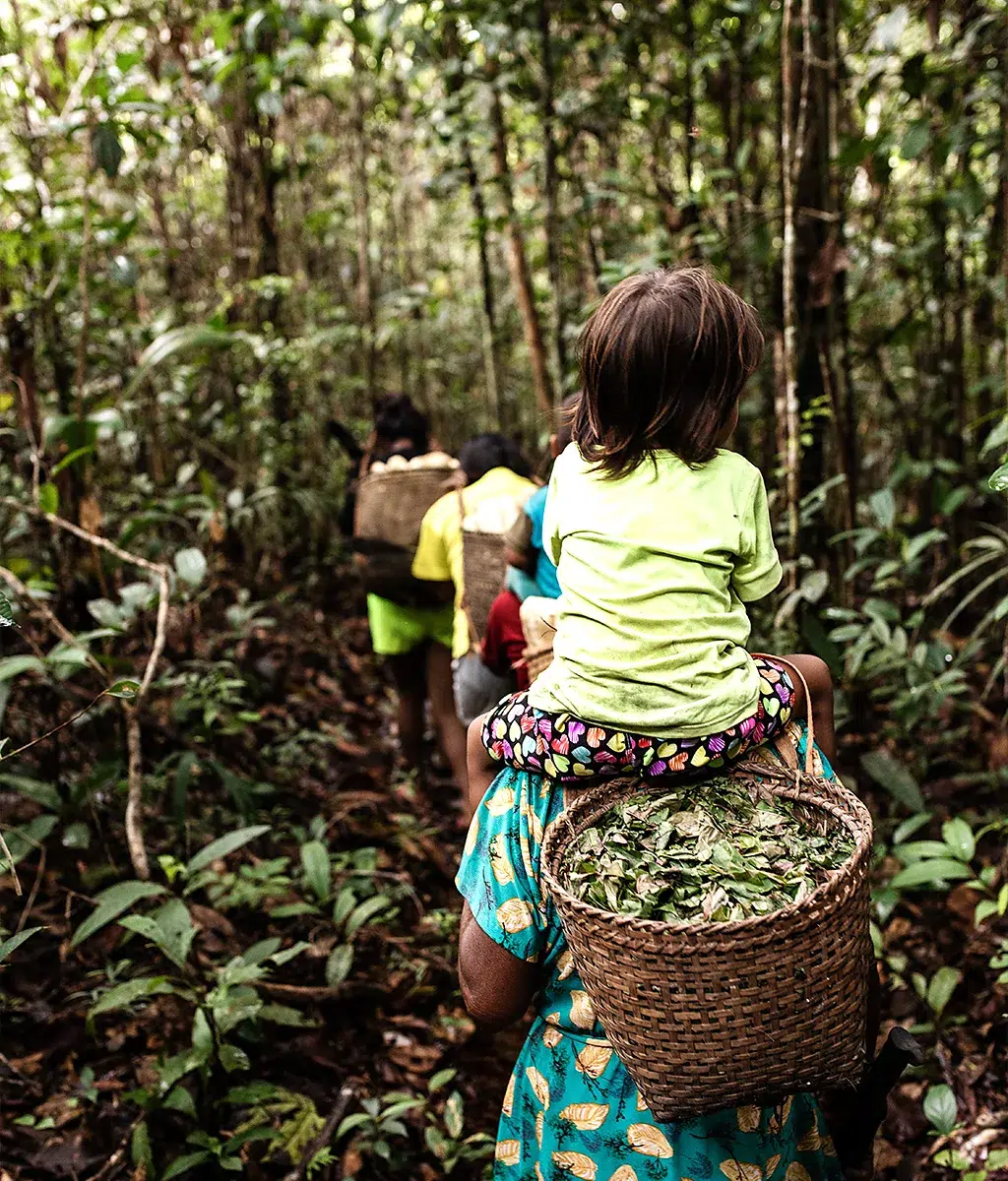
Agriculture in balance with forest cycles
Each chacra generally occupies less than two hectares and its design responds to knowledge accumulated over generations. The selection of the land, the planting calendar, and the location of each species follow carefully defined ecological criteria.
Before starting a new plot, the communities conduct collective processes to prepare the land. Although part of the vegetation is removed, efforts are made to preserve numerous native trees and minimize the impact on the surrounding ecosystem.
Moreover, research indicates that these plots maintain biodiversity significantly higher than that of conventional monocultures. They also store important amounts of carbon, contributing to mitigating the effects of climate change.
In territories like Miriti-Paraná, families often manage several chacras at different stages of development simultaneously. While one is in full production, another begins its natural recovery, and a third is being prepared for future plantings.
Biological diversity and food security
Yucca is the main crop in much of the Amazon. In the territory of Jaguares del Yuruparí, at least 67 different varieties are recorded, reflecting an extraordinary genetic diversity adapted to different environmental conditions.
Alongside yucca, bananas, pineapples, yams, sweet potatoes, fruit trees, tobacco, chilies, medicinal plants, and forest species grow. According to surveys conducted in the region, the chagras harbor more than 100 cultivated species.
Furthermore, this diversity allows for risk reduction against pests, extreme weather events or crop losses, strengthening the food security of Amazonian communities.
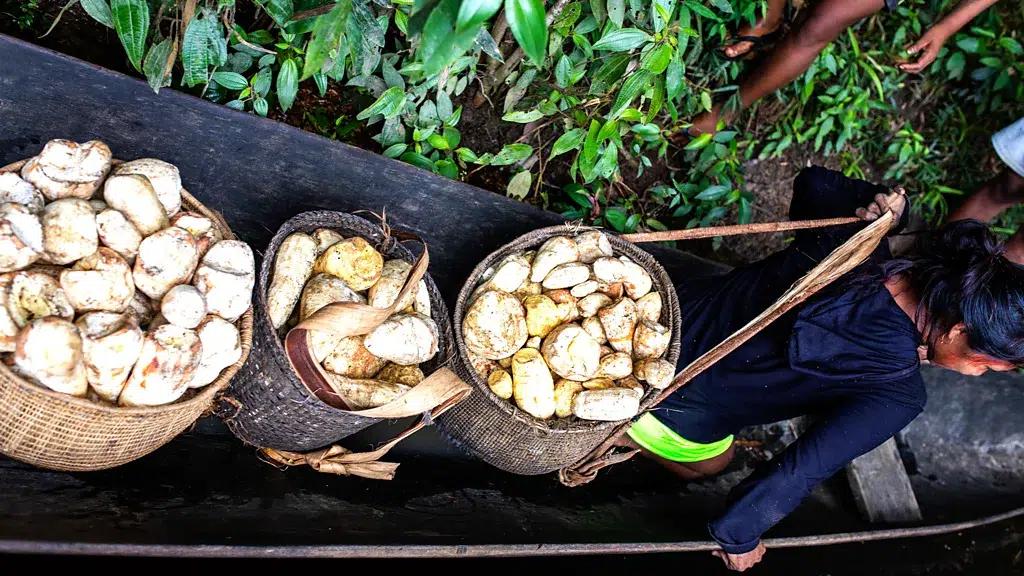
What are chacras and why are they considered sustainable farms
Chacras are traditional agroforestry systems developed by Amazonian indigenous peoples for at least 4,500 years. Unlike conventional agricultural operations, they combine multiple crops in the same space and take advantage of natural ecological processes.
Among their main advantages are the absence of synthetic pesticides, biodiversity conservation, carbon storage, soil protection, and the natural regeneration of vegetation once the productive cycle is completed.
Additionally, after five or six years of use, the plots are abandoned so that the forest can reclaim the space. During this process, fruit trees remain and create new refuges for birds, mammals, and insects.
For these characteristics, chacras are considered a global reference in sustainable production and have sparked the interest of researchers seeking alternatives to the environmental impacts of industrial agriculture.
Growing threats to a conservation model
Despite their ecological benefits, chacras face numerous challenges. The expansion of mining, deforestation, drug trafficking, and climate change are profoundly altering the Amazonian ecosystems.
In regions like Jaguares del Yuruparí, mercury contamination associated with gold mining affects the quality of water, fishing, and food security of indigenous communities.
At the same time, changes in rainfall patterns, rising temperatures, and the emergence of new pests complicate traditional agricultural activities. In this scenario, experts agree that strengthening the territorial rights of indigenous peoples will be key to preserving these productive systems and the extraordinary biodiversity of the Amazon.



