



The Senate of the province of Buenos Aires is analyzing a project for a “Soil Law“ that has sparked controversy among agricultural producers.
The aim is to declare the protection of soil and water intended for agricultural and forestry production in Buenos Aires territory as of “public interest”.
To this end, it is proposed to establish an “integral care of soil” and water for agricultural or forestry use to maintain and improve its productive capacity.
The initiative is driven by the College of Agronomists and Foresters of Buenos Aires (Ciafba) and, for now, has not been addressed in the Buenos Aires Legislature.
However, it was presented in the Commission of Agrarian Affairs of the provincial Senate, from where it should move to the Upper House.
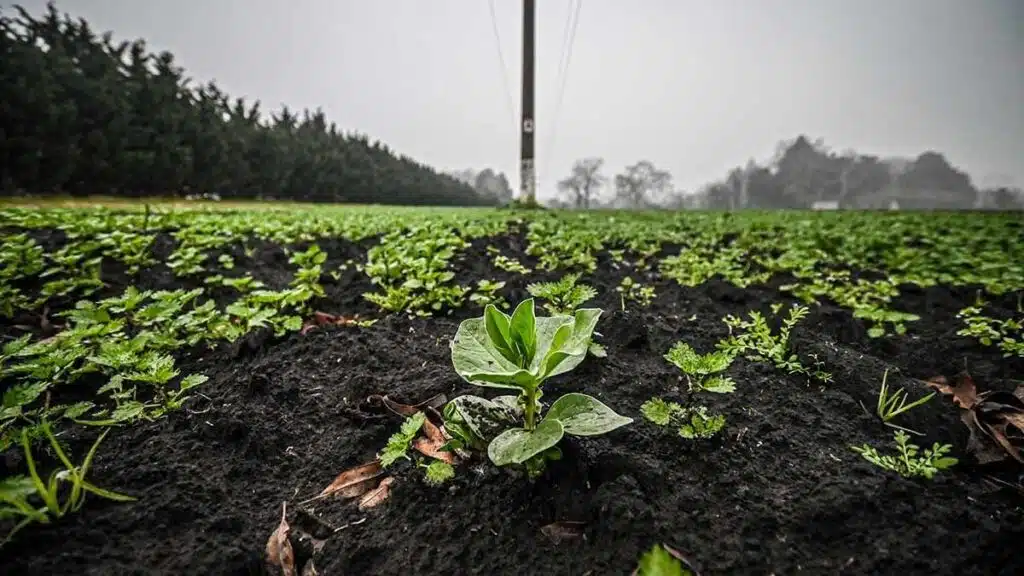
What the Buenos Aires “Soil Law” project proposes
The project is aimed at “all natural or legal persons engaged in agricultural and/or forestry production” in the province of Buenos Aires.
In its article 2, it proposes to “oblige” these subjects to “collaborate with the care of the soil” and water through the necessary actions to ensure an adequate use and management.
Furthermore, the Soil Law prohibits using for production those unsuitable soils or in a state of degradation until their recovery.
The stated goal is to preserve resources for future generations and to continue being functional for:
- food security;
- climate change mitigation;
- the generation of foreign currency.
The regulation contemplates the creation of Soil and Water Care Districts.
There, the Ministry of Agrarian Development of PBA —as the enforcing authority— would define agro-environmental characteristics according to the susceptibility and degree of degradation of each area.
All producers, owners, or tenants should prepare mandatory use and management plans every four years.
These documents would require the signature of a registered professional, would contemplate a minimum period of four agricultural campaigns, and should adhere to the official catalog of practices approved by the State.
The project also foresees a dual system of benefits and penalties.

Producers who comply will access tax deductions, while those who do not will face fines, exclusion from state programs, and even administrative intervention.
It also seeks to create a Provincial Fund financed with 0.08% of Buenos Aires’ annual budget, plus the proceeds from applied fines, legacies, and donations.
This fund would manage resources allocated to the implementation of the law.
Controversy over the “Soil Law” proposed in Buenos Aires: complaints from various entities
The Confederation of Rural Associations of Buenos Aires and La Pampa (Carbap) expressed its strong opposition.
“From Carbap, we express our rejection of the Soil Law project” made by Ciafba, because it encroaches on private property, they criticized.
According to the entity, the law “would impose controls, sanctions, and bureaucracy that would contribute nothing to the real care of the resource“.
Carbap identified ten critical points. Among them, the definition of “suitable soils” by the State, whose official criteria could leave lands unproductive.
It also questioned the mandatory nature of practices defined by the State and the creation of forced consortia that would compel producers to integrate into collective structures.
The entity warned about the “very broad powers” granted to the enforcing authority “to decide, control, and sanction, concentrating a power that in practice can lead to discretionary interventions“.
The Argentine Chamber of Rural Real Estate (CAIR), for its part, also issued a complaint.
“No one can arrogate the right to legislate on the proper use of the soil, underestimating the forces of the field and the producers,” they said.
The debate in the Buenos Aires Legislature is just beginning, with meetings scheduled in the coming weeks on an initiative that divides opinions.


