



Las solid-state batteries are highlighted by much of the automotive industry as the great technological leap that will mark the future of electric vehicles. On paper, they offer improvements on all fronts: greater safety, better performance, more range, drastically reduced charging times, and superior lifespan.
This potential has unleashed a global race among manufacturers seeking to be the first to bring the technology to production. From proprietary developments like those of Chery to strategic alliances like Mercedes-Benz with Factorial Energy, which is already working with initial prototypes.
Dongfeng accelerates the competition
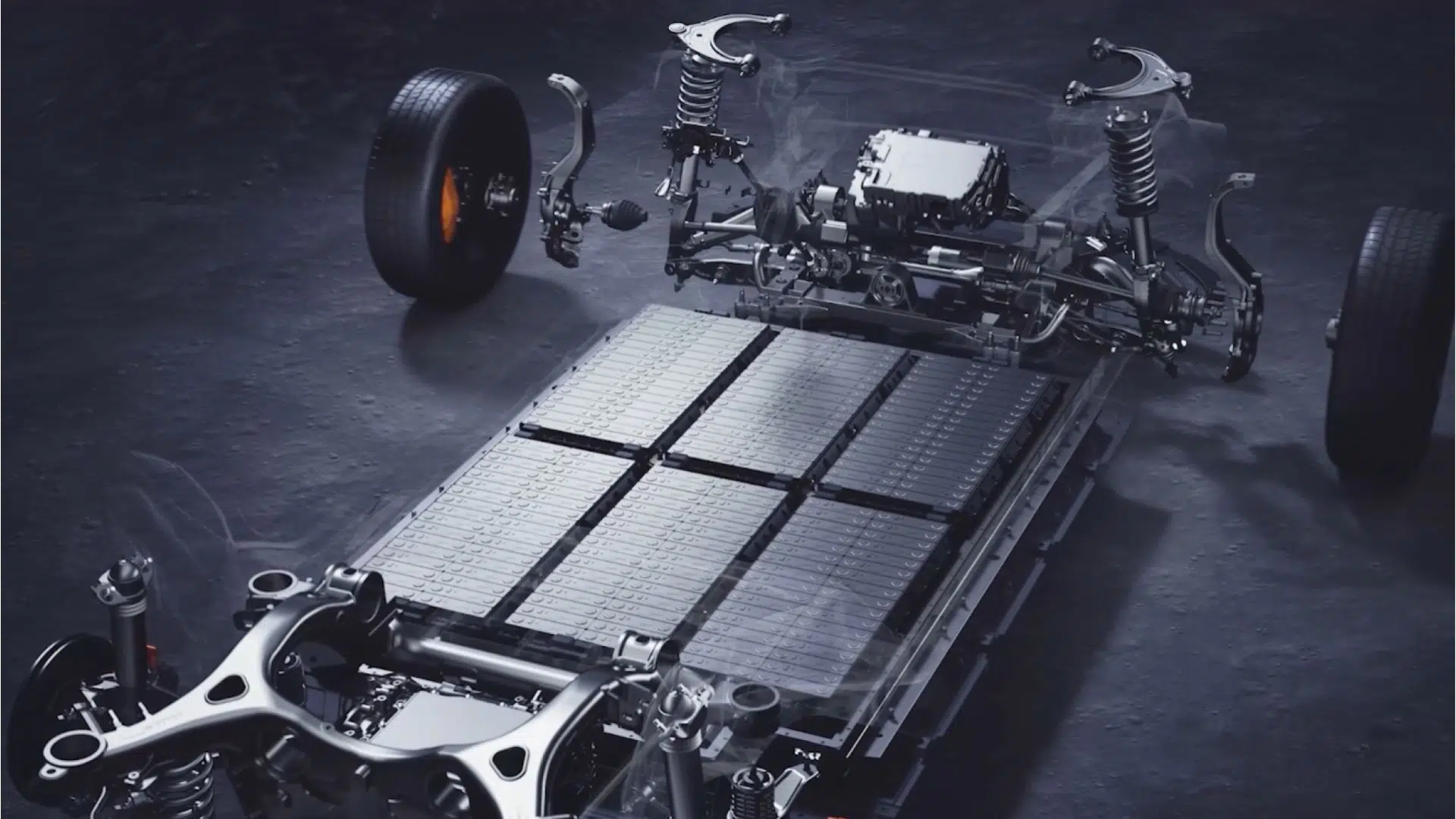
In this scenario of expectations, Dongfeng decided to speed up the timeline and announced plans to launch a high-density solid-state battery aimed at electric vehicles in 2026, with production scheduled for September of the same year.
This move contrasts with the caution of the rest of the industry, which places the massive arrival of this technology after 2030. According to the brand, the pack will employ a high-capacity ternary cathode, a silicon-carbon anode, and a solid polymer electrolyte.
Outstanding technical features
The disclosed data shows remarkable advances:
- Retention of more than 72% of energy even at –30 °C.
- Energy density of 350 Wh/kg, enough to exceed 1,000 kilometers of range.
- Integration with the new Mach Super-kV platform, a 1,200-volt architecture equipped with a silicon carbide power module.
This base would allow ultra-fast 12C charging, theoretically capable of adding 450 kilometers in just five minutes, an advancement that directly addresses one of the most persistent user demands: charging times equivalent to refueling a combustion vehicle.
Commercial strategy and global outlook
The launch is linked to an aggressive commercial strategy. While the industry associates solid-state with high initial costs and limited production, Dongfeng seeks to break that logic and assures that its goal is to offer affordable prices both in China and international markets.
In parallel, MG advanced with an intermediate proposal: the MG4 with semi-solid-state battery, which combines elements of traditional cells with advances from solid-state technology.
A market in transition
The landscape is complicated by the decision of the Chinese government to modify the official designation of battery technologies, creating confusion about what should be considered “solid,” “semi-solid,” or “advanced.”
The result is a market in full transition, where brands seek to position themselves while standards are still being redefined.
Warnings and challenges
During the World Electric Battery Conference, sector leaders called for moderation.
- Wu Chengxin, vice president of the Collaborative Innovation Platform for solid-state batteries, warned that the industry faces significant challenges in scientific research, development of specialized equipment, and industrial design.
- Deng Chenghao, vice president of Changan Automobile and president of Deepal, considered that 2030 is the “best-case scenario” and that true adoption could stretch to 2035.
The message is clear: the potential of the technology is enormous, but its commercial maturity still requires time.
With its schedule for 2026, Dongfeng aims to become the player that marks the first major breakthrough in the solid-state race. Although doubts persist about large-scale viability and production costs, the Chinese brand’s bet could accelerate the transition to a new generation of safer, more efficient, and competitive electric cars.



