



The province of Jujuy took a historic step by officially presenting its Comprehensive Provincial Environmental Education Plan. A public policy aimed at building an engaged and aware citizenship in the face of the socio-environmental challenges of the 21st century.
The plan integrates sustainability as a cross-cutting axis at all levels and modalities of the educational system, consolidating education as a driver of transformation.
An unprecedented institutional presentation
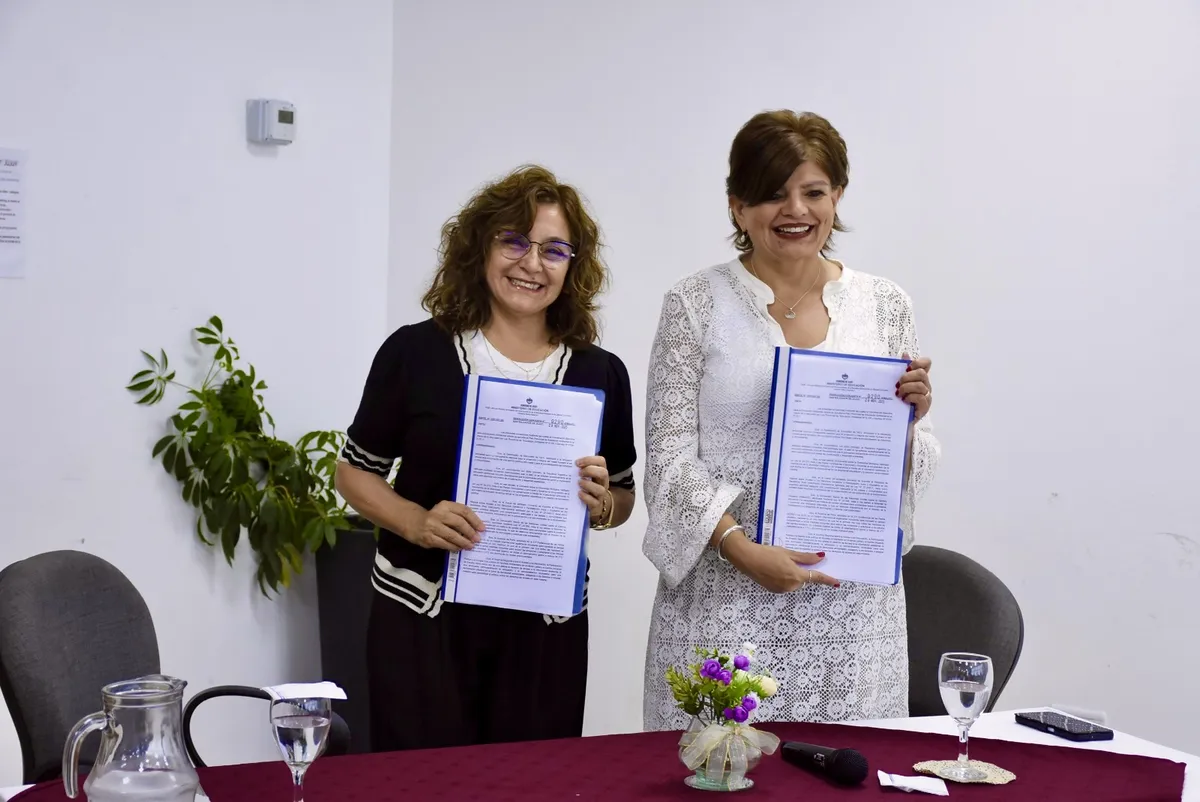
The launch took place at the Ministerial Education Complex, with the participation of the Ministers of Environment and Climate Change, María Inés Zigarán, and Education, Miriam Serrano, along with technical teams, level directors, teachers, and officials from both ministries.
The plan was developed by the teams of the Executive Coordination for the Application of the Provincial Environmental Education Law (No. 6,105), a pioneering regulation enacted in Jujuy two years before the National Comprehensive Environmental Education Law.
Political and social commitment
Minister Zigarán highlighted the joint work of the technical teams and the Agency for Science, Technology, and Innovation, chaired by Luis Bono, emphasizing that this plan represents “a milestone and an unprecedented event in our country.”
She recalled the actions initiated since 2016 in curricular matters and school projects, and emphasized the importance of environmental education in the context of the triple environmental crisis: pollution, climate change, and biodiversity loss.
“It is a powerful, dynamic, and enriching tool that helps us assume an intergenerational moral commitment in the face of the urgency of this crisis, which is also civilizational,” she stated.
Zigarán also highlighted that the environmental agenda was incorporated into the Provincial Constitution Reform, giving environmental education a central place in Jujuy’s legal framework.
A roadmap for sustainability
For her part, Minister Serrano emphasized that the plan addresses the need for a comprehensive view of the environment as a cross-cutting topic at all educational levels.
“It is a roadmap that guides us, with strategic lines, on where we need to go, with continuous teacher training, pedagogical innovation, and the role of the community in creating collective projects for environmental care,” she noted.
She also highlighted the work of teachers and students in fairs and exhibitions with projects recognized at the national level, reaffirming that education will take on the role of facilitators of the care of Mother Earth, Pachamama.
Scope and objectives of the plan
The Comprehensive Provincial Environmental Education Plan covers all educational institutions of state, private, municipal, social, and cooperative management, considering the territorial, cultural, and ecological diversity of the province.
It recognizes the urgent challenges of the environmental agenda:
- Biodiversity loss.
- Waste management.
- Pollution.
- Effects of climate change.
Strategic axes
The strategy is structured around four central axes that guide short, medium, and long-term actions:
- Initial and continuous teacher training: ongoing training to incorporate sustainability into educational practice.
- Pedagogical innovation: new resources and methodologies to integrate the environment into the classroom.
- Community participation: collective projects involving society in environmental care.
- Comprehensive evaluation and monitoring: systematic follow-up to ensure effective and updated results.
With the presentation of this plan, Jujuy begins a new stage that reaffirms its political and institutional commitment to the environmental agenda. Education becomes the transformative axis to build a more sustainable present and a resilient future, strengthening the active and responsible citizenship that the province needs to face the socio-environmental challenges of the 21st century.


