



The year 2025 was marked by a familiar environmental scenario: global emissions continue to rise and nature continues to decline. However, amidst the bad news, positive environmental milestones emerged, showing that targeted action in clean energy, conservation, and indigenous rights can yield tangible results for the climate and biodiversity.
Clean Energy on the Rise
- Wind, solar, and other renewables surpassed coal as the world’s main source of electricity.
- The growth is driven by China, which massively expanded its production and exports of clean technologies.
- China even developed typhoon-resistant wind farms, harnessing extreme storms.
- Globally, more than 80% of countries are accelerating their renewable capacity, with projections to double total capacity by 2030.
- For the first time, China’s CO₂ emissions fell in 2025, suggesting they may have peaked.
Ocean Protections
- In September 2025, the High Seas Treaty came into effect, designating 30% of international waters as Marine Protected Areas (MPAs).
- The world’s largest MPA was created in Tainui Atea, French Polynesia, with 1.1 million km² of protected ocean.
Forest Recovery
- Brazil hosted the COP30 in Belém, dubbed the “Forest COP.”
- The country announced a roadmap to end deforestation by 2030, supported by over 90 countries.
- The Tropical Forest Finance Facility (TFFF) was launched, a fund aiming to reward tropical forest conservation with a target of US$125 billion.
- Deforestation in the Brazilian Amazon fell by 11% in 2025, reaching the lowest rate in 11 years.
- Globally, deforestation rates were 38% lower between 2015-2025 compared to 1990-2000.
Climate Justice
- The International Court of Justice (ICJ) issued a historic decision allowing countries to sue each other over climate change.
- Although non-binding, the ruling could influence future climate cases and strengthen international accountability.
Wildlife Triumphs
- Green turtles moved from “endangered” to “least concern” on the IUCN Red List.
- Florida recorded over 2,000 leatherback turtle nests, a historic record.
- India doubled its tiger population in a decade, reaching over 3,600 individuals, representing 75% of the world’s population.
Indigenous Rights
- At the COP16 on biodiversity, indigenous peoples gained an official voice in global decision-making.
- At the COP30 in Brazil, new funding commitments and 10 new indigenous territories were recognized.
- The importance of ancestral knowledge in environmental management was highlighted.
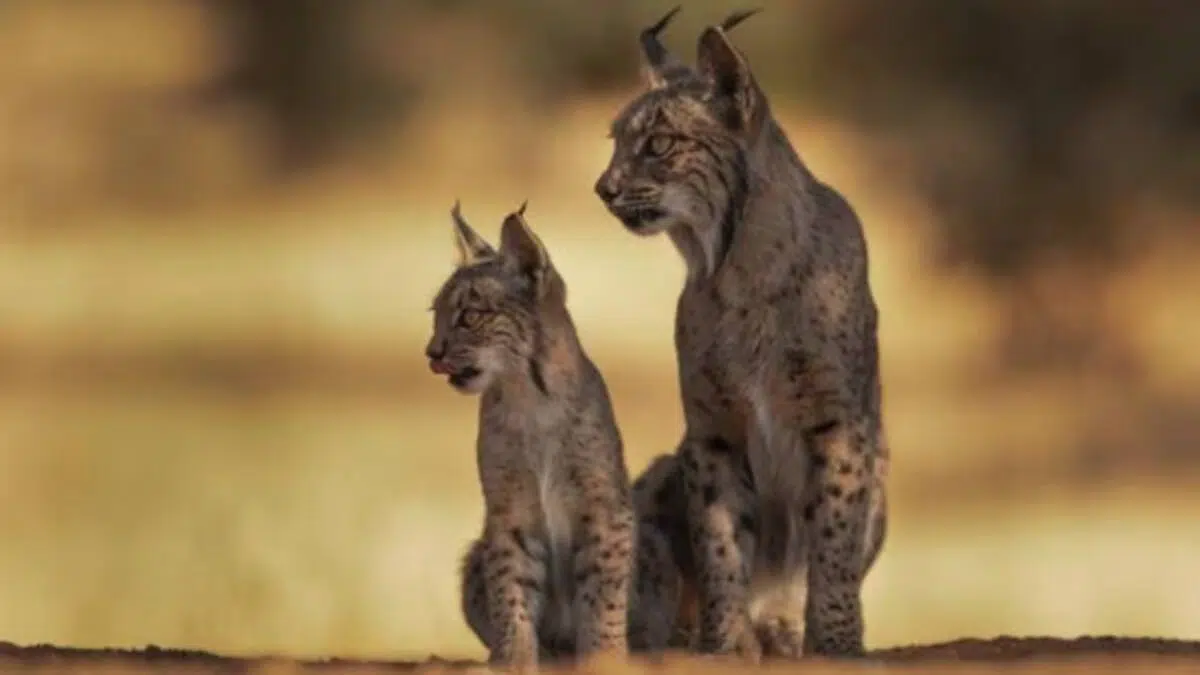
The Rebirth of the Iberian Lynx
- The population reached 2,401 individuals in 2024, a 19% increase from the previous year.
- In 2002, fewer than 100 individuals remained, confined to Sierra Morena and Doñana.
- Today, Spain hosts 85% of the Iberian lynxes, with Portugal adding another 354.
- The species moved from “Critically Endangered” to “Vulnerable” on the IUCN Red List.
Ozone Layer
- The ozone layer hole in 2025 was the smallest in five years and closed earlier than usual.
- The Montreal Protocol (1987) continues to show results, and scientists estimate the layer could fully recover by 2066.
2025 Balance
2025 made it clear that while environmental challenges persist, there are concrete advances demonstrating the power of collective action: clean energies displacing coal, oceans and forests with new protections, wildlife returning from the brink of extinction, and indigenous peoples recognized as central actors in conservation.
These quiet achievements are signs of hope in a world that needs to accelerate its transition towards sustainability.


