



In 2021, researchers released 500 African spurred tortoises (Centrochelys sulcata) in the southernmost part of the Sahara.
What began as an animal conservation program ended up transforming the geography of the area. Five years later, satellites captured green patches where there was once only hardened sand.
How the tortoises act
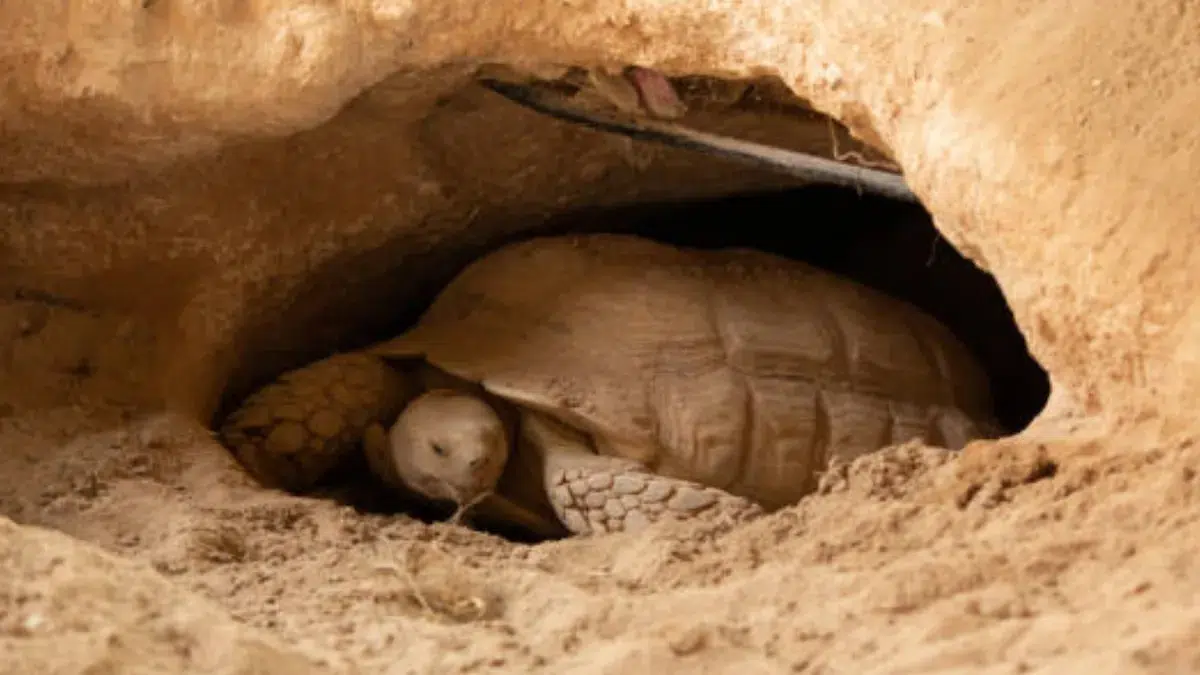
The tortoises, weighing over 100 kilos, dug burrows up to 15 meters to survive the extreme heat. This natural behavior had surprising ecological effects:
- Soil engineering: by breaking the surface crust, they allowed rainwater to penetrate and be retained in the subsoil.
- Seed germination: the moisture favored the activation of dormant seeds, generating vegetation visible even from space.
- Micro-refuges: the burrows created microclimates that attracted insects, birds, and small vertebrates.
- Seed dispersion: by feeding on scarce vegetation and moving through the territory, the tortoises dispersed seeds through their droppings.
Ecological impact
This recovery process occurred without heavy machinery, irrigation, or chemicals. The organization SOS has been managing release programs in Senegal since 1992, achieving survival rates above 80%.
The IUCN confirmed that Sulcata tortoises act as ecosystem engineers, essential for combating desertification.
Expanding biodiversity
The burrows not only benefit plants but also serve as vital refuges for other species. In this way, the tortoises contribute to:
- Increasing biodiversity in arid regions.
- Maintaining grassland balance through their constant grazing.
- Protecting associated species that depend on the vegetation and microclimates generated.
Conservation status
Despite their regenerative capacity, the species remains in a vulnerable state. Hunting, habitat loss, and climate change have reduced their populations in countries like Mali and Burkina Faso.
The success of the green patches depends on the animals surviving long enough to keep their tunnels active.
International programs
The reintroduction of Sulcata tortoises in countries like Senegal seeks to recover populations and restore ecosystems. These programs demonstrate how animal conservation can have a direct impact on environmental regeneration and the fight against desertification.
The release of African tortoises in the Sahara is an extraordinary example of how nature can be an ally in ecosystem restoration. By acting as soil engineers, these tortoises transform the desert into a space capable of retaining water, germinating seeds, and attracting life.
Their role is vital for the future of the Sahel and to demonstrate that animal conservation can also be a strategy for climate resilience.


