



An experiment on seed conservation initiated in 1879 remains ongoing and reveals crucial data for modern agriculture.
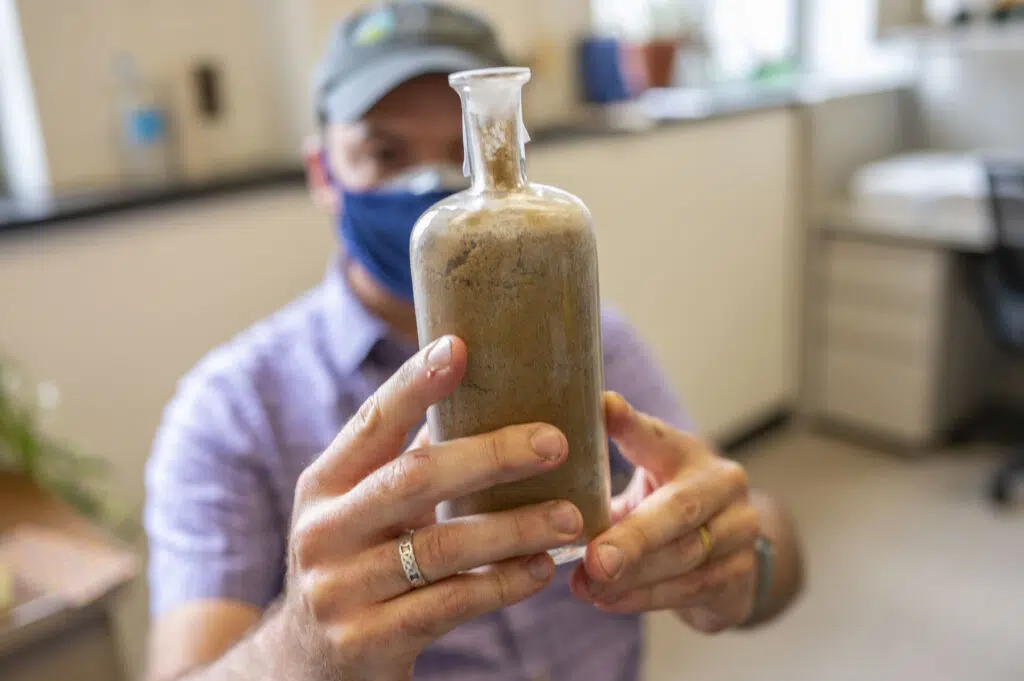
This is thanks to the scientist James Beal, who nearly 150 years ago buried 20 bottles with more than 1000 seeds each.
His objective: to determine how long seeds remain viable underground.
This study, considered the longest-running still in progress, represents a fundamental investigation to understand the survival of seeds in natural conditions.
The origin of the most extensive experiment in seed science
James Beal designed a pioneering investigation in 1879 with a specific objective: to verify the longevity of seeds in their natural conservation.
Each bottle contained 50 seeds of 21 species of different plants, all mixed in sand.
The researcher sought to answer an essential question for agriculture: how long would seeds remain viable in the soil to grow.
The experiment lies in maintaining the right levels of moisture so that they survive without sprouting.
This methodology turned the study into a key reference for complex situations, such as periods of war or food crises.
A protocol that spans generations
Initially, the study was designed so that each bottle would be unearthed every five years. However, this range quickly changed to 10 years and later to 20 years between unearthing and unearthing.
After each extraction, the seeds are planted and scientists check if they are fit for growth.
Those that do not germinate naturally are subjected to alternative systems at Michigan State University to try to make them sprout.
Those that fail to bloom undergo detailed studies to explain the reason for their inviability.
This systematic process allows for precise documentation of the degradation of seeds over time.

The current results and the future of the experiment
The last bottle unearthed was in 2021, with a one-year delay due to the COVID-19 pandemic, as it was scheduled for 2020.
The next bottle to be retrieved and analyzed will be around the year 2040.
Scientists are expectant, as, if the calculations are not wrong, there would be three or four specimens left to unearth.
The scientific community maintains a special attention on this experiment.
The study is scheduled to end around the year 2100, making it a unique transgenerational investigation. The data obtained are fundamental for:
- Understanding the long-term viability of different plant species
- Developing more effective seed storage strategies
- Planning germplasm banks for emergency situations
- Improving agricultural conservation techniques in the face of climate change
This pioneering experiment demonstrates that some plant species can maintain their germination capacity for over a century under controlled moisture conditions.
The results have direct implications for global food security and the preservation of agricultural biodiversity in a context of climate and environmental crisis.


