



The near-total interruption of urban life during the strictest months of the Covid-19 pandemic not only modified human habits, but also left marks on wildlife.
A study published in Proceedings of the National Academy of Sciences (PNAS) revealed that birds born during that period showed physical modifications linked to the absence of people, vehicles, and food waste.
The research, led by scientists from the University of California, Los Angeles (UCLA), analyzed populations of dark-eyed juncos (Junco hyemalis) in North America. The results showed that birds born during the lockdown developed beaks different from those of previous generations.
Traditionally, urban juncos have shorter and sturdier beaks, adapted to feeding on human food scraps. However, with the disappearance of these wastes during the so-called “anthropause”, the birds turned to natural food sources, acquiring a morphology similar to wild populations.
With the gradual return of human activity, subsequent generations once again exhibited the so-called “urban beak,” demonstrating a high capacity for adaptation in a short period of time.
Adaptive Sensitivity and New Questions
The authors of the study emphasized that these findings demonstrate the sensitivity of urban wildlife to human presence—or absence. Although the genetic mechanisms are still being investigated, the main hypothesis points to diet as a determining factor in the morphological changes.
The work raises questions about the everyday impact of human activity on evolutionary processes and reinforces the idea that even minor actions, such as generating food waste, can directly influence urban biodiversity.
The “Anthropause” and Wildlife Mobility
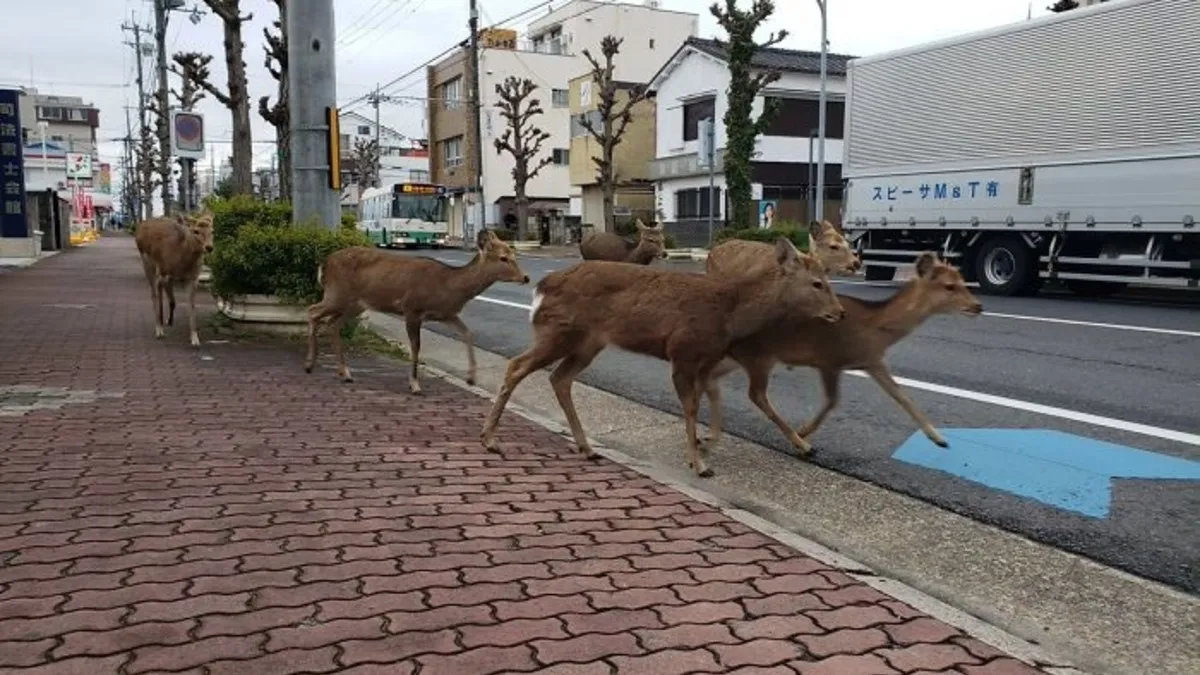
During the pandemic, the drastic reduction in human activity generated a phenomenon known as anthropause, which allowed for significant changes in the mobility of wild animals to be observed:
Changes in Movement and Distribution
- Greater range of movement: in regions with strict lockdowns, terrestrial mammals moved on average 73% farther than the previous year.
- Proximity to infrastructure: animals were 36% closer to roads due to reduced traffic and noise.
- Urban exploration: species that normally avoided human contact—such as pumas in Santiago, Chile, wild boars in Barcelona, or peacocks in Madrid—ventured into empty urban centers perceiving greater safety.
Behavior and Connectivity
- Increase in daytime activity: some species increased their activity during the day in areas where they were previously predominantly nocturnal.
- Temporary improvement in connectivity: large animals, like bears, crossed structural barriers such as roads and human settlements more frequently.
- Reduction in roadkill mortality: collisions between wildlife and vehicles decreased by up to 80% in some regions during periods of greatest restriction.
Variations According to Environment
Not all animals responded the same way. In areas with strict lockdowns, mobility increased, while in areas where the use of natural spaces was promoted as an alternative to confinement—for example, national parks in the U.S.—animals traveled shorter distances due to the increase in visitors.
The Covid-19 pandemic left an unexpected mark on urban and wild fauna. From morphological changes in birds to modifications in mammal mobility, the anthropause demonstrated how human activity directly influences evolutionary processes and ecosystem dynamics. These findings reinforce the need to rethink the relationship between cities, people, and nature in an increasingly urbanized world.


