



The association INTERCIDS, Legal Operators for Animals, warned that the business model of zoos—based on the exhibition of animals and their breeding in captivity—has no place in the future Great Apes Law being prepared by the Spanish Ministry of Social Rights.
The warning was issued on January 16, the day the Iberian Association of Zoos and Aquariums (AIZA) held a conference in the Congress of Deputies titled “Science, Legislation, and Great Apes: Towards Evidence-Based Regulation”. The event coincided with the final phase of the draft bill, developed from a proposal presented in 2024 by INTERCIDS and the Franz Weber Foundation.
Objectives of the Great Apes Law
The initiative aims to:
- Strengthen the legal protection of great apes.
- Recognize their rights as sentient and highly social animals.
- Ensure compassionate conservation.
- Reduce their objectification and suffering.
INTERCIDS argues that these goals are incompatible with the conditions of captivity and exhibition typical of current zoos.
Criticism of the Zoo Model
Zoos, mostly private enterprises, base their economic sustainability on the permanent exhibition of wild animals. They organize shows, promote photos with animals, and encourage interactions that perpetuate captivity.
INTERCIDS warns that exhibition involves a vicious cycle of constant breeding and exchange between zoos, which contradicts the recommendations of the IUCN, which advises against breeding great apes in captivity for conservation reasons.
Questioned Arguments
- Zoos often present themselves as “Noah’s Arks” to preserve genetically viable populations. However, the real genetics of many individuals are unknown, and hybridization problems are frequent.
- Very few animals born in zoos are reintroduced into the wild.
- In the case of great apes, captivity prevents the development of their complex natural behaviors.
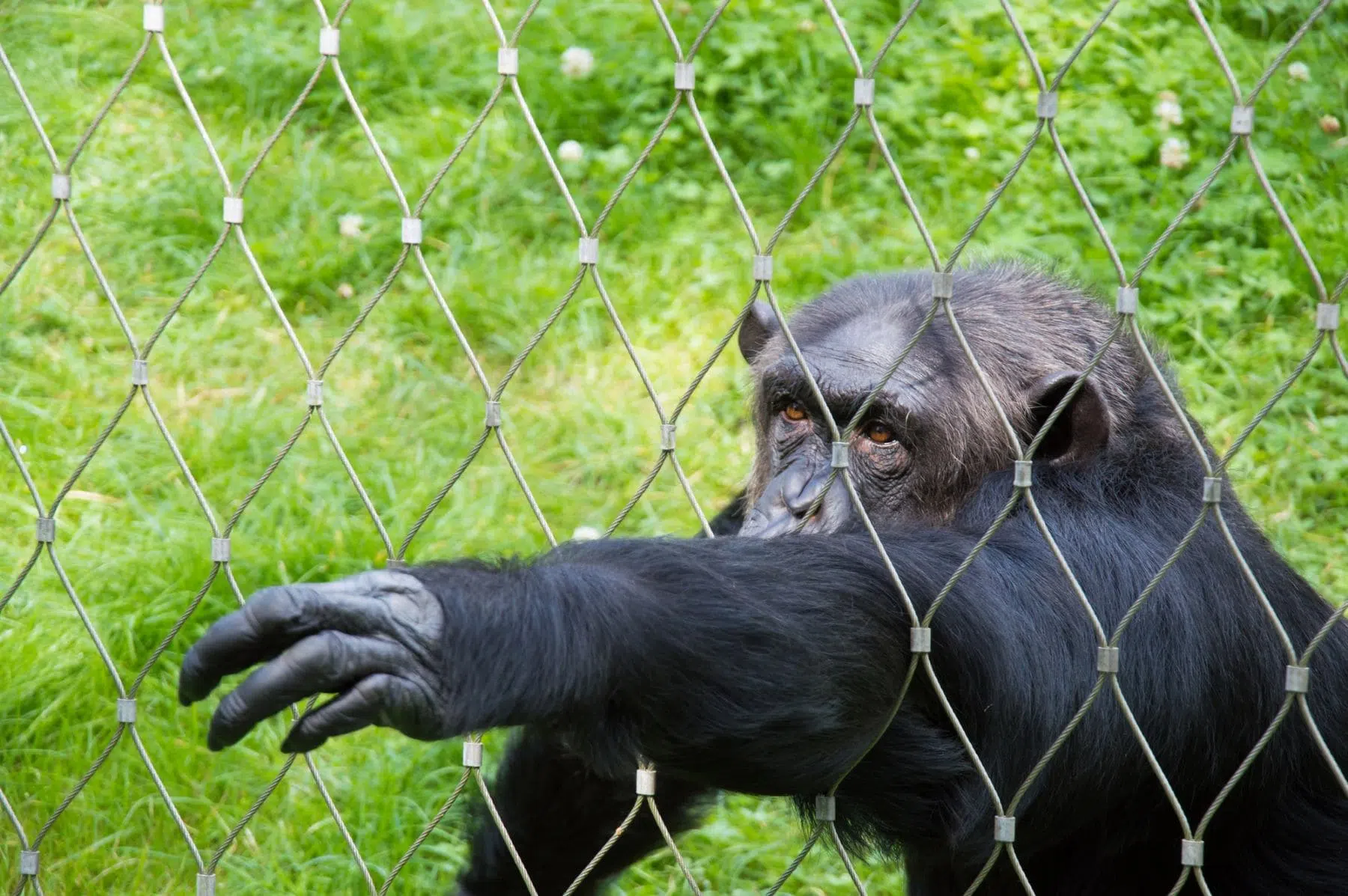
Contradictions Recognized by the Sector
Internal documents from the EAZA (European Association of Zoos and Aquariums) highlight the tensions:
- The European Studbook for chimpanzees (2018) states that breeding needs to be increased to “meet exhibition needs.”
- In orangutans, the best practices guide acknowledges an excess of males in European zoos.
- In gorillas, the number of males that cannot be placed in breeding programs is increasing.
INTERCIDS highlights the paradox: these species are endangered in the wild, while zoos acknowledge an “excess” of individuals in captivity.
Animal Welfare in Question
Although the sector claims that welfare is guaranteed, various studies indicate that captivity is the main causal factor of abnormal behaviors in great apes.
A paradigmatic example: the orangutans, an arboreal and semi-solitary species, require privacy. In zoos, they live in small spaces, in unnatural social groups, and under constant public exposure.
Scientific evidence confirms that great apes possess self-awareness, culture, and complex social systems. In captivity, they exhibit physical problems (heart disease, respiratory issues, obesity) and psychological issues (stress, depression, anxiety, self-harm).
Risk of Influence from the Zoo Lobby
INTERCIDS expressed concern about the danger of zoos being established as scientific references in the legislative debate when their business model remains anchored in the breeding and exhibition of wild animals, incompatible with the real protection of great apes.
The entity trusts that the processing of the law will maintain its essence:
- Recognition of basic rights for great apes.
- Prohibition of their exhibition and breeding in captivity.
- Strengthening strategies against illegal trafficking.
- Promotion of protection and conservation projects in their countries of origin.
The debate over the future Great Apes Law in Spain faces two irreconcilable models: the zoo exhibition business and the legal protection of highly intelligent and social animals. The legislative decision will set a precedent in how society recognizes and defends the rights of great apes.



