



In the context of the World Economic Forum in Davos, President Donald Trump announced a decisive change in the United States’ extractive policy: the acceleration of licenses for underwater mining in international waters.
The measure, formalized by the National Oceanic and Atmospheric Administration (NOAA), seeks to consolidate permit processes into a single, shorter review, aimed at countering the near-monopolistic control that China exerts over critical metals needed for the manufacture of electric vehicles and advanced electronics.
The Pacific Board
The industry sets its sights on vast areas of the Pacific Ocean, where polymetallic nodules abound, small rocks rich in nickel, copper, and cobalt. These resources are found at extreme depths, outside national jurisdictions, posing a complex legal scenario.
Washington’s decision generates international controversy, as the United States has not ratified the United Nations Convention on the Law of the Sea (UNCLOS). While the International Seabed Authority (ISA) debates global norms without consensus, Trump advances under his own legislation: the Deep Seabed Hard Mineral Resources Act of 1980.
Key Points of the Decree
- Bureaucratic Simplification: unification of criteria to reduce companies’ waiting times.
- Outer Continental Shelf: specific process for permits in waters under direct U.S. jurisdiction (up to 200 nautical miles).
- Corporate Precedent: companies like the Canadian The Metals Company have already begun procedures to operate under this scheme.
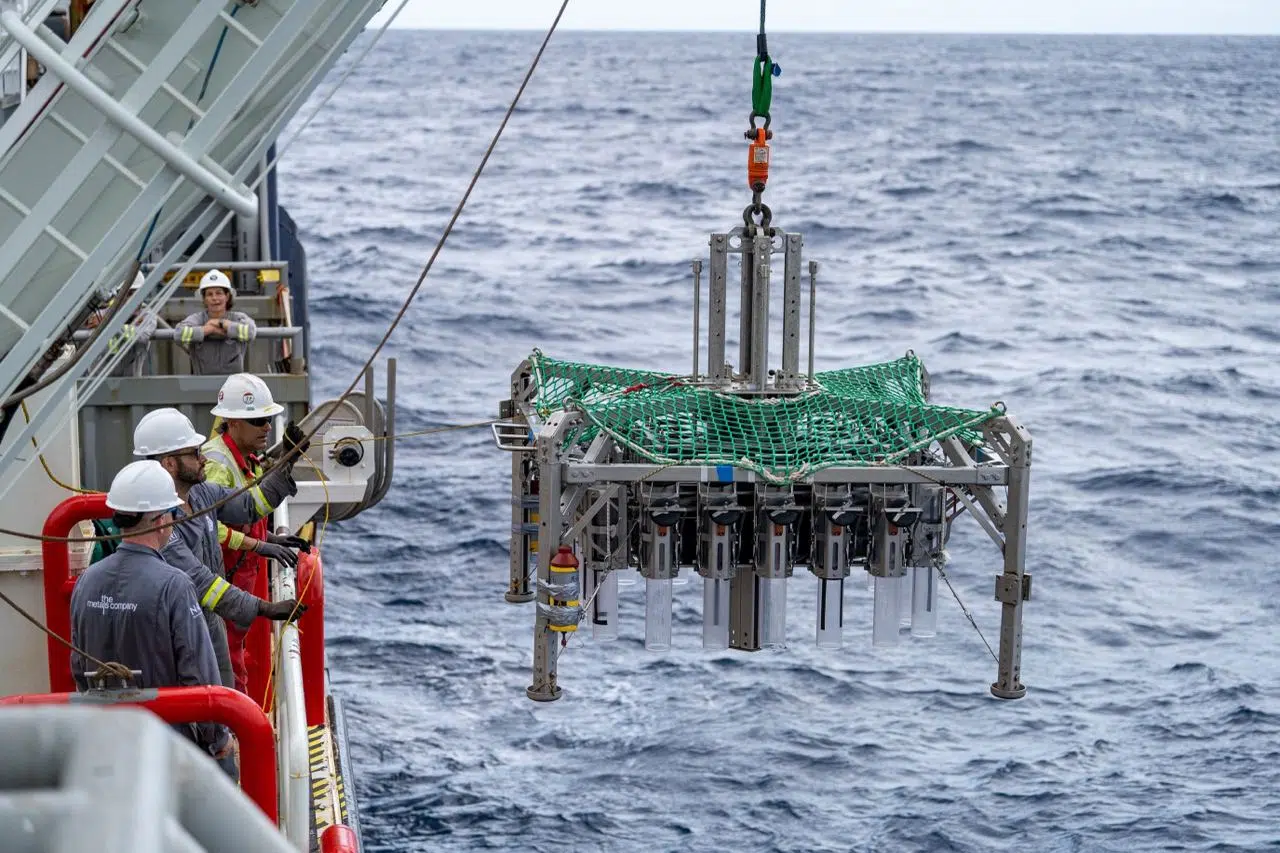
Arguments For and Against
Proponents argue that underwater mining is a “lesser evil” compared to land-based exploitations, which generate visible impacts and face social resistance. However, scientists and ecologists warn of catastrophic consequences:
- Irreversible Destruction of Biodiversity: about 90% of species in deep waters are unknown to science. Mining threatens to extinguish them before they are cataloged.
- Alteration of the Water Column: sediment clouds can suffocate filter organisms and block light. Noise and artificial light alter the physiology of cetaceans and sharks.
- Climate Crisis: the seabed is a massive carbon sink. Its removal could release large amounts, exacerbating global warming.
- Socioeconomic Risks: altering deep ecosystems can affect fisheries and food security. Additionally, an international regulatory vacuum persists.
A New Geopolitical Front
With this move, Trump not only challenges international bureaucracy but also places the seabed as the new chessboard of the trade and technological war with China.
International underwater mining, regulated by the ISA, becomes a field of dispute where economic interests clash with the need to protect one of the least understood ecosystems on the planet.
The acceleration of licenses for underwater mining opens a crucial debate: is it possible to exploit seabed resources without compromising biodiversity and climatic balance? While the United States seeks to curb China’s dominance in critical metals, the scientific community warns of irreversible risks.
The future of this industry will depend on whether the logic of geopolitical competition prevails or the urgency to preserve the oceans.



