



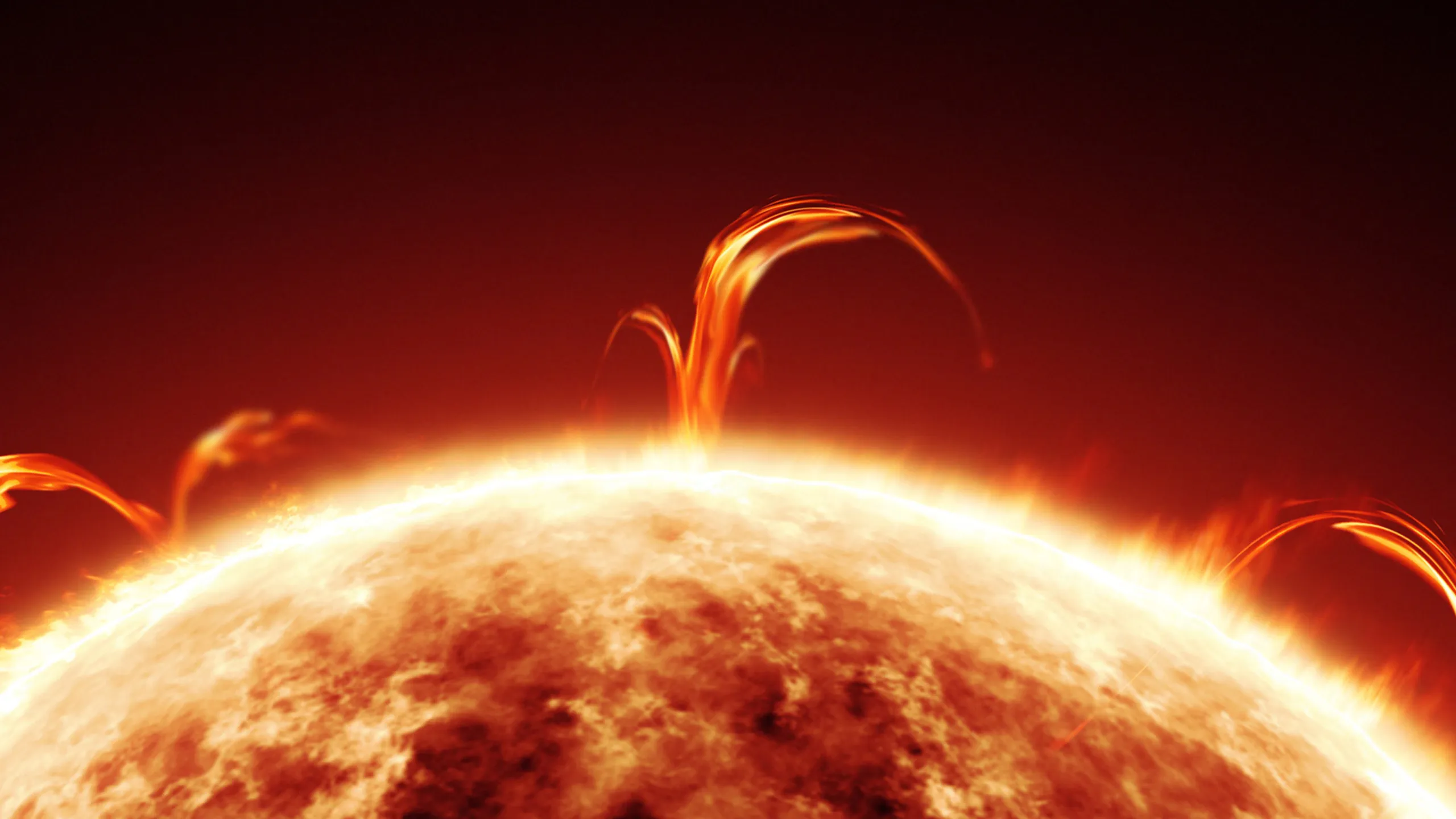
Between January 19 and 21, 2026, the Earth was shaken by a severe geomagnetic storm (G4), considered the most intense in the last 22 years. The event originated on January 18, when a solar flare was accompanied by a coronal mass ejection (CME) that headed directly towards our planet.
The material expelled by the Sun took between 18 and 24 hours to reach Earth, interacting with the Earth’s magnetic field and generating far-reaching visible and technological effects.
What is a coronal mass ejection
A CME is a massive eruption of plasma and magnetic fields that the Sun launches into space.
When it impacts the Earth’s magnetosphere, it can cause geomagnetic storms capable of disrupting technological systems and generating natural phenomena like auroras.
Visible and technological effects of the solar storm
One of the most striking effects was the increase in auroral activity, visible even at mid-latitudes, which is rare. However, the impacts go beyond the visual:
- Interruptions in radio communications.
- Disruptions in positioning systems (GPS).
- Issues with satellites and power grids.
- Risks for flights near the poles.
- Threats to human activities in space.
Scientific context
Doctor in Astronomy Fernando López, a researcher at the National University of San Juan (UNSJ) and CONICET, explained that the phenomenon has already concluded and its effects were temporary. “The geomagnetic storm usually lasts a couple of days. In this case, it was responsible for the visible auroras in Europe last week, but the phenomenon is now over,” he noted.
Although the Sun has entered a declining phase of its cycle, López warned that new events cannot be ruled out.
Research in Argentina
The UNSJ has a strong track record in studying solar activity. Through the Félix Aguilar Astronomical Observatory and the Carlos Ulrico Cesco High Altitude Astronomical Station, located in the El Leoncito National Park, researchers work with specialized telescopes to analyze solar flares and associated phenomena.
“We have a solar physics group that studies these events in depth, allowing us to better understand how they impact Earth and anticipate possible risks,” López concluded.
The strongest solar storm in two decades highlighted the fragility of technological systems in the face of natural phenomena. Although its effects were temporary, the event underscores the importance of scientific research and preparation to mitigate future risks in communications, transportation, and energy.


