



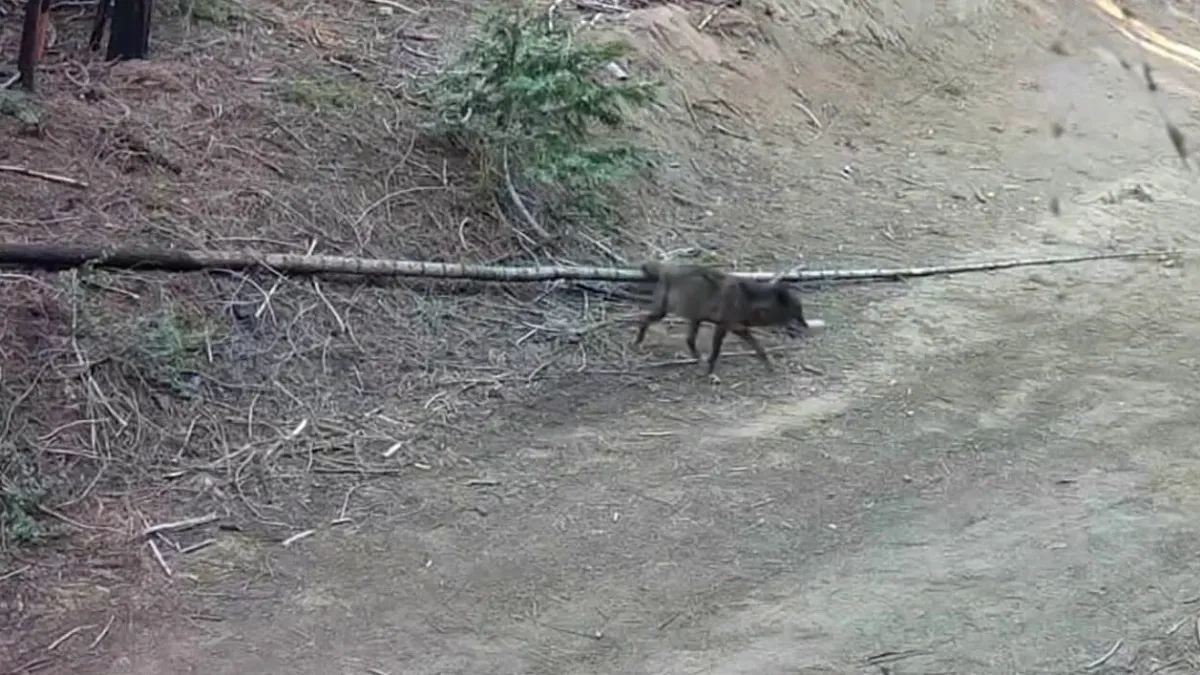
The appearance of a gray wolf in Los Angeles County, after a century of absence, marks a milestone for California’s biodiversity. The specimen, a young three-year-old female equipped with a GPS collar and known as BEY03F, was detected in the Santa Clarita mountains over the weekend.
The California Department of Fish and Wildlife (CDFW) confirmed that this is the southernmost record of the species in the state and the first documented in this region since the early 20th century.
The return of a key predator
The wolf is in a phase of dispersal and searching for a mate. Its presence symbolizes the return of a predator that was practically exterminated in the early 20th century due to federal policies linked to livestock farming. The sighting opens a new chapter in the coexistence between large carnivores and humanized landscapes.
Axel Hunnicutt, state coordinator for gray wolves, highlighted: “It’s the first time a wolf has reached Los Angeles in a century and also marks the southernmost point in California where a wolf has been tracked.”
Historical context of the species
- Extermination: the gray wolf was eradicated in California through federal elimination campaigns.
- First return: in 2011, the specimen OR-7 arrived from Oregon and became the first confirmed wild wolf in the state in almost 90 years.
- Recent population: in 2020, only eight gray wolves had been documented in California.
- New pack: in 2023, the existence of a pack in the Sequoia National Forest was confirmed, with an adult female and four pups. It is unclear if BEY03F belongs to that pack, although its lineage traces back to migrants from Oregon.
Ecological significance
The return of the gray wolf is crucial for the health of ecosystems, as it plays a regulatory role in food chains. Its presence can help balance herbivore populations and promote the regeneration of natural habitats.
Moreover, the dispersal of young individuals like BEY03F is a sign that populations are attempting to expand into new territories, reinforcing the need to ensure safe biological corridors.
Conservation challenges
The recovery of the gray wolf poses significant challenges:
- Coexistence with livestock: historically, conflicts with rural producers were the main cause of its extermination. Today, compensation and education policies are required to avoid new confrontations.
- Legal protection: the gray wolf is protected by state and federal laws, but their enforcement depends on constant vigilance.
- Habitat connectivity: the expansion to the south shows that wolves need ecological corridors that allow them to move without becoming isolated.
The arrival of BEY03F in Los Angeles confirms the slow but steady recovery of the gray wolf in California. This historic sighting not only reinforces the importance of conservation policies but also presents new challenges for the coexistence between wildlife and human communities.
The return of the gray wolf is a reminder that, with effort and protection, species that seemed lost can reclaim their place in the natural balance.



