



Fifteen years after the nuclear accident at Fukushima, a study published in the Journal of Forest Research revealed the existence of a hybrid population between domestic pigs and native wild boars. The human abandonment in the exclusion zone allowed escaped domestic animals to crossbreed with wildlife, generating a large-scale hybridization process.
Researchers Shingo Kaneko and Donovan Anderson from Hirosaki University collected 191 specimens and found that hybridization was not a one-time phenomenon but a dynamic process that continues to develop.
DNA and Maternal Inheritance
The analysis of mitochondrial DNA, transmitted exclusively through the maternal line, along with other nuclear markers, showed that many hybrids were more than five generations from the original cross.
Professor Kaneko explained that the rapid reproductive cycle of domestic pigs is inherited maternally, allowing hybrids to reproduce more frequently than wild boars, which have only one litter per year. This difference accelerated the integration of domestic traits into the wild population, shortening evolutionary timescales.
Ecological Consequences
The maternal transmission of reproductive traits has profound implications:
- Population explosion: hybrids can multiply rapidly, altering the ecological balance.
- Integration of domestic traits: characteristics such as increased docility, dietary changes, or physiological adaptations are incorporated into the ecosystem.
- Global model: this mechanism could be repeated in other regions where domestic pigs and wild boars coexist, offering a useful framework for managing hybrid populations.
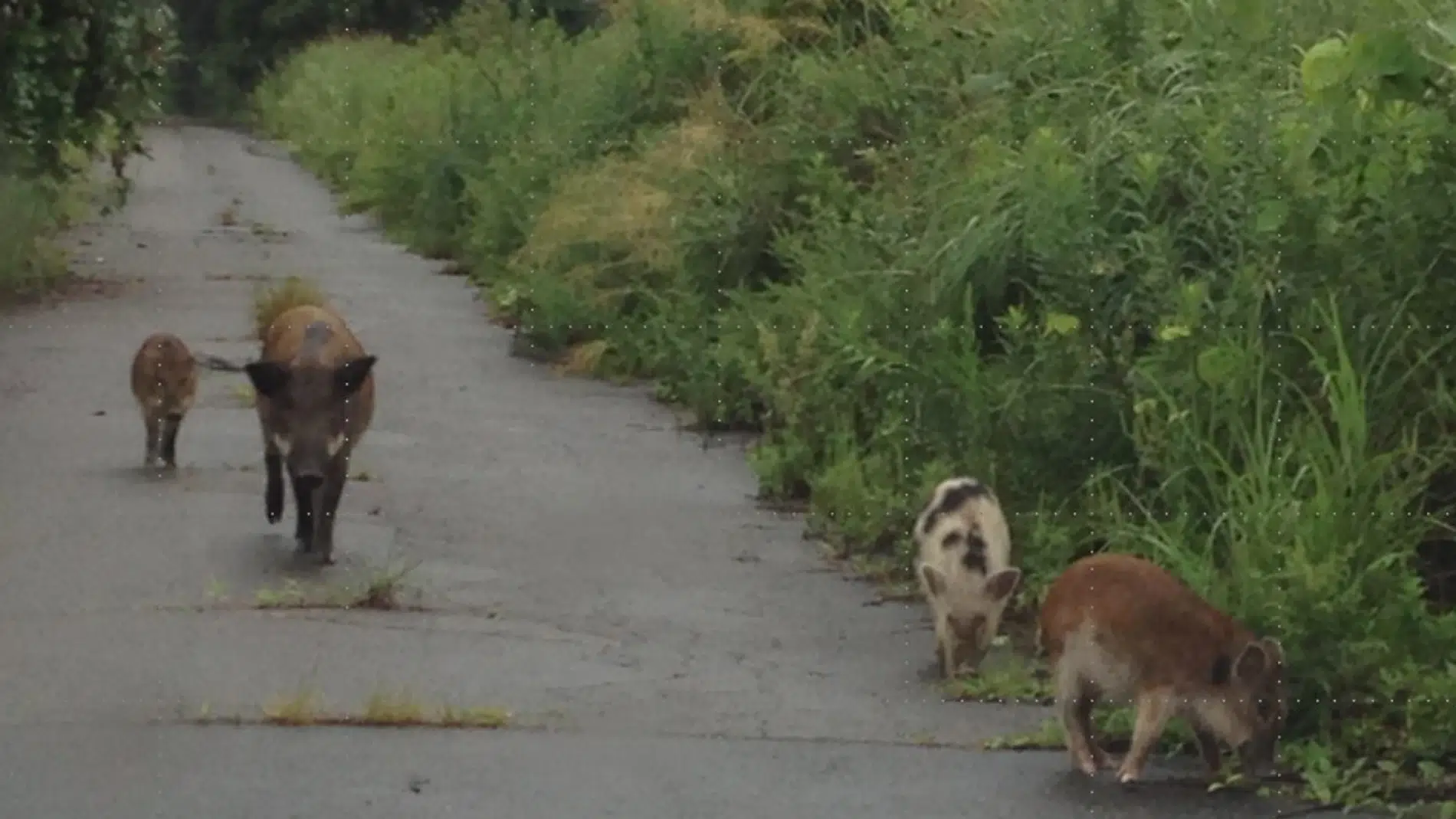
An Ecosystem Transformed by Human Abandonment
The study highlights that the absence of humans in Fukushima allowed the traits of domestic animals to be efficiently integrated into the ecosystem. This phenomenon demonstrates how mass hybridization events can modify local fauna in relatively short times.
Furthermore, the finding raises questions about the management of invasive fauna and the need for control policies that consider the reproductive speed inherited maternally. The ability to predict population explosions offers a key tool for planning conservation strategies and management.
Implications Beyond Japan
The authors point out that this mechanism of maternal inheritance likely occurs in any other region of the world where domestic and wild pigs coexist. This makes the Fukushima case a global model for understanding the dynamics of hybrid populations and anticipating their ecological impacts.
The discovery of hybrids between pigs and wild boars in Fukushima is an example of how environmental disasters and human abandonment can trigger unexpected evolutionary processes. The research provides a valuable model for understanding and managing hybrid populations in different parts of the world, where the interaction between domestic and wild animals can lead to profound changes in ecosystems.


