



In the province of Catamarca, local tourism providers have reported that the Chinese lithium mining company Zijin-Liex is allegedly causing the drying up of mountain lagoons in Fiambalá, a destination known for its natural beauty and its growing tourist appeal.
The protest materialized in a roadblock at “km 0,” the access to the road towards the Balcón del Pissis, an area of high scenic value also used by mining companies.
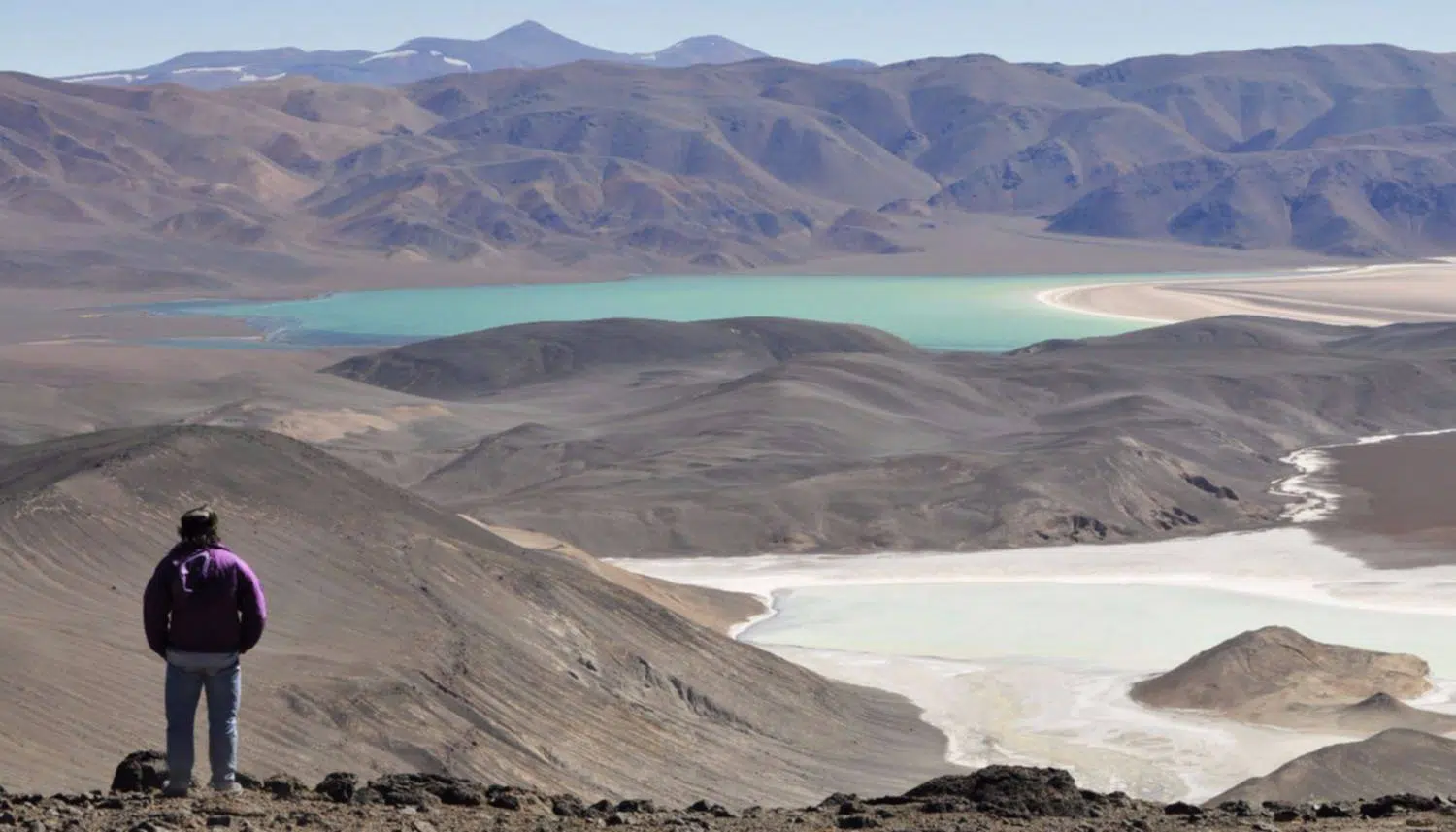
What began as a demand for road safety evolved into a denunciation of environmental ecocide, with particular concern for Laguna Verde, whose water level is said to have decreased by up to five meters. The providers claim that the phenomenon is directly linked to lithium extraction in the nearby salt flat.
Fiambalá has established itself as a tourist destination thanks to its mountain lagoons: Laguna Celeste, Laguna Negra, and Laguna Verde, the latter considered the jewel of the region for its changing colors. The loss of these natural resources jeopardizes not only biodiversity but also the local economy, which depends on tourism.
Controversies with the lithium mining company
The company Zijin-Liex had already faced problems in October 2024, when the construction of the lithium processing plant in Fiambalá was halted. There were mass layoffs, complaints about poor working conditions, and even an accusation of gender violence against a manager. The community, which expected prosperity and development, found itself with unemployment and frustration.
Residents expressed their disappointment: “My son was just let go, try to find work and see where the promised development is”. The arrival of mining, without planning or clear environmental measures, disrupted the daily life of a community with a tradition of herding and wool weaving.
Environmental impact of lithium
Lithium extraction requires enormous amounts of water: between 2,000 and 5,000 liters per ton. In an arid region like Fiambalá, this demand is critical.
- Saline and vibrant lagoons are at risk of disappearing due to aquifer overexploitation.
- Water, vital for the population, fauna, and flora, is diverted towards mining.
- Tourism, which depends on these landscapes, faces an uncertain future.
Tourism providers insist on enforcing the ordinance regulating access to the Balcón del Pissis and establishing stricter control over mining activities. Mayor Raúl Usqueda approached to talk with the protesters, but solutions still seem distant.
A national issue
The case of Fiambalá reflects a larger dilemma: lithium mining, a key resource for the global energy transition, is generating serious environmental and social consequences in Argentine communities. The promise of economic development must be accompanied by an ethical and environmental responsibility that, according to reports, is absent in many projects.
Without proper management, the advance of mining can transform these landscapes into ecological and social deserts, endangering both biodiversity and the cultural identity of communities.
The complaint in Fiambalá exposes the tension between mining development and the preservation of essential natural resources. The drying up of mountain lagoons not only threatens biodiversity but also the economic and cultural livelihood of the region. The challenge is to find a balance between exploiting a strategic resource and protecting the ecosystems that sustain local life and identity.



