



A study by the NGO Transport & Environment (T&E) revealed that in 2023, 1,043 European ferries emitted 13.4 million tons of CO₂, equivalent to the emissions of 6.6 million cars in a year. These ships, essential for connecting islands with the mainland and considered an alternative to airplanes, are in many cases old and highly polluting.
In port cities like Barcelona, Dublin, and Naples, ferries generate more toxic pollution from sulfur oxides (SOx) than all the cars in those cities. SOx cause respiratory problems, worsen asthma, and contribute to acid rain.
Most Affected Ports
- Dublin: the most polluted port city in Europe by SOx.
- Las Palmas (Gran Canaria) and Holyhead (Wales): also among the most affected.
- Barcelona: the largest CO₂-emitting port in Europe, with ferries that emit 1.8 times more SOx than all the cars in the city.
As of May 2025, the Mediterranean was designated as a Sulfur Emission Control Area, requiring a reduction in sulfur content in marine fuels from 0.5% to 0.10%. However, the Canary Islands are not included in this regulation, which could make Las Palmas the most polluting port by 2027.
The Need for a “Clean Renewal”
The average age of European ferries is 26 years, highlighting the urgency of modernizing the fleet. According to T&E, electrification and hybridization could:
- Reduce CO₂ emissions by up to 42%.
- Improve air quality in port cities.
- Lower operating costs.
The report estimates that at least 60% of the European fleet could operate on batteries by 2035, and many routes would already be cheaper in electric mode today.
Example in Stockholm
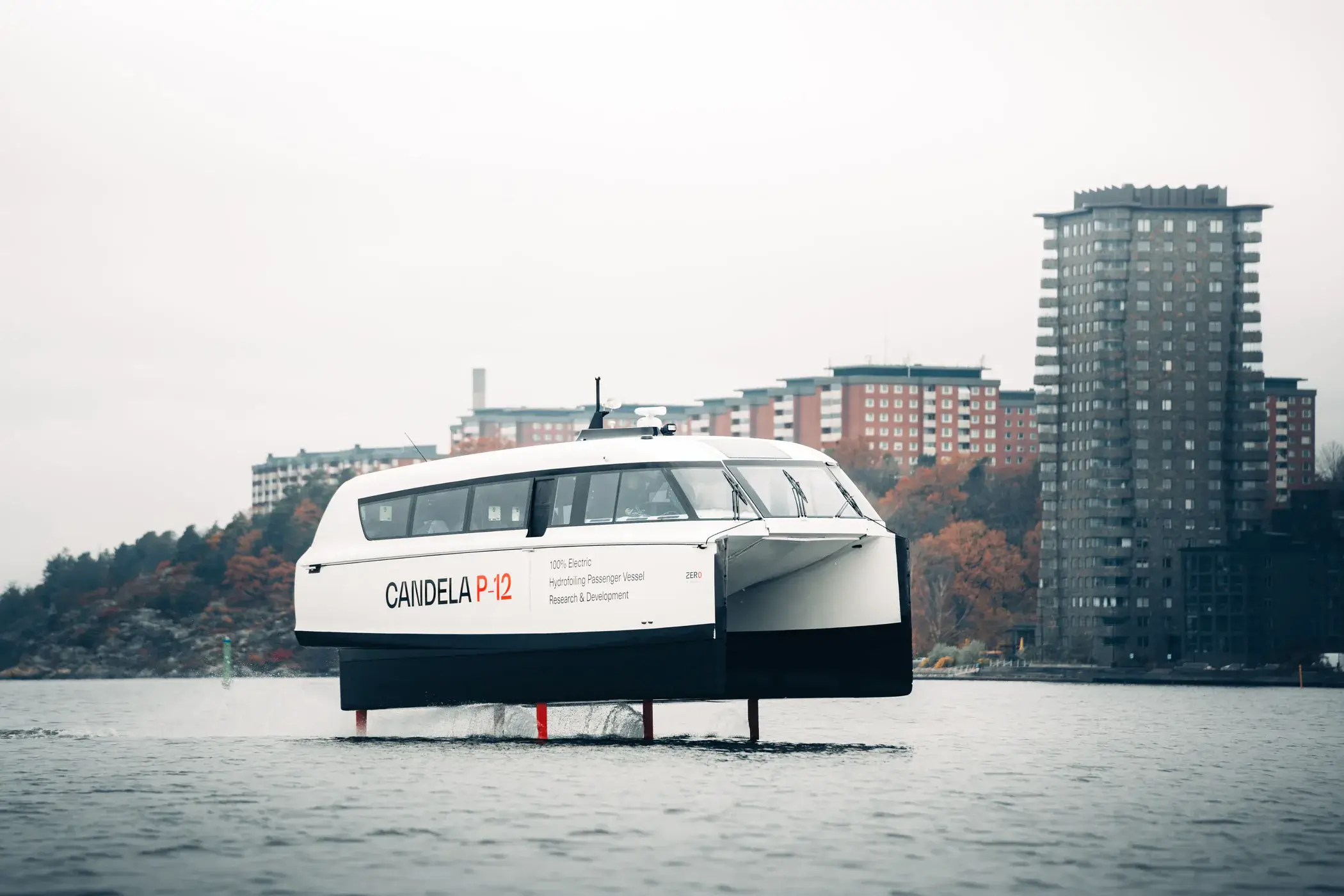
The pilot project of the Candela P-12 Shuttle, an electric hydrofoil ferry, demonstrated that it can cut emissions by up to 94% and reduce travel times from 55 to 30 minutes.
Main Features of the P-12
- Foiling Technology: underwater wings that lift the vessel, reducing resistance and consumption.
- Speed: service at 25 knots, maximum of 30.
- Sustainability: 97.5% less emissions during its lifetime compared to diesel ships.
- Inclusive Design: capacity for 30 passengers, space for bicycles, wheelchairs, and strollers.
- Versatility: variants for public transport, tourism, or private transfers.
The P-12 turns daily commutes into a fast, quiet, and comfortable experience, eliminating the environmental and acoustic impact of traditional river transport.
Obstacles and Solutions
The main challenge for generalizing electric ferries is the charging infrastructure. However, T&E argues that the challenge is smaller than expected: 57% of ports would only need small chargers of less than 5 MW to operate electric ferries.
Ferries should connect communities, not pollute them. Electrifying the European fleet could drastically reduce emissions and improve the quality of life for millions of people in port cities. With an average age of 26 years for ferries, the time for a clean renewal is now.


