



The Laguna del Cisne, located in the department of Canelones, returns to the center of the environmental debate. A proposal driven by social organizations seeks to incorporate it into Uruguay’s system of protected areas.
Additionally, the proposal includes its entry into the Departmental System of Environmental Protection Areas and the National System of Protected Areas. Consequently, the aim is to guarantee its long-term conservation.
Therefore, the initiative focuses on the protection of water as a human right. It also reinforces the need for public and community management.

A project that prioritizes water access and social participation
The Commission in Defense of the Laguna del Cisne and the Yasyry promote a comprehensive strategy. In this sense, it proposes measures aimed at preserving the quality and availability of the water resource.
Additionally, the project contemplates the expropriation of plots adjacent to the lagoon and the OSE water treatment plant. In this way, it seeks to protect the immediate environment.
Furthermore, the initiative suggests that this action constitutes an investment in public health and climate resilience. Therefore, it aims to ensure responsible and monitored access.
On the other hand, the importance of citizen participation in decision-making is highlighted. Consequently, an inclusive management is promoted.
Environmental pressures and increasing conflicts
In recent years, the lagoon has faced multiple threats. Among them, population growth and real estate projects stand out.
Moreover, urban expansion progressed in a context with insufficient sanitation infrastructure. Consequently, the risks of contamination increased.
Additionally, intensive agricultural activity left persistent impacts. Therefore, the presence of agrochemicals was detected in the water and fauna.
On the other hand, new private developments generated socio-environmental conflicts. Thus, the pressure on this key ecosystem increases.
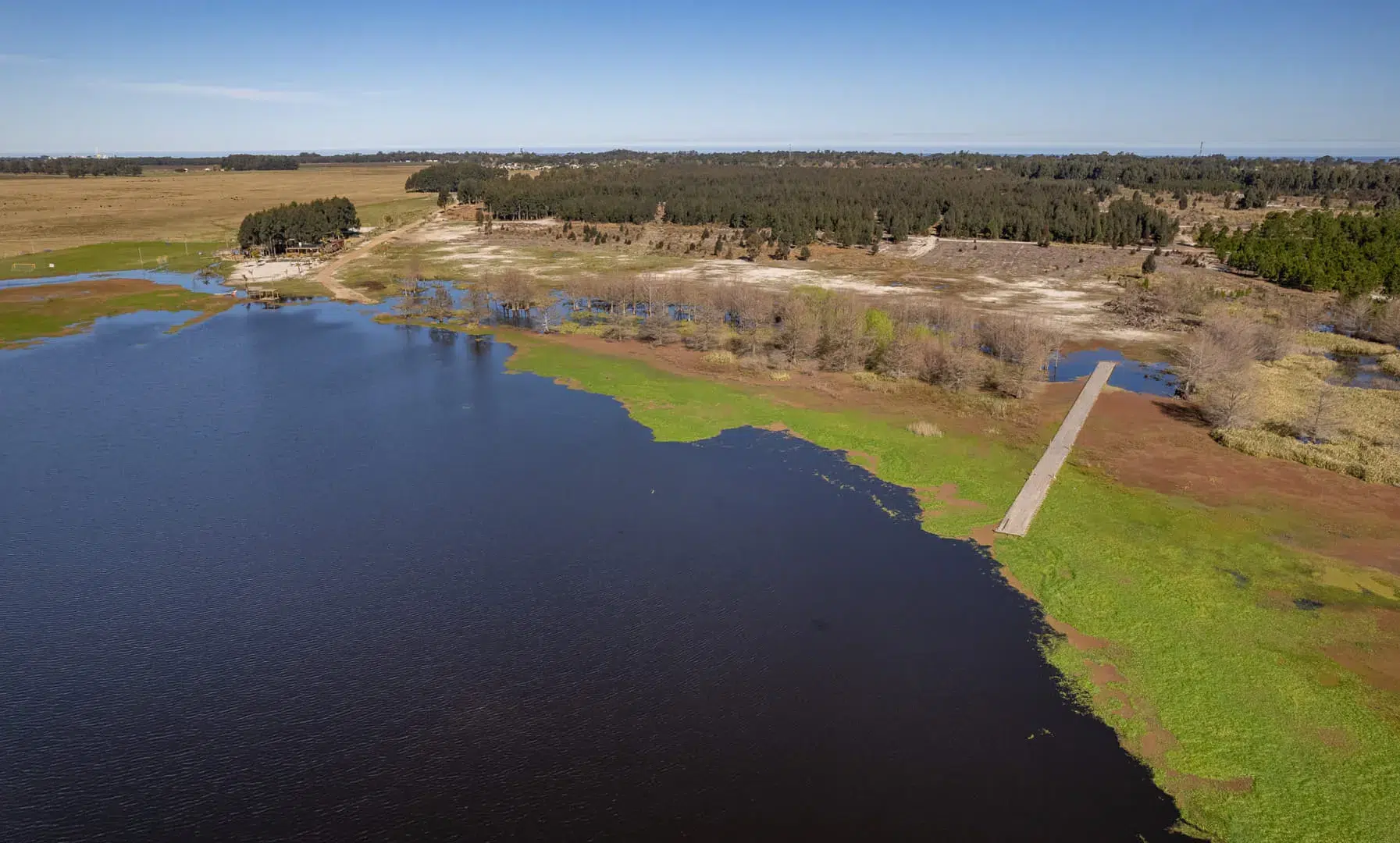
Environmental characteristics of Laguna del Cisne and its ecological importance
Laguna del Cisne is the only natural lagoon in Canelones. Moreover, it plays an essential role as a source of drinking water since 1970 for the Costa de Oro.
It also functions as a biodiversity reservoir. Consequently, it hosts aquatic and terrestrial species that depend on its ecological balance.
On the other hand, it acts as an environmental regulator. Thus, it contributes to stabilizing the water cycle and mitigating climatic impacts.
Additionally, its basin integrates natural processes and human activities. Therefore, its conservation is key to regional sustainability.
Finally, this ecosystem possesses a significant social and cultural value. Consequently, its preservation also strengthens local identity.
Towards a sustainable and educational management model
The proposal includes the creation of a Popular Training Center in Agroecology. In this sense, it seeks to promote sustainable practices.
Additionally, the space would be oriented towards environmental restoration and agroecological production. In this way, the ecological transition is promoted.
Furthermore, a joint management between organizations, educational institutions, and local actors is proposed. Therefore, territorial knowledge is strengthened.
On the other hand, the project aims to generate opportunities for youth and communities. Consequently, it promotes local attachment.
Finally, the initiative seeks to consolidate a model that integrates conservation, education, and participation. Thus, the Laguna del Cisne could become an environmental reference.


