



The coast of the state of Veracruz is facing an environmental emergency following the expansion of a hydrocarbon spill. The oil slicks continue to spread, causing the death of marine species in Mexico.
Additionally, the phenomenon originated in early March in the municipality of Pajapan. Consequently, the impact quickly spread to other coastal areas.
Therefore, the situation raises concerns about its cumulative effects. Likewise, there is evidence of damage to biodiversity and local economies.

Affected Marine Fauna and Emergency Operations
In recent days, multiple cases of marine fauna mortality have been reported. Among them, a dolphin was found on Isla del Amor, between Alvarado and Boca del Río.
Additionally, in Villa del Mar, municipality of Veracruz, a dead turtle appeared. Consequently, specialized personnel intervened for its protection.
Likewise, in Cazones de Herrera, oil slicks were detected along with another turtle covered in crude oil. Therefore, mitigation actions were deployed.
On the other hand, brigades from the Secretariat of the Navy carried out cleaning tasks. Thus, tons of contaminant residues were collected in Tuxpan and Isla Lobos.
Spill Expansion and Affected Localities
More than 20 days after the first report, the hydrocarbon reached the northern part of the state. Consequently, it now extends over more than 350 kilometers.
Among the impacted areas are Actopan, Alvarado, Ángel R. Cabada, Boca del Río, Catemaco, Coatzacoalcos, Lerdo de Tejada, Mecayapan, Nautla, Pajapan, San Andrés Tuxtla, Tamiahua, Tatahuicapan, Tuxpan, and Veracruz.
Additionally, in Nautla, it was recommended to suspend fishing activities. Therefore, the aim is to avoid health risks and local economic impacts.
Likewise, the advance of the contaminant highlights the difficulty of containment. Consequently, pressure on the coastal ecosystems is increasing.
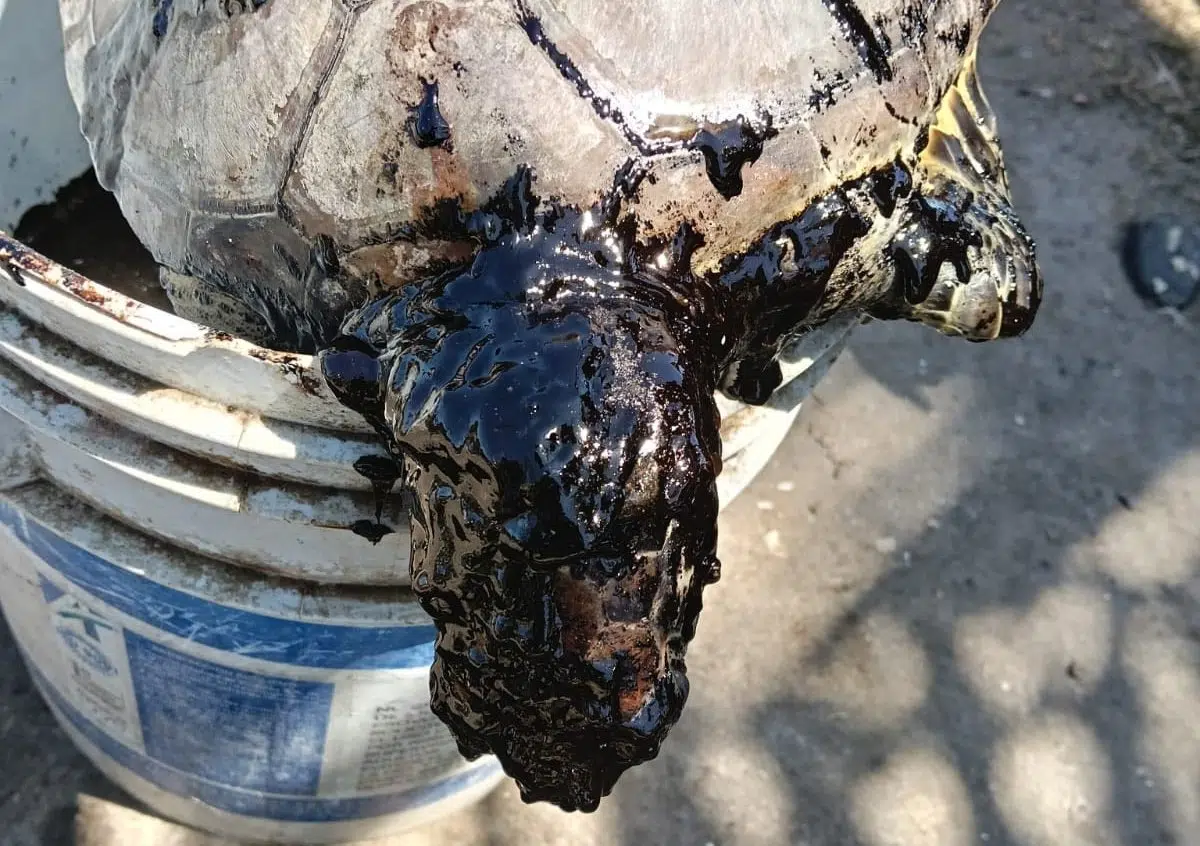
Environmental Consequences of the Hydrocarbon Spill
The hydrocarbon spills have severe impacts on marine ecosystems. Firstly, they cause the death of species due to poisoning.
Additionally, the oil covers the water surface, preventing the exchange of oxygen. Consequently, it affects fish, mollusks, and microscopic organisms.
Likewise, birds and marine mammals suffer damage to their skin and plumage. Therefore, they lose their ability for thermal insulation and buoyancy.
On the other hand, hydrocarbons contaminate sediments and coasts for long periods. Thus, they alter food chains and ecological processes.
Finally, these events also impact human communities. Consequently, they affect fishing, tourism, and environmental health.
A Scenario that Demands Sustainable Responses
Despite official efforts, the spill continues to generate visible effects. Additionally, the constant arrival of oil slicks worsens the outlook.
Likewise, specialists warn about the need for continuous monitoring. Therefore, it is necessary to evaluate medium and long-term damage.
On the other hand, coordination between organizations is key. Consequently, the aim is to strengthen the response to environmental emergencies.
Finally, the case highlights the urgency of preventive policies. Thus, it becomes essential to move towards more sustainable energy models.



