



In the arid Patagonian steppe, water has found its way again thanks to a restoration project in Santa Cruz. It’s not about large rivers or lakes, but underground springs that, upon reappearing, regenerate wetlands and restore ecological balance to the region.
The work began in 2018 in the Patagonia Park, with the removal of livestock and fences that had degraded the land. Since then, scientific and technical teams from the Rewilding Argentina Foundation have been advancing in the recovery of these vital systems.
The role of park rangers
Román Mosqueira, a park ranger and member of the El Unco Biological Station, explains that the springs are “like oases” in the middle of the steppe. Their recovery not only improves the landscape but also redefines the ecological balance of the entire region.
Originally from Chubut and graduated in Córdoba, Román joined Rewilding in 2023. Today he leads wetland restoration and invasive species control projects. “The goal is not to build something new, but to help the system function again,” he summarizes in a conversation with the Río Negro portal.
Concrete actions
Restoration tasks include:
- Cleaning obstructed channels.
- Removal of invasive exotic species like mint and watercress.
- Rechanneling springs and small retentions to regulate the flow.
- Planting native species like rushes and sedges.
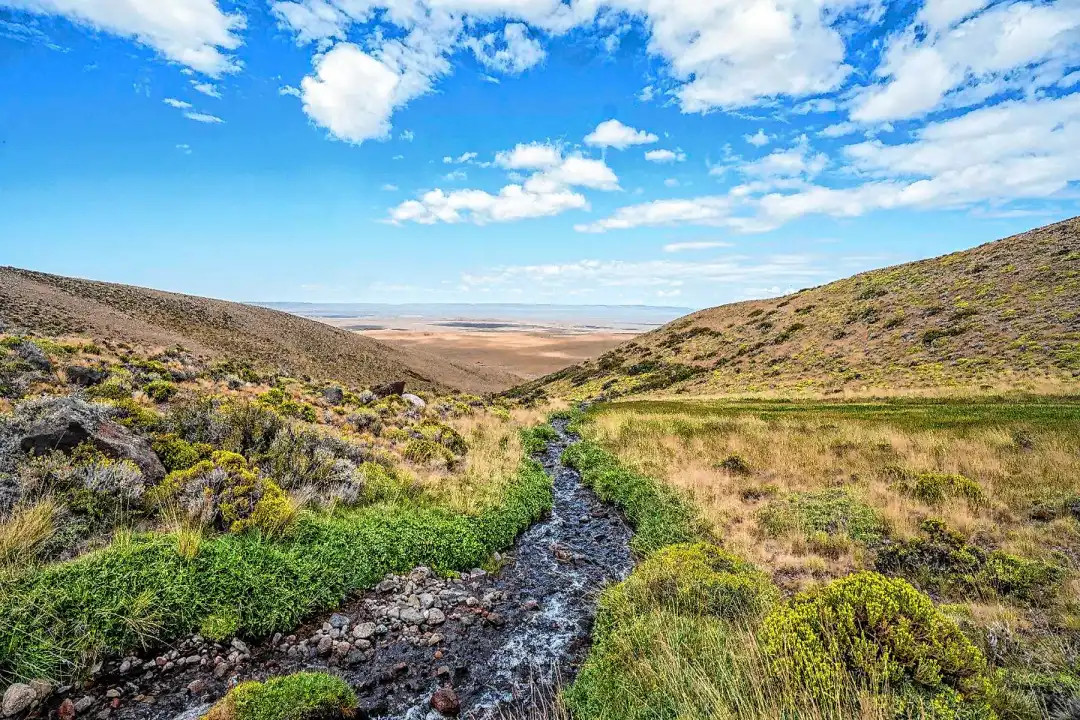
The result is visible: a wetland that in four years expanded from 8 to 30 hectares and continues to grow. Currently, the team is working on six active springs, although more than 100 have been identified in the park.
Signs of recovery
Regeneration is perceived in three stages:
- Water: flows more continuously and remains on the surface.
- Vegetation: hydrophilic species return and green areas expand.
- Fauna: birds and mammals appear, confirming that the system is functioning again.
Ecological and community value
In arid environments, wetlands play a key role: they retain water, keep soils moist and allow vegetation to develop. Additionally, the restoration incorporates a community component: local inhabitants contribute knowledge about the springs and the historical use of the territory.
The experience in Patagonia Park demonstrates that ecosystems have the capacity for resilience. After years of degradation, with time and suitable conditions, they can regenerate. “It may not be exactly like before, but it’s about finding a balance that allows life to continue sustaining itself,” Mosqueira reflects.


