



During the last weekend, the tranquility of Punta Médanos was interrupted by a disturbing discovery. Locals found the lifeless body of an adult humpback whale on the sand.
Furthermore, a few days earlier, on different beaches of the Partido de La Costa, five specimens of loggerhead turtle had appeared in similar conditions.
Consequently, the coincidence of these events raises concerns about the state of the marine ecosystem and the pressures it faces in the region.
A phenomenon out of season that draws scientific attention
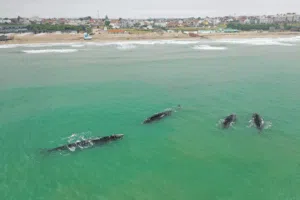
The presence of whales off the Buenos Aires coast has become more frequent in recent years. However, this case is atypical due to the timing of its occurrence.
Generally, these cetaceans begin to move south from the end of May. During that period, they head to breeding areas near Chubut.
Therefore, the early appearance of a dead specimen raises questions about possible alterations in their migratory routes or adverse environmental conditions.

Possible causes: between bycatch and health issues
In the case of the turtles, specialists link their death to bycatch. This phenomenon occurs when they become trapped in nets intended for other species.
As a result, the animals are unable to reach the surface to breathe and die from suffocation. This problem had already been detected in similar episodes recorded in the area.
On the other hand, in large mammals like whales, the causes tend to be more complex. Factors such as malnutrition, diseases, or feeding difficulties can influence their condition.
Why the presence of these animals in the region is unusual
The appearance of these specimens on the Buenos Aires coast out of season is due to multiple factors. Firstly, changes in sea temperature can alter their movement patterns.
Likewise, the availability of food also conditions their routes. If prey decreases or moves, the large marine animals may change their behavior.
Additionally, climatic phenomena such as southeast winds or intense swells can carry lifeless bodies to the shore. This explains why many findings coincide with extreme weather events.
A natural process with ecological implications
In less traveled areas like Punta Médanos, the remains usually stay in place. There, the decomposition process is part of the natural cycle of the coastal ecosystem.
Over time, the bone remains can be recovered for research or conservation in scientific institutions. Thus, each finding provides valuable information.
However, the repetition of these episodes should not go unnoticed. It reflects growing tensions between human activity and marine life.
A wake-up call about the ocean’s health
The accumulation of similar cases in the region reinforces the need for environmental monitoring. It also highlights the impact of practices such as intensive fishing.
At the same time, it invites us to rethink the relationship with marine ecosystems. Conservation not only involves protecting species but also ensuring the balance of their habitats.
Ultimately, these findings serve as alert signals. The ocean, though vast, responds directly to the pressures exerted on it.



