



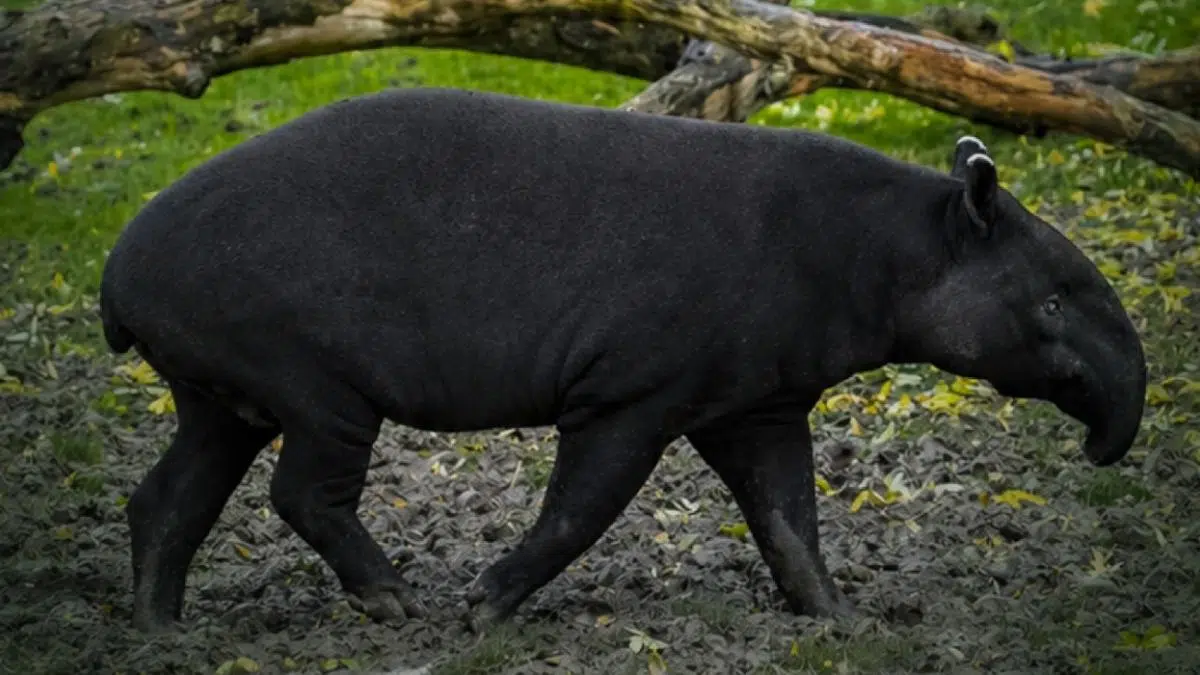
On April 27th, coinciding with World Tapir Day, the Andean tapir (Tapirus pinchaque) was recorded for the first time in the Eastern Cordillera of the Metropolitan District of Quito (DMQ).
The discovery was achieved through a rigorous monitoring process with camera traps, as part of a joint research effort between the Environment Secretariat, the Environmental Fund, and the Laboratory of Ecology and Carnivore Conservation of the Universidad San Francisco de Quito (USFQ).
This event positions Quito as a key territory for biodiversity conservation and reinforces the need to strengthen actions for the protection and restoration of ecosystems.
The “forest architect”
The Andean tapir is known as the forest architect for its role in ecosystem regeneration: it disperses seeds over long distances and contributes to ecological balance. Its presence is a direct indicator of good environmental health in the páramos and cloud forests.
In Ecuador, there are two species of tapir: the Amazonian and the Andean or mountain tapir. The latter is in critical danger of extinction, with fewer than 2,500 individuals distributed between Ecuador, Peru, and Colombia.
Importance of its conservation
- Ecosystem engineer: disperses seeds and regenerates forests.
- Water protector: its habitat in páramos regulates vital water capture for communities and agriculture.
- Critical refuge: Ecuador is one of the few countries that hosts populations of this species.
- Climate change mitigation: the forests it inhabits act as carbon sinks.
Main threats
The Andean tapir faces:
- Habitat loss due to agriculture and livestock.
- Illegal hunting.
- Competition with livestock.
- Road accidents on routes.
Conservation initiatives
- Andean Tapir Conservation Project (PCTA): population monitoring in the Llanganates-Sangay corridor, environmental education, and community participation.
- Jocotoco Foundation: use of camera traps in private reserves.
- Cóndor Andino Foundation: biodiversity monitoring in montane habitats.
- National Conservation Strategy: action plan to protect the three species of tapir in Ecuador.
- Protected areas: Sangay National Park and Llanganates National Park are essential for its survival.
The recording of the Andean tapir in Quito is a historic milestone that reinforces the importance of conserving this emblematic species. Protecting the tapir is not just about saving an endangered animal, but ensuring the functionality of ecosystems that provide water, regulate the climate, and support the biodiversity of the Andes.



