



Researchers from the Yokohama National University have introduced a resin capable of being reused up to 10 full cycles without significant loss of performance. This breakthrough promises to transform high-precision 3D printing, overcoming the limitations of traditional photocurable resins, which harden permanently and cannot be recycled.
The environmental problem of 3D printing
Stereolithography, which uses ultraviolet light to harden liquid resins, generates plastic waste that is difficult to manage.
According to Shoji Maruo, a professor at Yokohama, non-recyclable photocured models pose a growing environmental problem, as discarded parts accumulate in landfills and increase pressure on waste management systems.
The technological breakthrough
The Japanese team used anthracene, a chemical compound that allows reversible reactions:
- Photodimerization: under UV light, the molecules form cross-linked networks.
- Thermal reversion: by applying heat, the reaction is reversed and the material returns to a liquid state.
Unlike other proposals, this resin does not require photoinitiators or chemical additives, simplifying its composition and reducing pollution during recycling cycles.
Laboratory tests
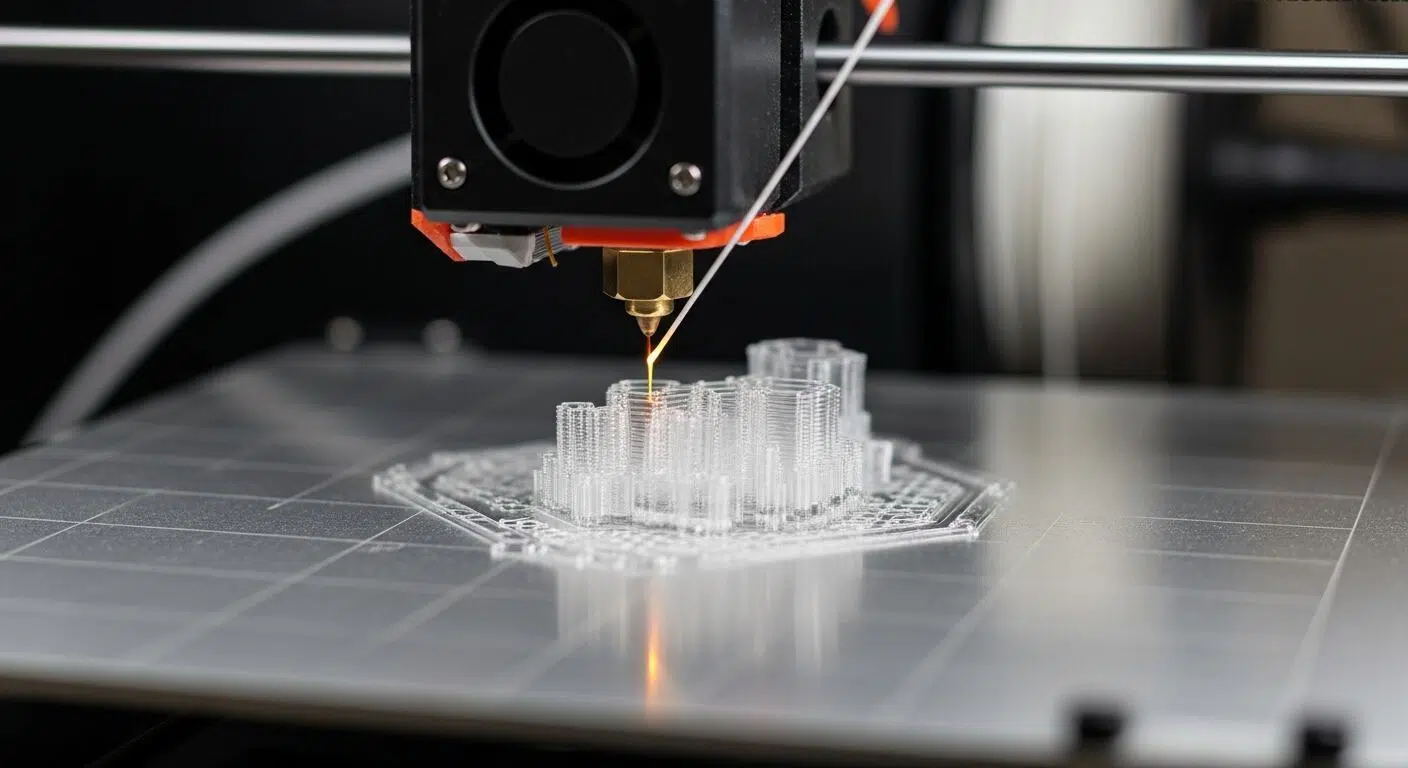
The researchers printed microscopic structures using microstereolithography and two-photon lithography.
- They created a butterfly-shaped model with quality comparable to conventional materials.
- They reused the material up to 10 times to print the letters “YNU”.
- They transformed a cube into a disc by heating it to 150 °C for 15 minutes.
The analysis showed minimal degradation compared to other recyclable materials, confirming its potential for industrial applications.
Upcoming challenges
The team seeks to adapt the resin to larger-scale 3D printers and improve its long-term stability.
The innovation opens the door to applications in industrial, medical, and research sectors, where precision and waste reduction are essential.
Circular economy and sustainability
The combination of 3D printing and recyclable materials drives a circular economy model:
- Reduction of plastic waste: reuse of failed parts and unused objects.
- On-demand production: eliminates overproduction and large inventories.
- Local manufacturing: decreases dependence on global chains and reduces the carbon footprint.
- Innovation in materials: use of organic polymers and recycled filaments like PLA or PETG.
In Argentina and other countries, rising energy tariffs and the need to reduce costs accelerate the adoption of recycled filament technologies, which allow transforming domestic and industrial waste into raw material for new prints.
The development of recyclable resin in Japan marks a milestone in sustainable 3D printing. By allowing multiple reuse cycles without quality loss, it offers a practical alternative to reduce waste and move towards a cleaner and more efficient industry.
Such innovations reinforce the transition towards a circular economy, where materials cease to be waste and become strategic resources for future production.



