



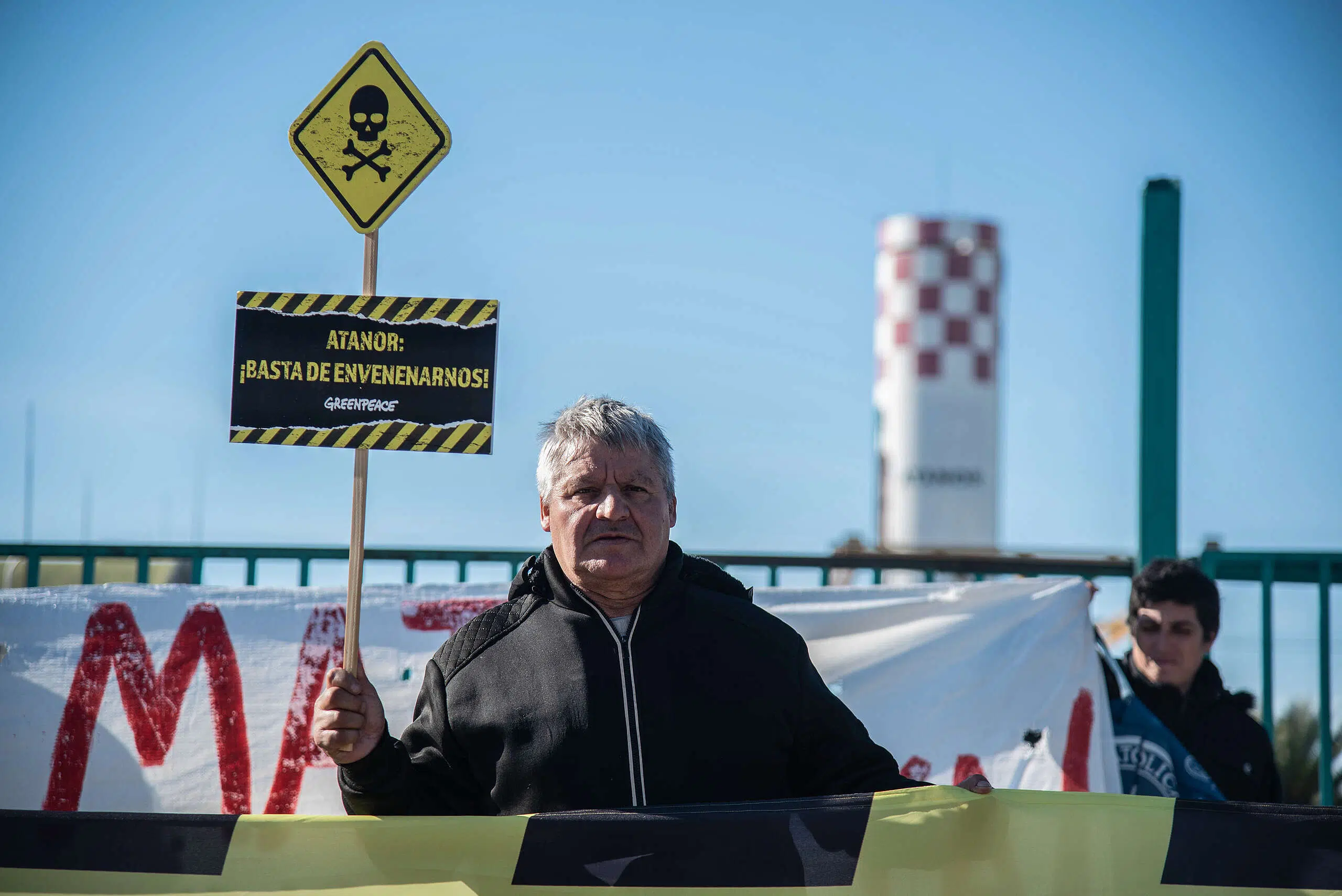
The Atanor plant in San Nicolás is once again at the center of controversy. Greenpeace and the San Nicolás Environmental Forum (FOMEA) warned that the dismantling process of the factory must be carried out under strict controls, permanent monitoring, and transparency towards the community, after detecting agrochemical residues in rainwater discharges that flow into the Paraná River.
Alarming Results
The Environmental Research Center (CIM-CONICET/UNLP) analyzed samples taken by the Water Authority of the Province of Buenos Aires between February and April. The results confirmed the presence of:
- Glyphosate and its metabolite AMPA.
- Atrazine and derivatives.
- Extremely high concentrations of Atrazine-Hydroxy.
These compounds come directly from the plant’s stormwater system, which raises concern due to their proximity to sensitive areas of the local water system.
Contamination Background
The finding adds to recent episodes:
- Hazardous waste on a cliff adjacent to the plant.
- Pesticides in wells and points of the San Nicolás water network.
According to Fabián Maggi, a lawyer for residents and a member of FOMEA, the case reflects not only corporate responsibility but also the failures of the environmental oversight system.
Judicial Context
The plant is undergoing a dismantling process following the March 2024 explosion, which forced the cessation of agrochemical production. The judiciary is investigating historical responsibilities:
- The Federal Court of Appeals of Rosario ordered inquiries into six Atanor executives, five OPDS officials, and three former presidents of the Water Authority.
- The case, initiated more than a decade ago, examines possible discharges of hazardous waste, burial of toxic substances, and omissions of state control.
Organizations’ Demands
Greenpeace and FOMEA demand:
- Permanent monitoring of the site during dismantling.
- Public access to environmental information.
- Clarification of corporate and state responsibilities.
- Preventive measures to avoid new contamination episodes affecting the Paraná River, its ecosystems, and dependent communities.
Agostina Rossi Serra, spokesperson for Greenpeace Argentina, emphasized: “The contamination did not end when Atanor stopped producing. The results reinforce warnings about the risks of mobilizing contamination accumulated over years within the industrial site”.
The Atanor case in San Nicolás exposes the tension between the need for environmental restoration and the persistence of historical pollutants.
The complaint by Greenpeace and FOMEA highlights that the dismantling of the plant cannot be carried out without rigorous controls, as public health and the protection of the Paraná River, one of Argentina’s most important water systems, are at stake.



