



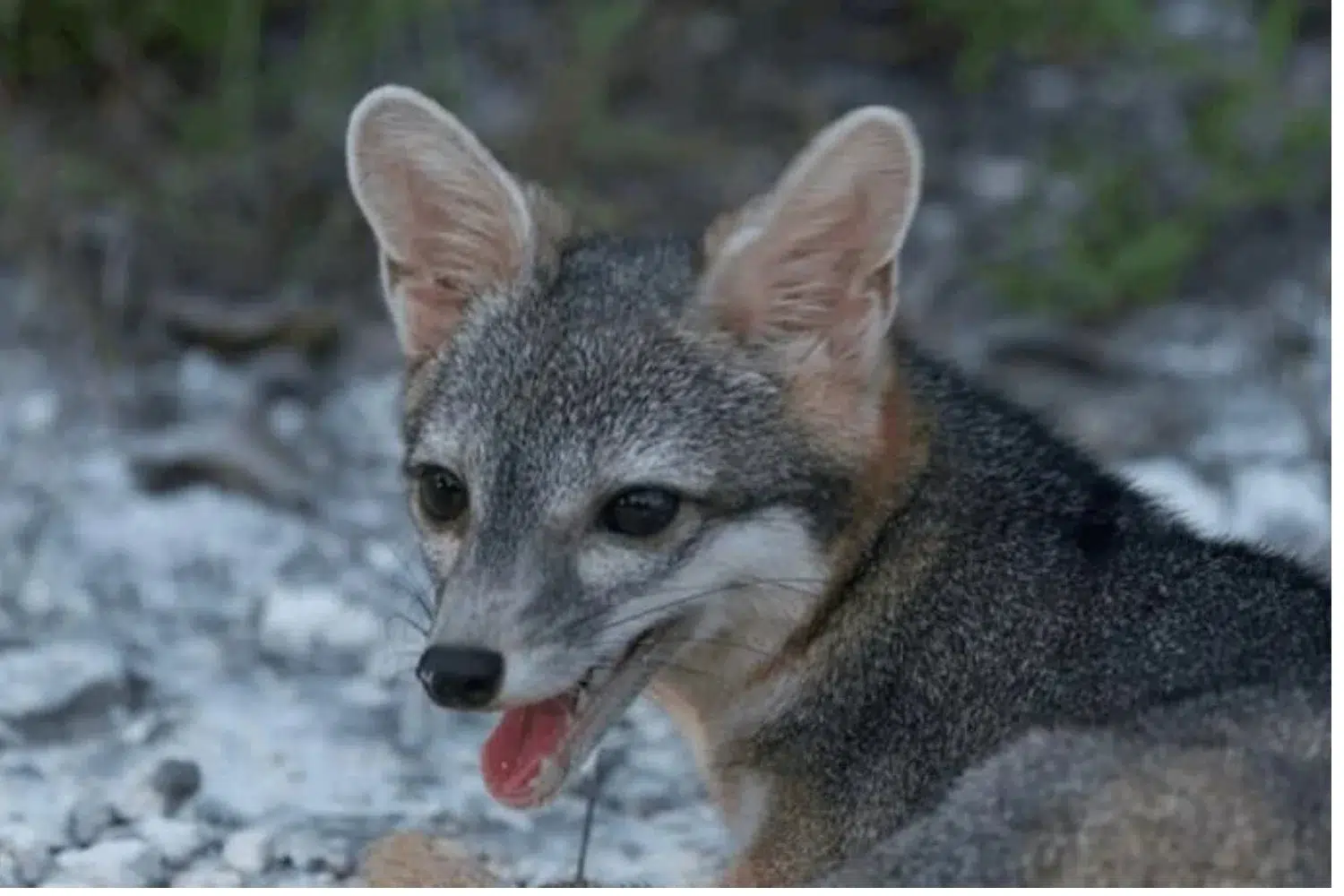
Después de más de 20 years without confirmed records, the Cozumel dwarf fox (Urocyon sp.), considered in critical danger of extinction, has reappeared in Mexico.
The scientific journal Neotropical Biology and Conservation published photographic evidence of the first confirmed sighting in decades, marking a milestone for the conservation of one of the rarest canids on the planet.
The record corresponds to the rescue of an adult male on September 14, 2023, located by the Foundation of Parks and Museums of Cozumel after notices from neighbors. The animal was attended to, medically evaluated, and released on September 17 in the Laguna Colombia State Reserve, an ideal protected area far from roads.
A unique lineage in the Caribbean
The Cozumel dwarf fox represents an isolated population that has inhabited the island for millennia. Subfossil remains even suggest that its presence predates the first Mayan settlements.
This prolonged isolation led to a process of island dwarfism and evolutionary divergence, although it was never formally described as an independent taxonomic species. The study estimates that it measures between 60% and 80% of the size of the continental gray fox, making it an exceptional case of evolutionary adaptation.
Threats it faces
The habitat in the south of the island is under constant pressure:
- Land use change due to urbanization and tourist development.
- Invasive species that compete for resources or transmit diseases.
- Natural disasters such as hurricanes, which alter fragile ecosystems.
The scientific community warns that the fox is on the brink of disappearance if urgent conservation measures are not implemented.
Reflections from the researchers
The lead author, Travis D. Bayer, noted that extinction can occur gradually and silently, especially in rare species inhabiting remote places. “The rediscovery is not yet a resounding success, but it represents a second chance,” he stated.
The big question is how many specimens survive and what their distribution is. The lack of information on population and ecology greatly hinders its conservation.
Conservation priorities
The authors identified urgent actions:
- Population studies to determine size and distribution.
- Genetic analysis to understand its evolution and confirm its taxonomic status.
- Protection of suitable habitats and reduction of conflicts with humans.
- Environmental education in local communities to avoid negative interactions with wildlife.
Importance of the finding
The rediscovery of the Cozumel dwarf fox is a reminder that conservation must act even amid uncertainty. The species, invisible for two decades, is once again the protagonist of a scientific and social effort aimed at preventing its silent extinction.
The case also opens the door to reflect on other little-studied animals that may be disappearing without the world noticing. As Bayer pointed out, “conservation is often more urgent when certainty is lower and uncertainty itself can be a call to action.”
The Cozumel dwarf fox, rediscovered after 20 years, represents a second chance for science and conservation. Its future will depend on rapid research, habitat protection, and community commitment. This finding not only restores hope for a unique species but also underscores the need to act decisively in the face of the silent loss of biodiversity.



