



The sea turtles have inhabited the oceans for more than 100 million years, which means they coexisted with dinosaurs and survived their extinction.
Their persistence with few evolutionary changes makes them one of the most resilient vertebrates on the planet and an indicator of marine health.
Essential Ecological Functions
Sea turtles play vital roles in ecosystems:
- By feeding on seagrasses and algae, they keep these habitats healthy and promote biodiversity.
- In coral reefs, species like the hawksbill consume sponges that compete with corals, aiding their recovery.
- Their nests on beaches provide nutrients to the soil, strengthening coastal vegetation that protects against erosion.
If they disappear, natural cycles that sustain both marine biodiversity and human communities dependent on fishing and tourism are disrupted.
Species and Characteristics
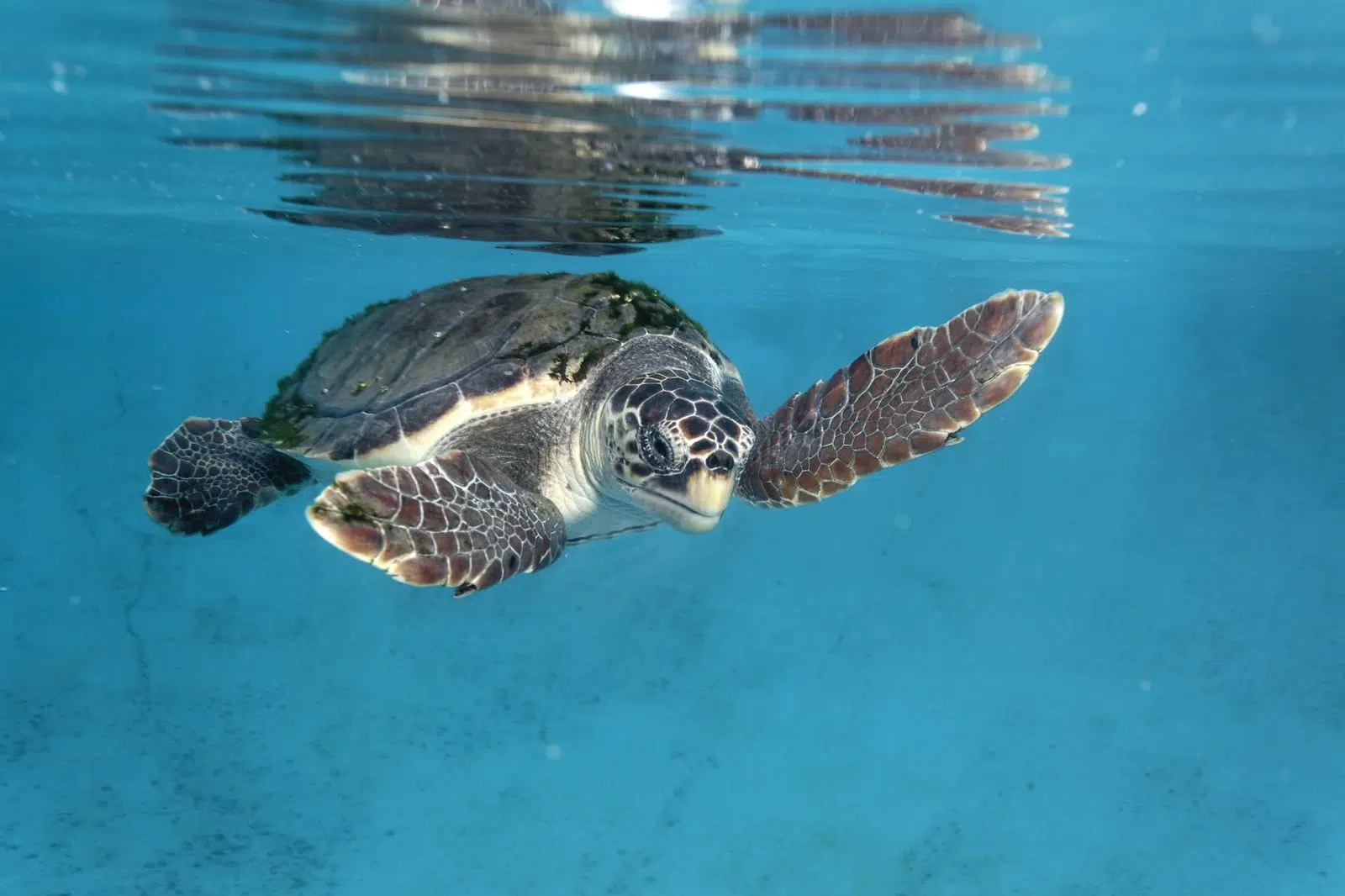
There are seven recognized species: green, leatherback, hawksbill, loggerhead, Kemp’s ridley, olive ridley, and flatback. They are grouped into two families: six with hard shells and one (the leatherback) with a flexible shell. Each individual can be identified by the unique pattern of its facial scales, like a fingerprint.
Unlike land turtles, sea turtles cannot retract their heads or legs into their shells. Their hydrodynamic bodies and flippers allow them to swim long distances.
Reproduction and Climate Threats
The sex of the hatchlings depends on the incubation temperature:
- Above 29 °C → females.
- Below 29 °C → males.
This phenomenon, called temperature-dependent sex determination, concerns scientists because global warming generates clutches with a majority of females, risking reproductive balance.
Survival and Longevity
Only one in a thousand hatchlings reaches adulthood. After hatching, they face predators like birds, crabs, fish, and domestic dogs.
Those who survive can live between 50 and 100 years, reaching sexual maturity only between 20 and 35 years.
Extraordinary Migrators
Sea turtles travel up to 19,000 km between feeding areas and nesting beaches.
They use the Earth’s magnetic field as a natural compass, a phenomenon known as geomagnetic imprinting, which allows them to return decades later to the same beach where they were born.
Human Threats
Turtles face multiple risks derived from human activity:
- Bycatch.
- Ingestion of plastics.
- Climate change.
- Habitat destruction.
- Exploitation of eggs and meat.
Each year, according to the UN, eight million tons of plastic enter the oceans, causing deaths by entanglement or ingestion. The case of “Lime-a-palooza,” a turtle rescued with more than a meter of thread and a balloon in its digestive system, exemplifies the damage of pollution.
Sea turtles are much more than a symbol of the oceans: they are key species for ecological balance and their conservation is essential for the health of the seas and human communities.
Protecting them involves reducing plastic pollution, regulating fishing, and addressing climate change with responsible actions.


