



Moving goods is essential for the global economy, but the climate impact varies depending on the means used. According to the International Energy Agency (IEA) and the technical analysis of The Geography of Transport Systems:
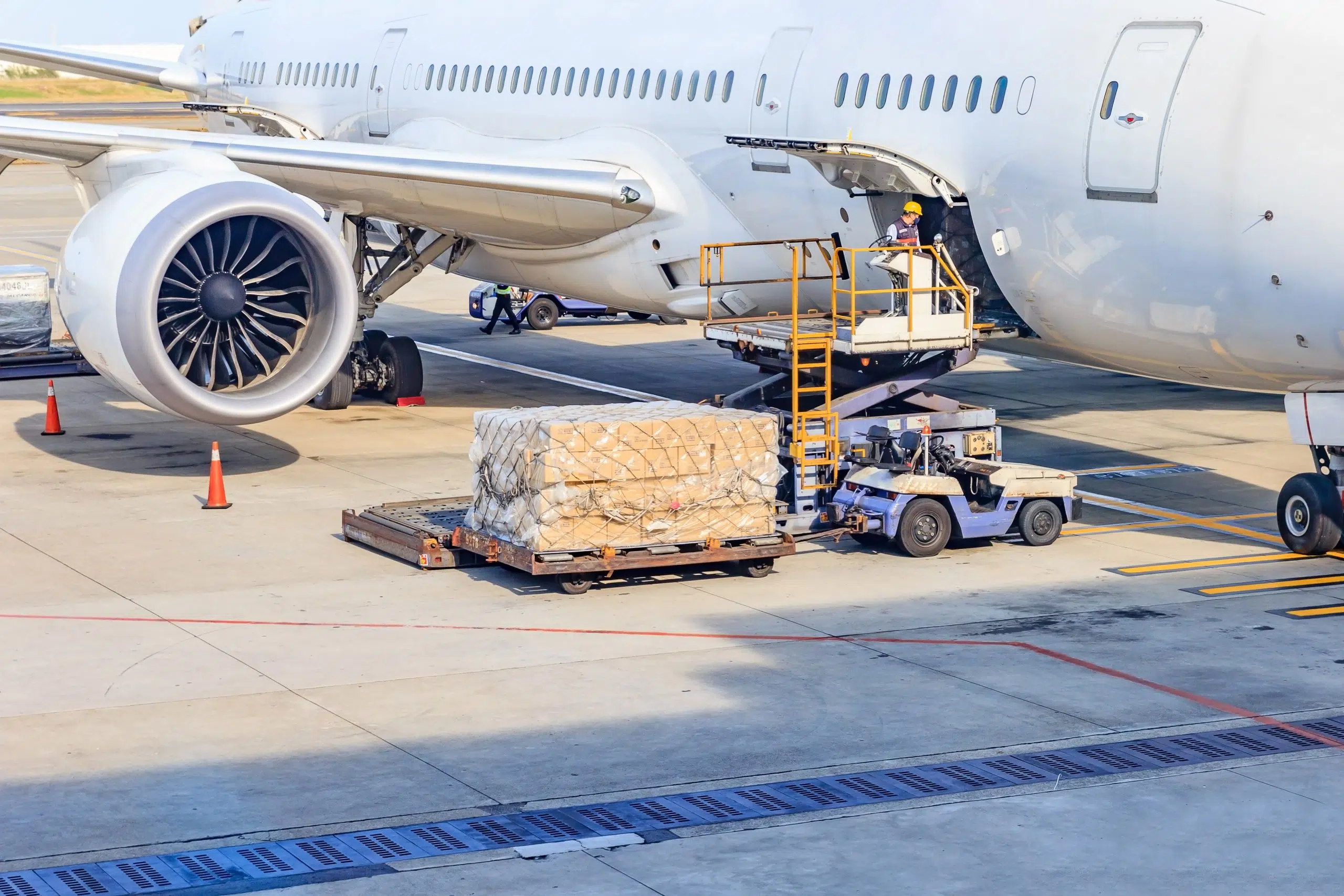
- Air transport: 602 g CO₂/t-km.
- Road: 62 g CO₂/t-km.
- Rail: 22 g CO₂/t-km.
- Maritime: 8 g CO₂/t-km.
Transporting one ton by plane can generate 75 times more emissions than by ship over the same distance. Even compared to road transport, the plane emits about ten times more.
Reasons for the high air impact
Air transport requires enormous amounts of energy:
- A wide-body cargo plane needs up to 130 MW of power to take off, equivalent to the consumption of more than 100,000 average households.
- The main fuel is kerosene, derived from fossils.
- Alternatives such as sustainable aviation fuels (SAF), green hydrogen, or electrification represent less than 1% of global consumption.
The OECD estimates that although air transport accounts for less than 1% of global freight activity measured in ton-kilometers, it is the mode with the highest carbon intensity.
Maritime transport: the most efficient
More than 80% of global trade is moved by sea. Although ships are large emitters in absolute terms, their carbon intensity per unit transported is the lowest.
- A container ship can carry between 200,000 and 240,000 tons in a single transoceanic trip.
- In 2024, global maritime transport emissions reached 973 million tons of CO₂, mainly from container ships and bulk carriers.
Rail and road transport
- Rail transport represents 6% of global ton-kilometers, but barely 1% of the sector’s emissions.
- Road transport emits ten times less than air transport but accounts for 65% of global emissions due to its massive use.
- The urban last mile represents 20% of freight transport emissions, despite covering only 3% of the activity.
Logistical factors beyond emissions
The choice of transport mode also depends on:
- Delivery time: perishable or urgent products usually travel by plane.
- Cost: maritime and rail are more economical for large volumes.
- Available infrastructure: ports, railways, and roads influence decisions.
- Type of goods: raw materials and industrial goods are moved by ship or train; high-value electronics, by plane.
Air transport is the most polluting means per ton-kilometer, while maritime is the most efficient.
Decarbonization logistics requires reducing dependence on planes, improving road transport efficiency, and enhancing alternatives such as rail and sustainable fuels.
