



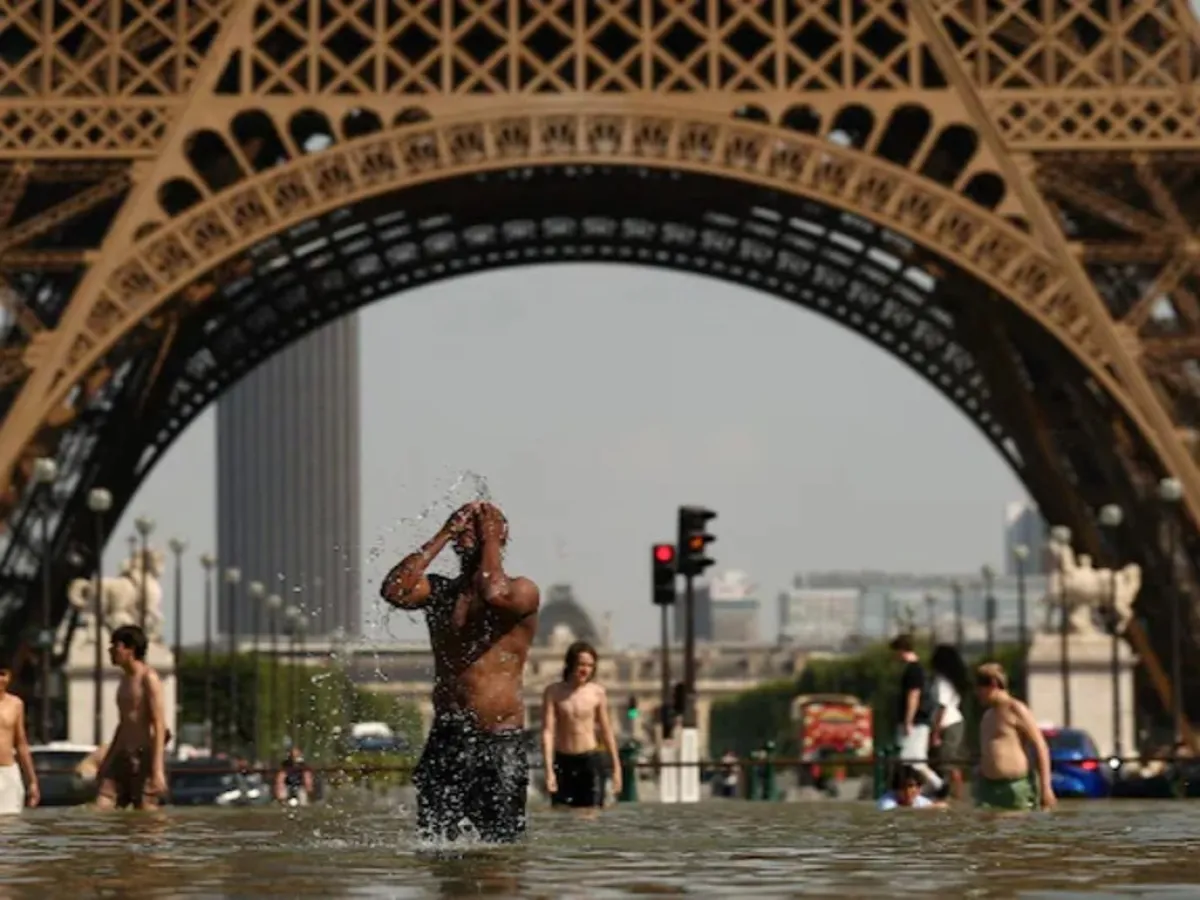
Western Europe is experiencing a heat dome that has shattered temperature records in June. France recorded the hottest day in its history for the second consecutive day, with a national average of 30 °C in 24 hours, surpassing the previous record of 29.9 °C. In Paris and other cities, thermometers exceeded 40 °C.
The United Kingdom issued red alerts for extreme heat, an exceptional measure, with forecasts of up to 39 °C, which would far exceed the historical June record (35.6 °C). Spain and Germany also reported record temperatures.
Humidity and health risk
The heat is accompanied by high humidity, making it difficult to regulate body temperature.
- Dr. Heather Massey explained that perspiration loses effectiveness when humidity is high.
- Professor Hugh Montgomery warned that temperatures of 36 °C with 65% humidity can be dangerous, and that 42 °C with 35% humidity can be lethal.
Social impact: drownings and vulnerability
The heatwave has led to an increase in drowning deaths:
- In France, at least 42 people died in rivers and lakes in one week, mostly young people seeking to cool off.
- In the United Kingdom, 19 people died in open waters last month.
Cold water shock is one of the main causes of drowning, even in experienced swimmers, when the water temperature is below 15 °C.
Children from disadvantaged areas are more than twice as likely to die in these circumstances, according to the UK National Child Mortality Database.
Stifling nights and power outages
France experienced its second hottest night in history, with a national average of 21.5 °C. In Paris, temperatures did not drop below 25.5 °C throughout the night. More than half of the country (58 out of 96 regions) is under red alert.
In Brittany, about 68,000 homes were left without electricity, affecting hospitals and nursing homes.
Energy consequences
Extreme heat also affects infrastructure:
- The nuclear reactor Golfech 2 temporarily shut down due to the increase in river water temperature.
- Other reactors, such as Saint-Alban 2, Bugey 3, and Nogent 2, reduced their production.
- French regulations require limiting operations to protect aquatic life.
Climate change as a trigger
Experts like Peter Thorne from the ICARUS Climate Research Center warn that heatwaves are being enhanced by human emissions of greenhouse gases.
“We are cooking in our homes in much of Europe,” Thorne told CNN, noting that many homes were designed to retain heat.
Climate change adds between 3 and 4 additional degrees to extreme temperatures, according to preliminary studies.
Recommendations for the population
- Stay out of the sun during the central hours of the day.
- Close blinds and windows during the hottest hours.
- Seek cool spaces and use available community support.
- Pay attention to elderly and children, the most vulnerable.
The heatwave hitting Europe is a reminder of how climate change intensifies extreme phenomena and endangers health, safety, and infrastructure.
France, the United Kingdom, and Spain face not only temperature records but also social and energy consequences that highlight the urgency of adaptation and mitigation measures.


