



The mayor Nicolás Mantegazza officially launched the strategic project that plans the city’s growth for the next 30 years. Environmental recovery, urban planning, tourism, investments, employment, and sustainable development are part of an unprecedented initiative for the region.
With a long-term vision and the goal of turning the Laguna de San Vicente into the main driver of environmental development, tourism, urban, and economic growth of the district, Mayor Nicolás Mantegazza officially presented “Distrito Laguna San Vicente“, a master plan covering 561 hectares and proposing a comprehensive transformation of one of the most important natural spaces in the Buenos Aires Metropolitan Area.
The initiative represents one of the most ambitious territorial planning projects promoted by a Buenos Aires municipality in recent years and outlines a roadmap for the coming decades, integrating environmental recovery, public infrastructure, private investments, preservation of natural heritage, and new opportunities for residents, entrepreneurs, and companies.
“This is not a project for one administration. It is a project for the next 30 years and for future generations,” expressed Mantegazza during the presentation, defining the strategic scope of an initiative that seeks to restore the historic relationship between the city and its lagoon.
The project was born after more than three years of interdisciplinary work among municipal technical teams, provincial agencies, national universities, researchers, scientific institutions, social organizations, and private sector representatives.
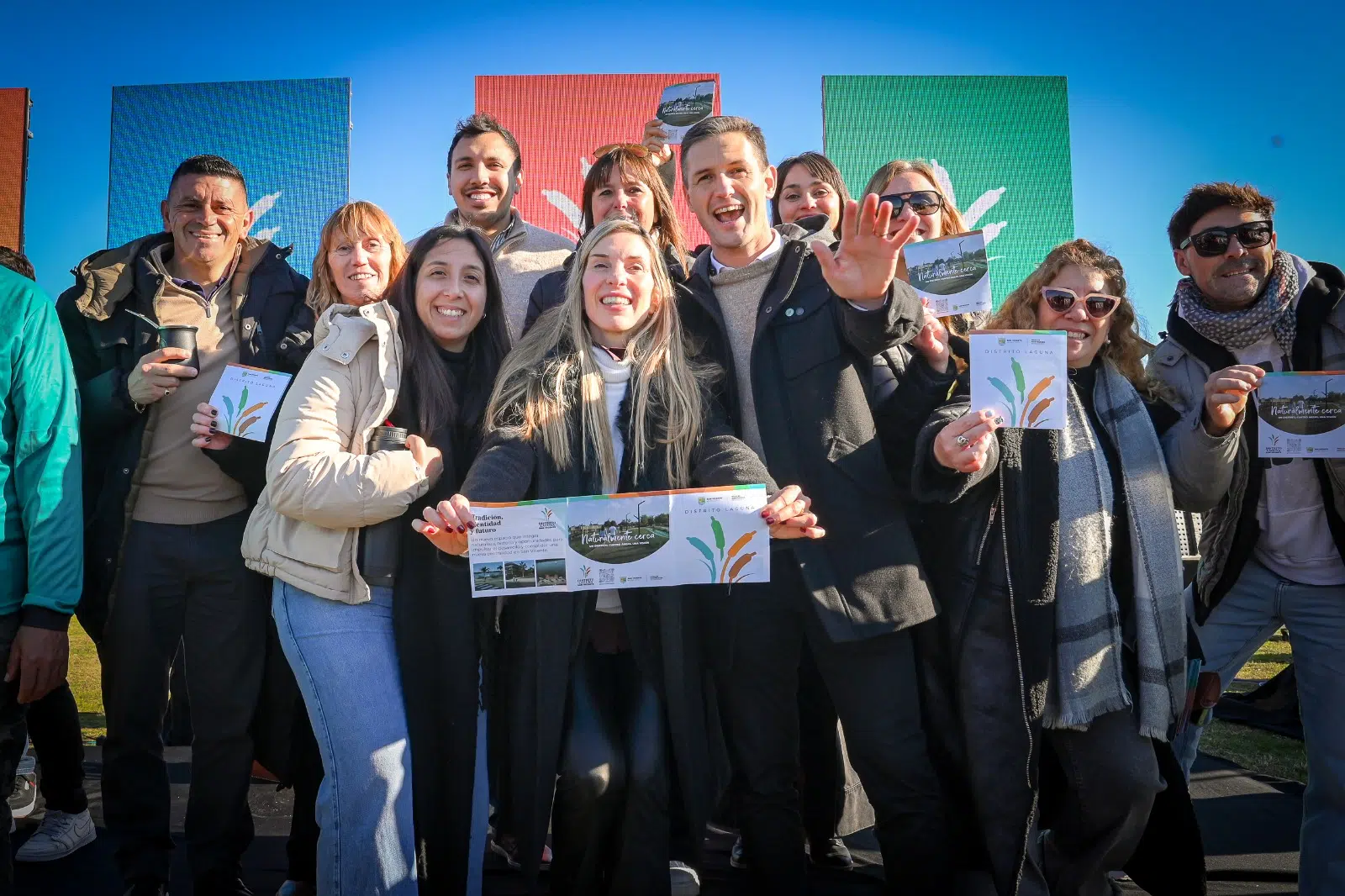
A new centrality for San Vicente
Distrito Laguna proposes to reorganize urban growth around the district’s main natural heritage, consolidating a new meeting space for the community and generating a development model based on sustainability.
The planning includes four major strategic areas.
The northern zone will be oriented towards environmental conservation and ecosystem protection.
The eastern zone will preserve the historical and cultural heritage linked to the origin of San Vicente.
The western zone will enhance development associated with the air park and regional connectivity.
Meanwhile, the southern zone will concentrate the main transformation hub, incorporating new public spaces, infrastructure, gastronomic proposals, services, recreational activities, tourism ventures, private investments, and new urban developments.
The goal is for the lagoon to cease being an isolated space and become the heart of a new growth phase for San Vicente.
Unprecedented environmental recovery
One of the central axes of the project is the comprehensive recovery of the lagoon’s environmental system.
In this context, the Municipality has already launched the most important reforestation plan in its history, with more than 5,000 trees planted in various public spaces, in addition to the recovery of the Costanera Sur and the incorporation of new machinery specifically aimed at the maintenance and sanitation of the water body.
Among the most significant actions is the start of a historic intervention on the lagoon that will allow the recovery of approximately 28 hectares of the water body by removing invasive aquatic vegetation, improving its hydraulic capacity, and increasing its storage capacity by about 50%.
This is complemented by an institutional achievement of enormous relevance: after joint work with provincial agencies such as the Water Authority and the Ministry of Environment, San Vicente managed to incorporate nearly 300 new hectares into the protected system.
Thus, the Distrito Laguna reaches a total area of 561 hectares, becoming the largest integrated system of natural reserve and water body within the Buenos Aires Metropolitan Area.
Economic development, employment, and investments
One of the pillars of the project is to generate a new model of economic development based on nature tourism, private investment, and the growth of services.
The plan includes the creation of new gastronomic spaces, hotel ventures, sports, recreational, and commercial activities, as well as creating conditions for the development of investments linked to tourism and the local economy.
According to estimates from the Municipality, the Distrito Laguna will boost the generation of direct and indirect employment, strengthen local suppliers, expand the commercial offer, and consolidate an active economic circuit throughout the year.
In this regard, the mayor also announced the submission to the Deliberative Council of an ordinance that will create a Municipal Program for the Promotion of Public-Private Investments.
The initiative will establish specific tools to encourage strategic investments through promotion regimes, benefits, new urban uses, and mechanisms of articulation between the State and the private sector.
“We are going to give it momentum. There is a strategic plan. We will call on the entire city and all sectors to build it together,” stated Mantegazza.
A new tourist destination for the Province
Distrito Laguna also seeks to position San Vicente as one of the main nearby tourist destinations in the province of Buenos Aires.
The proposal will integrate the Laguna de San Vicente, the Natural Reserve, the 17 de Octubre Historical Museum, and new circuits linked to environmental tourism, sports, gastronomy, education, and events.
The goal is to increase visitor stays, diversify the tourist offer, and consolidate a new recreational hub for millions of inhabitants of the Metropolitan Area.
Science, university, and sustainable development
The project was designed under the guidelines of the Sustainable Development Goals promoted by the United Nations and involves the participation of national universities, researchers, and scientific organizations.
During the presentation, the joint work developed with the National University of Lomas de Zamora, specialized researchers, academic institutions, and provincial technical agencies was highlighted to ensure growth compatible with the preservation of environmental heritage.
The initiative also includes permanent programs of environmental education, scientific research, ecological restoration, strengthening of the Natural Reserve, and development of technologies for the sustainable management of the ecosystem.
A project for future generations
At the close of the event, Mantegazza defined Distrito Laguna as the starting point of a new stage for San Vicente.
“Today begins a new story to become a powerhouse in the province of Buenos Aires, taking care of what is most valuable to us, which is water and the environment, but generating opportunities for everyone,” he expressed.
And he concluded with a definition that synthesizes the spirit of the project:
“What for visitors will be a walk by the water, for the residents of San Vicente will be work, investment, services, opportunities, and the recovery of a public space that for years was waiting to be a protagonist.”
With a view projected towards the coming decades, Distrito Laguna seeks to turn a historic natural heritage into a new growth engine, integrating public planning, private development, environmental preservation, and community participation into a single city strategy.



