



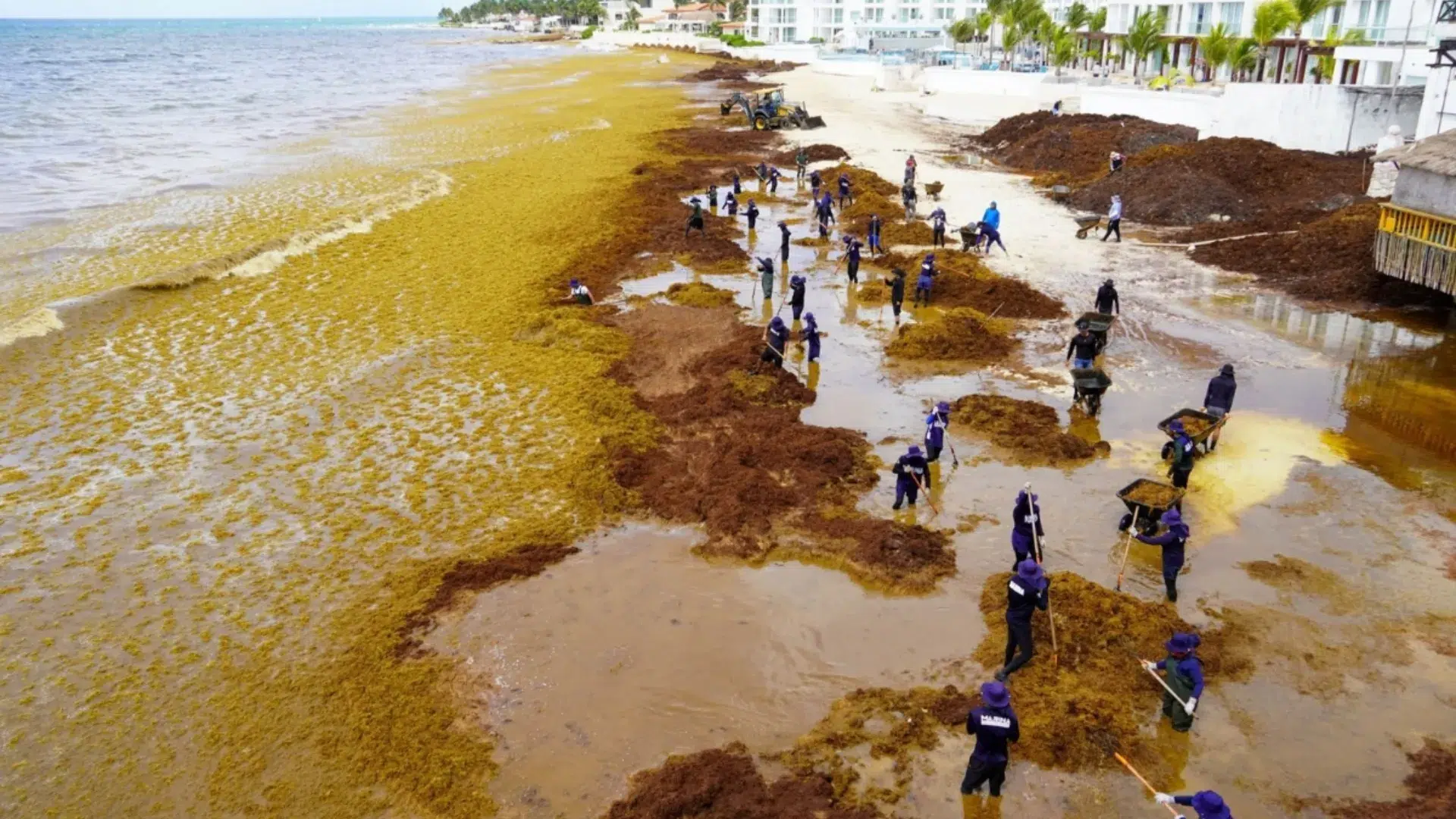
The year 2026 will be remembered as the worst in terms of exponential growth of sargassum. A historic landing of more than 40 million tons is estimated, with devastating consequences for tourism, hospitality, real estate value, and the regional economy of the Caribbean.
Analysts estimate losses of several trillion dollars, and the most concerning aspect is that the worst part of the phenomenon has yet to be felt.
The uncontrolled growth of this brown macroalga is directly linked to human activity: the contribution of chemical nutrients to the sea, global warming, and ocean acidification.
From plague to opportunity
In the face of this crisis, researchers and companies are working on disruptive solutions to transform sargassum into useful raw material.
Bio-transformation emerges as an alternative capable of turning the problem into a business opportunity while mitigating environmental impacts.
Among the most promising products are:
- Bioplastics.
- Biofertilizers and biostimulants.
- Biogas.
- Activated biochar (ABC).
Sargassum bioplastics
The algae contain high levels of cellulose and alginates, allowing the manufacture of biodegradable materials with properties comparable to conventional plastics like HDPE or PLA.
Main advantages:
- Degrades in 10-26 weeks without leaving microplastics.
- Does not compete with food sources or require fertilizers.
- Reduces carbon footprint compared to plastics like PET or PLA.
- Can be applied in packaging, containers, pallets, bags, pet diapers, sandbags, and water filters.
Biofertilizers and resilient agriculture
Sargassum provides nutrients that improve crop yields and the nutritional quality of food. Additionally:
- Promotes tolerance to abiotic stress.
- Improves the water resilience of plants.
- Enhances resistance to pests and extreme temperature changes.
Activated biochar (ABC)
Through continuous processes, sargassum can be transformed into high-capture biochar, useful for:
- Restoring soils.
- Filtering water.
- Capturing carbon emissions.
- Controlling pests naturally.
- Generating tradable carbon credits.
ABC stands out for its high porosity, hydrophilicity, and electrical conductivity, qualities that make it an ideal material for electrochemical biosensors and portable analytical devices.
Bioenergy and biogas
Sargassum can also be converted into biofuels with low emissions and a zero-waste cycle.
These processes have already proven useful for industrial energy, machinery, and transportation, offering a cost-effective alternative to fossil fuels.
Obstacles and challenges
The alternatives exist, but the lack of political will, corruption, and bureaucracy hinder the implementation of large-scale projects. Without a clear regulatory framework and institutional support, sargassum will continue to grow and reach new records, worsening the environmental and economic crisis in the Caribbean.
Sargassum is today a threat, but also an opportunity. Turning it into bioplastics, biofertilizers, biochar, and biogas can transform a marine plague into a driver of sustainable innovation.
The key lies in overcoming political and bureaucratic hurdles so that science and industry can deploy solutions that benefit both the environment and the regional economy.



