



The company Quebracho Colorado SA, run by two American brothers, has been requesting deforestation permits in Salta since 2007. In total, they have sought authorization to intervene in almost 80,000 hectares in the Anta and Orán departments. Although some of these requests have not been realized, at least 30,000 hectares remain at risk according to satellite images.
In July 2026, the company requested to advance on 11,000 hectares in the El Chaguaral estate (Orán), divided between a silvopastoral plan and agriculture under the scheme of Integrated Livestock Forest Management (MBGI). The public hearing is scheduled for August 7.
Background of Requests
- 2007: request for deforestation of 30,962 hectares in the El Álamo estate (Rivadavia). Only 3,300 hectares were realized due to the intervention of the then Secretary of Environment, Catalina Buliubasich.
- 2010: request for 11,432 hectares in Estancia El Guayacán (Anta).
- 2014: request for 7,993 hectares in El Chaguaral.
- 2020: modification of 5,724 hectares in the same estate, suspended due to the pandemic.
- 2024: request for 11,955 hectares in El Chaguaral.
- 2026: new request for 11,905 hectares, which could be added to the previous one to reach almost 24,000 hectares in a single action.
Criticism from Greenpeace
The Forest Campaigns Coordinator, Hernán Giardini, denounced that the new territorial forest zoning in Salta has regressed in protection, allowing deforestation in areas that were previously classified as yellow.
According to Giardini, the Quebracho Colorado case is a “legalized Karlen”, referring to the illegal deforestation of more than 11,000 hectares carried out by the Karlen businessmen in 2013, which resulted in a fine of more than 21 billion pesos.
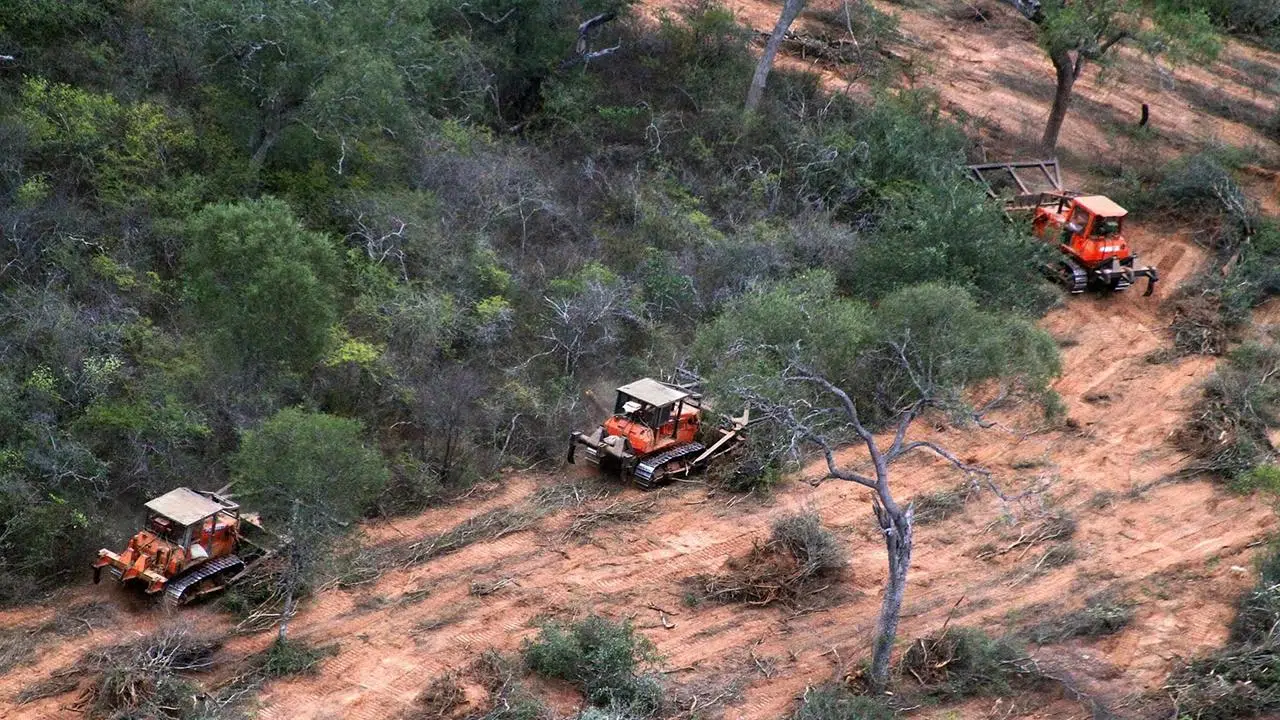
Disputed Concepts
The use of terms like “land use change” or “silvopastoral management” seeks to soften the word “deforestation.” However, the official report from the National Environment Subsecretariat warns that areas subjected to silvopasture lose their function as a forest ecosystem and compromise the environmental services they provide.
The MBGI is presented as an alternative to combine livestock production and conservation, but environmentalists argue that in practice it does not differ from silvopastoral management: foreign pastures are introduced, and biodiversity is lost.
Environmental and Social Impacts
Loss of biodiversity: deforestation affects native species and reduces the resilience of ecosystems.
Rural communities and indigenous peoples: directly suffer the degradation of territories and water sources.
Forest fires: account for 13% of the forest loss recorded between 2022 and 2024.
Regulatory rollback: the relaxation of territorial zoning violates the National Forest Law.
The Quebracho Colorado case reflects how regulatory changes and lack of state control allow massive deforestation in Salta. Under the guise of silvopastoral or MBGI plans, processes are enabled that degrade native forests and compromise biodiversity.
The Greenpeace complaint and the Karlen precedent show that the province faces a legalized ecocide, with long-term environmental and social consequences.



